Choosing between a forex broker vs stock broker is not just about picking a platform with a clean app or low-advertised fees. It changes what you can trade, how risk behaves, which rules apply to your account, and even whether a broker is a practical option in your country. If you trade first and ask those questions later, the mismatch usually shows up fast through costs, restrictions, or tools that do not fit your strategy.
For some traders, the decision is simple. If you want to trade major currency pairs with tight spreads and short-term execution in mind, a forex broker is the natural fit. If you want access to listed companies, ETFs, and longer-term portfolio building, a stock broker usually makes more sense. The challenge is that many brokers now market themselves as multi-asset, which can blur the line and make comparison harder.
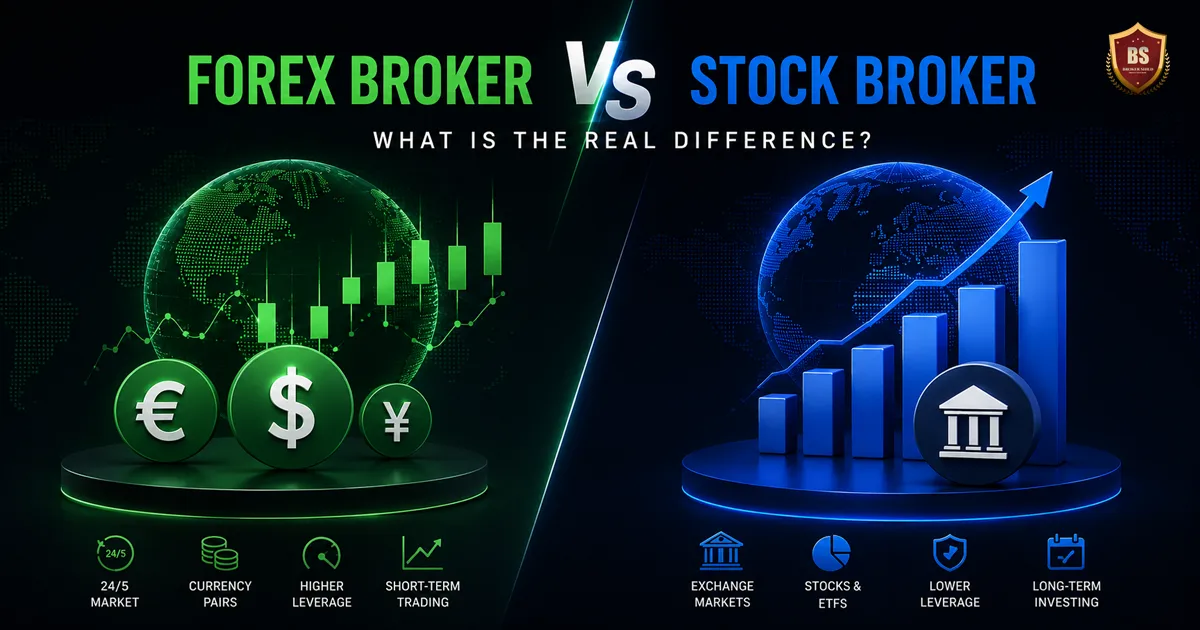
At the basic level, a forex broker gives you access to the foreign exchange market, where currencies are traded in pairs such as EUR/USD or USD/JPY. A stock broker gives you access to equities and often exchange-traded products such as ETFs, options, and bonds, depending on the broker and jurisdiction.
That sounds straightforward, but the deeper difference is market structure.
Most trading in foreign currencies happens directly between parties. Quotes move across systems linked to banks, brokers, and suppliers of funds instead of gathering in a single marketplace.
Fresh off the open bell, shares change hands mainly through official markets that show clear frameworks. Rules for joining these platforms stay consistent, yet each one sets its own clock for buying and selling moments.
What happens here goes beyond picking a product. Pricing shifts because of it. Execution changes, too, sometimes subtly. Clearness in costs depends on this factor. Traders find it easier – or harder – to check their charges based on these conditions.
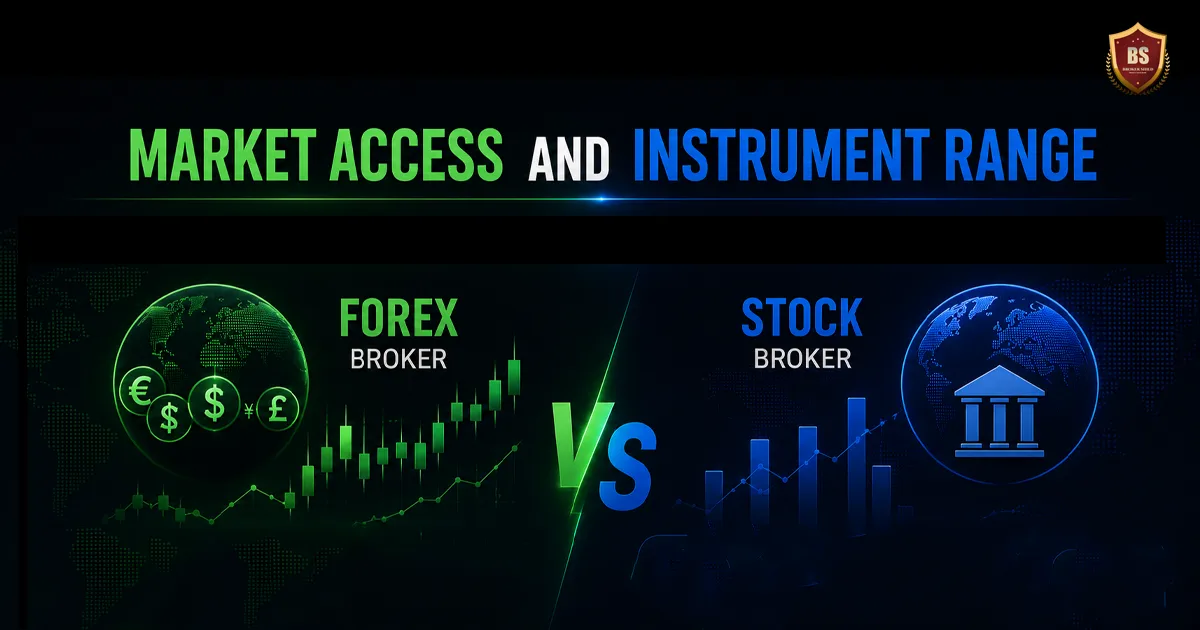
A forex broker is built around currencies first. That means the core offering usually includes major, minor, and exotic currency pairs, and often CFDs on commodities, indices, metals, or crypto, where permitted. The strength of a forex-focused broker is usually in pricing and execution on those instruments, not necessarily in broad investing features.
A stock broker is built around exchange-listed products. You are more likely to see direct access to U.S. stocks, international shares, ETFs, mutual funds, and retirement-friendly account structures. Some stock brokers also provide margin trading and options analytics, but they are not typically optimized for active forex speculation.
This is where many users make the wrong comparison. They look at a broker offering both forex and shares and assume it performs equally well in both areas. Often it does not. A broker may list many products, but the real test is whether its costs, platform tools, and execution quality are competitive in the specific market you want to trade.
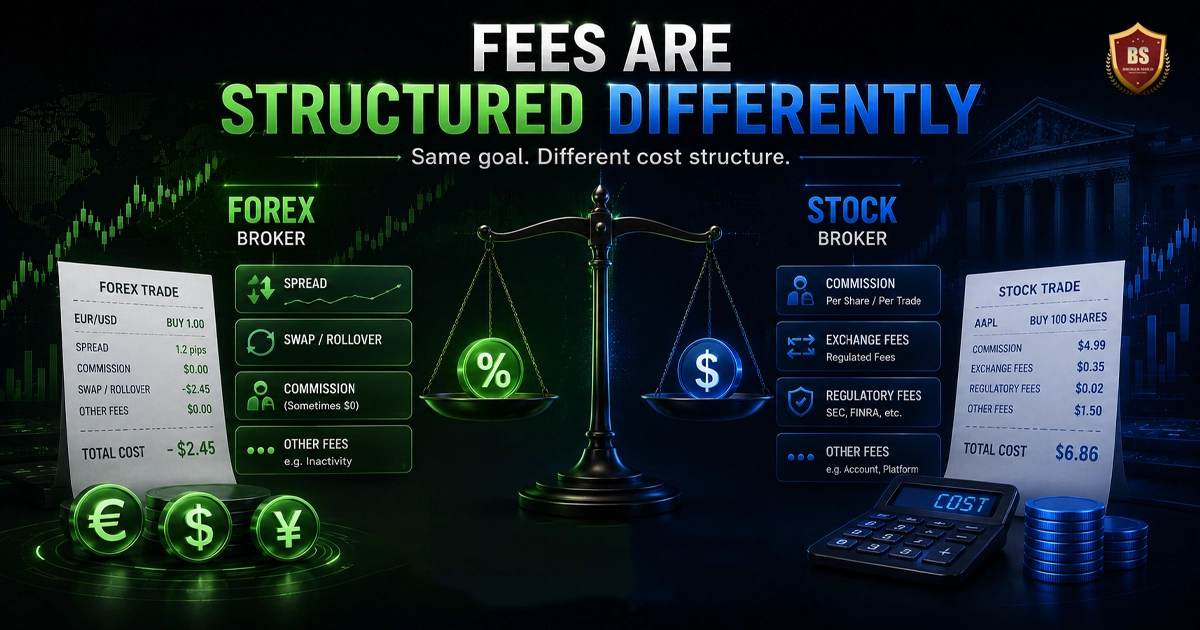
When comparing a forex broker vs stock broker, fee structure matters more than headline pricing.
Forex brokers usually charge through spreads, commissions, or a combination of both. On a standard account, costs may be built into the spread. On a raw spread or ECN-style account, the spread may be lower but paired with a fixed commission per lot. For active traders, this structure is familiar and easy to model once trade size and frequency are clear.
Stock brokers more often use commissions per trade, zero-commission models with payment-for-order-flow considerations, account fees, margin interest, or exchange and regulatory pass-through charges. Long-term investors may care less about a few cents in spread and more about custody costs, dividend handling, tax reporting, and access to specific markets.
The cheaper option depends on behavior. A day trader opening multiple short-term currency positions may find a forex broker more cost-efficient. A buy-and-hold investor purchasing ETFs monthly may be better served by a stock broker with low or no dealing commissions and strong account administration.
Leverage is one of the biggest differences between these broker types.
Forex brokers often offer higher leverage, subject to local regulation. In some jurisdictions, retail leverage is tightly capped. In others, offshore brokers may advertise much higher ratios. Higher leverage can reduce margin requirements, but it also increases the speed at which losses can build. That is why leverage should never be treated as a feature on its own. It only has value when paired with proper regulation, negative balance protection where applicable, and risk controls that are clearly explained.
Stock brokers usually offer lower leverage for equities, often through margin accounts with stricter rules. This tends to align better with investors and position traders who are not trying to maximize short-term exposure. It also means the trading environment may feel less aggressive, which is a benefit for users who prioritize capital preservation over frequent speculation.
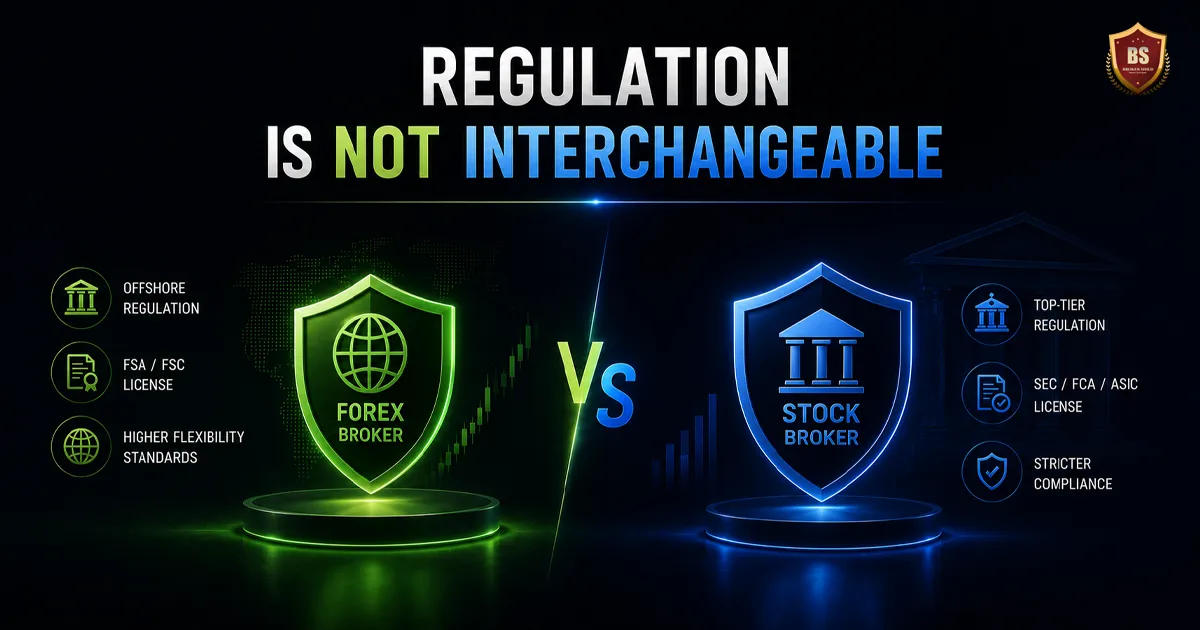
A regulated forex broker and a regulated stock broker are not automatically equal in how oversight works. The type of license, the legal entity serving your country, client money rules, compensation schemes, and product restrictions all matter.
Stock brokerage is often tied to well-established exchanges and securities frameworks, which can provide stronger clarity around asset ownership, reporting, and execution standards. Forex regulation can also be strong, but the industry has a wider gap between top-tier regulated firms and lightly supervised offshore entities.
For global users, this is especially important. A broker may be well regulated in one jurisdiction but onboard international clients through a different entity with different protections. Country availability is not just a sign-up detail. It determines which rules protect your funds, what leverage applies, and whether certain products are legally offered.
This is one reason comparison platforms such as Brokshield focus on the actual entity serving users, not just the logo on the homepage.
Forex brokers usually prioritize execution-focused platforms. You will commonly see MetaTrader 4, MetaTrader 5, cTrader, TradingView integration, and tools built for chart-based trading, expert advisors, and fast order entry. This suits scalpers, intraday traders, and users who rely on technical analysis or automation.
Stock brokers often prioritize portfolio views, research dashboards, earnings data, watchlists, tax documents, and longer-term account management. Their platforms may include charting and alerts, but the overall design is usually more investing-oriented than speed-oriented.
Neither approach is better in absolute terms. It depends on whether you are managing trades or building positions. A forex trader may find a stock broker too slow or limited. A long-term investor may find a forex platform overloaded with trading functions that add little value to their goals.
Forex trading runs 24 hours a day during the business week, which appeals to users in Asia, the Middle East, Africa, and Latin America who want access outside U.S. market hours. Liquidity is often deepest in major pairs during London and New York overlap, and many traders build their routine around those windows.
Stock brokers give access to markets with defined exchange sessions. There may be pre-market and after-hours trading, but liquidity can vary sharply outside the main session. That structure can be an advantage for investors who prefer clearer market rhythms, but it may feel restrictive for traders who need round-the-clock flexibility.
If your focus is short-term currency trading, leverage management, spread efficiency, and execution speed, a forex broker is usually the better fit. If your focus is owning company shares, investing in ETFs, receiving dividends, and building a portfolio over time, a stock broker is usually the better choice.
The gray area is the active multi-asset trader. If you want both forex and stocks, the right answer may be a strong multi-asset broker, but only if it is competitive in the products you actually trade. A broad product catalog is not enough. You need to compare real spreads, commission schedules, platform stability, local funding methods, support responsiveness, and the specific regulatory entity that will hold your account.
Start with your primary use case, not the broker’s marketing category. Ask what you will trade most often, how long positions will stay open, what level of leverage is appropriate, and whether your country imposes restrictions on certain products.
Then compare the details that affect outcomes directly: regulation, account protection, fee structure, platform fit, funding and withdrawal options, instrument availability, and support quality.
Open trades, how frequently will yours happen? Time in market, is it hours, days, sometimes longer? Leverage: Does your plan really depend on it? Tools built into platforms – pick only what fits how you work.
Who handles services where you live? Does users’ money stay safe? After factoring in spread, extra charges, and commission, what does trading truly cost? Support response time and withdrawal success rate, how steady are they?
A beginner may need a broker with simpler onboarding and clearer education. An experienced trader may care more about execution policy, slippage consistency, and whether commissions are predictable across account types.
The best broker is rarely the one with the biggest product list or the boldest pricing claim. It is the one that fits your market, your strategy, and your jurisdiction with the fewest unpleasant surprises.
A good broker comparison should leave you with fewer assumptions, not more excitement. If you can clearly explain why a forex broker or stock broker matches your goals before you open an account, you are already making a safer decision than most traders do.

Emma Thompson

Robert Walker