Before you compare spreads or read a single platform review, ask: who actually oversees this broker, and what does that mean for traders in your country?
That question sounds simple, but most broker searches skip it entirely. People click on a star rating, skim a feature table, and sign up without knowing whether the entity behind the brand holds a meaningful license, or just a name on a shelf company registered offshore.
Regulation is not a marketing badge. It is a legal framework that governs how a broker handles your money, reports client assets, resolves complaints, and behaves when things go wrong. A well-regulated broker operates under rules that create real accountability. A poorly supervised one can tick a compliance box while offering little practical protection.
That said, regulation alone is not a complete answer. It tells you about risk controls, not about whether the broker is competitively priced, well-suited to your strategy, or convenient to fund from your country. A thorough review addresses both dimensions: safety and suitability.
This is where many broker comparison sites fail their readers. A review that says "this broker is regulated" without specifying which legal entity serves your region is missing the most important piece of information.
Large forex brokers typically operate multiple subsidiaries under one umbrella brand. A trader based in the UAE may be automatically onboarded under a different entity than a trader in India, South Africa, or Australia. Each entity has its own license, its own protections, and often its own leverage limits and product range.
"A trader may assume access to one leverage profile or platform option, only to discover their local entity offers something narrower."
Concrete example: a broker may advertise 1:500 leverage on its homepage. But the entity actually serving traders in your country, governed by a stricter regulator, may cap leverage at 1:30. If you only read the headline, you signed up for something different from what you expected.
To verify properly, you need the exact name of the licensed entity (not the brand), the registration number, and the regulator's public database entry. Cross-referencing these three things takes under five minutes and should be non-negotiable before depositing.
⚖️
Regulatory frameworks typically require brokers to follow rules in a handful of key areas. Understanding what those rules actually do helps you interpret a license realistically.
| Area | Typically Regulated? | What It Means for You |
|---|---|---|
| Client fund segregation | Yes (top-tier) | Your deposit is held separately from company funds |
| Negative balance protection | Some jurisdictions | You can't lose more than your deposit in volatile markets |
| Compensation scheme | Select regulators only | Limited coverage if the broker becomes insolvent |
| Leverage caps | Yes (varies by regulator) | Limits on how much margin you can use |
| Spread competitiveness | No | Pricing is entirely at the broker's discretion |
| Execution quality | No | Fill speed and slippage are not regulated |
| Customer support quality | No | Response time and competence vary entirely by broker |
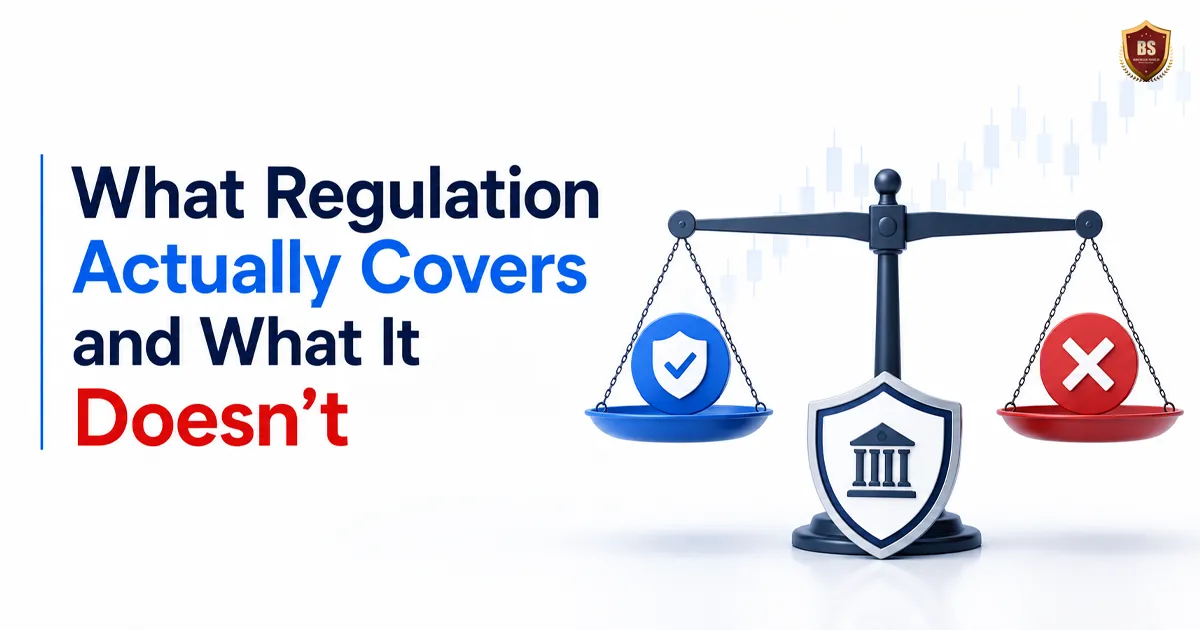
The table above makes the core point visible: regulation protects you from the worst outcomes (loss beyond your deposit, company misuse of funds), but it does not guarantee a good experience. Two brokers can both be fully regulated and still offer fundamentally different value to traders.
One of the clearest differences between a marketing review and a data-driven review is how fees are handled. Brokers lead with their lowest possible spread. Traders pay the full cost structure, which looks very different.
A complete fee picture includes at minimum:
For traders outside the US who fund accounts in local currencies, conversion friction can be substantial. A broker that looks competitive on EUR/USD spread may become noticeably more expensive once you factor in the cost of converting from AED, INR, or ZAR and the withdrawal processing time back to those currencies.
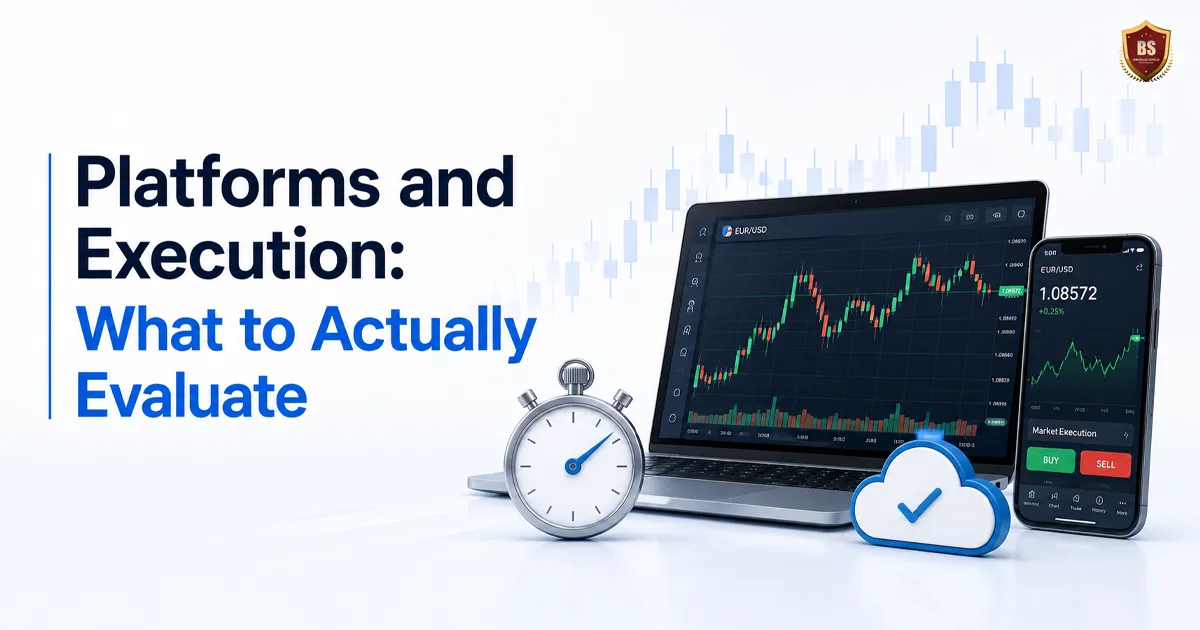
Platform availability is often reduced to a feature list: MetaTrader 4, MetaTrader 5, cTrader, proprietary app. That framing misses what you actually need to know.
The right question is not which platforms are offered but how well do they perform under your trading conditions. And the answer depends heavily on how you trade:
Charting depth, multi-timeframe layout, mobile stability, and order management quality matter most. Execution speed is secondary to layout and clarity.
Execution speed, slippage behavior on fast markets, VPS hosting compatibility, and policy on automated strategies become primary. Some regulated brokers explicitly restrict scalping or arbitrage, a detail that belongs in any honest review.
Platform integration across forex, indices, commodities, and shares, and how cleanly watchlists and positions are organized, affects daily usability significantly.
A useful review explains these trade-offs rather than declaring one platform universally superior. The best platform is the one that fits how you actually trade.
🖥️Many brokers market themselves as multi-asset providers. But the depth of that access varies dramatically. One broker may have a solid forex lineup with minimal stock CFD coverage. Another may offer broad CFD instruments with weaker forex pricing. Some support real share ownership in certain jurisdictions; others offer only derivatives on the same assets.
This matters because trading needs evolve. If you expect to expand from forex into indices, commodities, or individual shares, the product range becomes part of your broker decision, not an afterthought.
A quality review shows not just the count of available instruments, but where the broker is genuinely competitive and where it's thin. 500 instruments with poor pricing on most of them is different from 120 instruments with strong spreads across all major categories.
It's easy to overlook deposit and withdrawal mechanics until they become a problem. At that point, they matter enormously.
Relevant factors include regional payment method support (cards, bank transfer, local e-wallets), deposit processing times, minimum deposit thresholds, withdrawal handling time frames, and any fees associated with moving funds in and out.
For traders in markets where card reliability, bank transfer speed, or e-wallet availability varies, this is especially important. A well-regulated, technically strong broker can still be a poor fit if funding from your country is slow, expensive, or limited to one method.
This does not make the broker unsafe. It makes it the wrong choice for your situation, which is equally important to know before you sign up.
Support quality rarely feels important during the sales process. It becomes critical when something actually goes wrong: a verification hold, a delayed withdrawal, an unexpected platform restriction, or confusion about account terms.
At that moment, response time matters, but competence matters more. Can the support agent answer a specific question about your account type, the applicable leverage, or the withdrawal process for your country? Or do they send template replies that don't address your actual question?
The only reliable way to assess support is through direct testing, contacting the broker with account-specific questions, and observing how they respond. BrokShield's review methodology includes this step, which is why our assessments reflect observable conditions rather than feature claims from broker marketing pages.
🛡️Holding a license reduces risk significantly, but it should not make you less critical during the evaluation process. Several warning signs are worth watching for even when a broker is technically regulated:
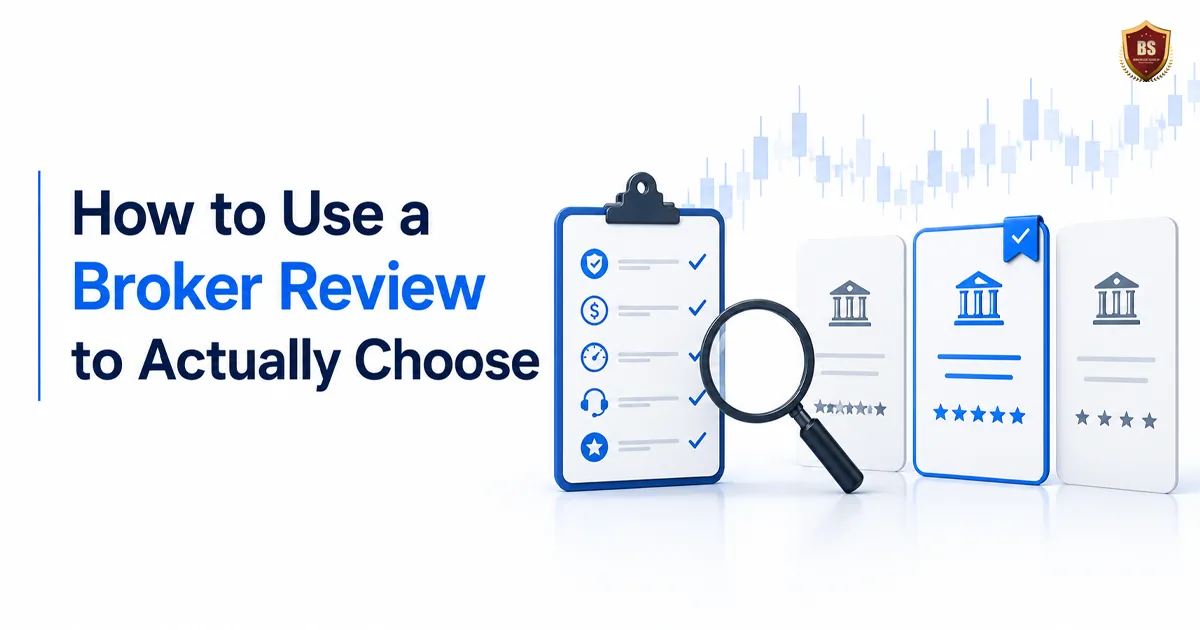
The most useful shift you can make in broker research is moving from "which broker is best?" to "which broker is best for me, given my country, strategy, and budget?"
That framing immediately makes reviews more productive:
Start with entity-level regulation. Confirm which specific licensed company will hold your funds and what client protections apply to compensation coverage, negative balance protection, and segregated accounts. Then proceed to everything else.
Compare the full cost structure across the instruments you actually trade, not the ones featured in the broker's marketing. Include overnight swaps if you hold positions beyond a day. Include conversion fees if your deposit currency differs from your account base currency.
Focus on platform behavior, latency, fill quality, and restrictions on trading styles (scalping, news trading, algorithmic strategies) before anything else. A broker with excellent regulation and poor execution is the wrong choice if you're a high-frequency trader.
Prioritize a low minimum deposit, a well-designed demo environment, solid educational materials, and accessible customer support. The tightest spread matters less than a setup that lets you learn without unnecessary friction.
BrokShield compares 100+ brokers using real accounts, real funds, and 600+ data points — filtered by where you actually trade.
Compare Brokers Now →Risk Disclaimer: Trading forex and CFDs involves significant risk and is not suitable for all investors. You may lose more than your initial deposit. BrokShield provides educational content and broker comparisons only and does not provide investment advice. Broker reviews reflect conditions at the time of testing and may change. Always verify current regulatory status and terms directly with the broker before depositing funds. Some brokers featured on BrokShield are commercial partners. Please see our advertiser disclosure for details.

Emma Thompson

Robert Walker