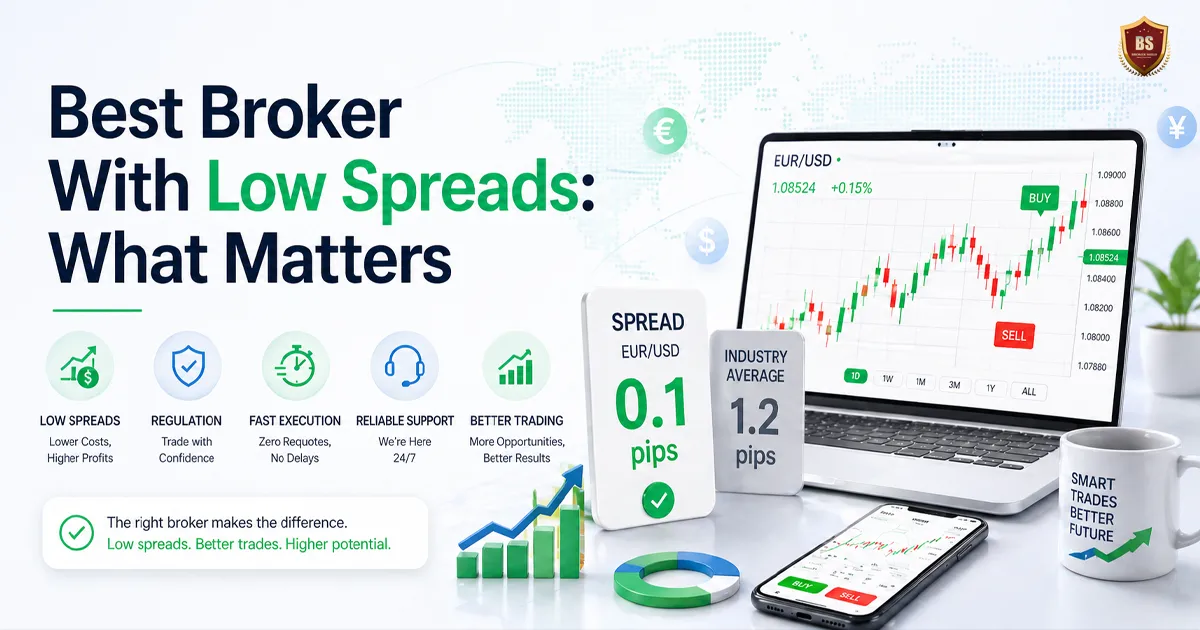
A broker can advertise a 0.0 pip minimum spread and still be expensive where it counts. That is the trap many traders fall into when searching for the best broker with low spreads. The spread matters, but by itself it tells you very little about what you will actually pay, how your orders will be filled, or whether the broker is a safe place to deposit funds.
For forex and CFD traders especially, spread-focused marketing is everywhere. It works because the number is easy to understand and easy to compare. But the real question is not who posts the smallest headline spread. It is which regulated broker consistently delivers competitive all-in trading costs, reliable execution, and terms that fit your strategy.
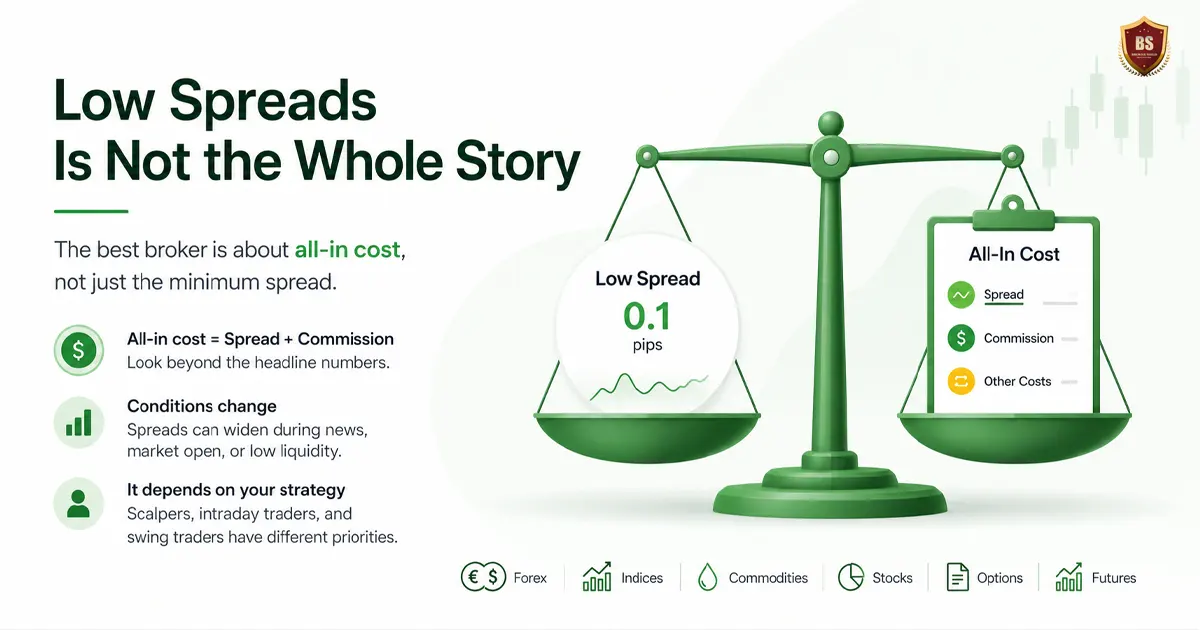
A low-spread broker is not automatically a low-cost broker. Some firms offer tight raw spreads but charge a commission that pushes the total cost higher. Others keep commissions low but widen spreads during volatile periods, around market open, or on less liquid instruments. If you trade around news, hold positions overnight, or use smaller account sizes, those differences can be more important than the minimum spread shown on a pricing page.
This is why serious broker comparison starts with all-in cost, not marketing claims. For forex, that means looking at the typical spread on the pairs you actually trade, then adding any commission per side. For multi-asset traders, the same logic applies across index CFDs, commodities, stocks, options, or futures. The cheapest-looking account on paper is not always the most efficient one in real use.
There is also a strategy question. A scalper, an intraday forex trader, and a longer-term swing trader do not experience spreads the same way. If you open and close many positions in short windows, spread costs can materially affect performance. If you trade less frequently and hold for days, spreads still matter, but swaps, platform stability, and execution quality may matter more.
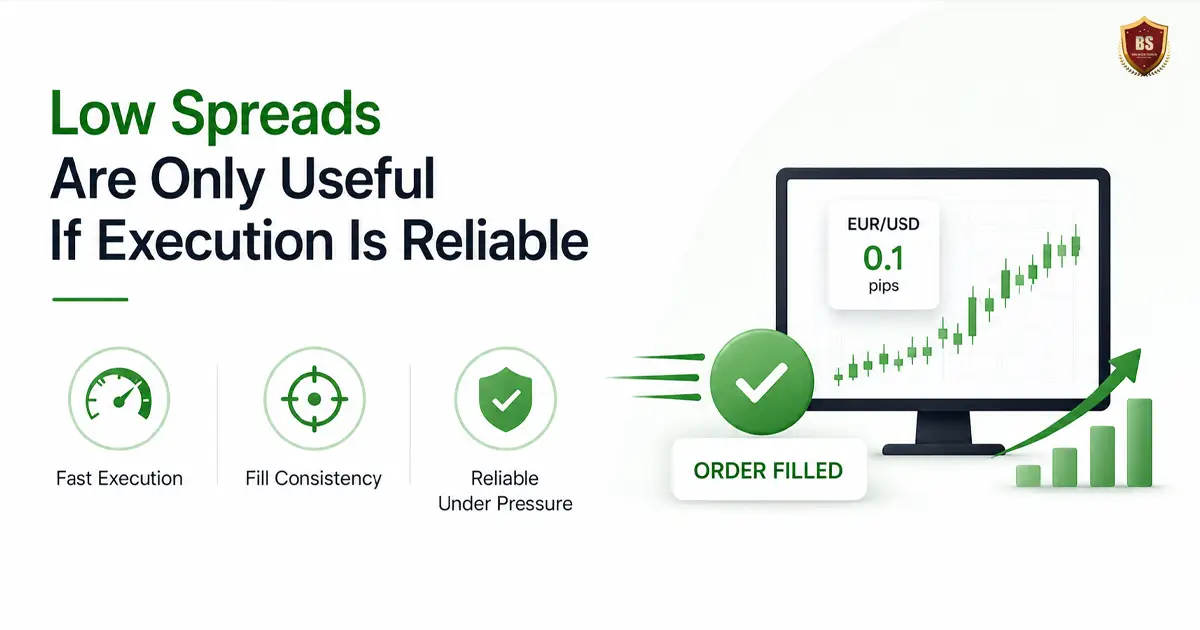
Pricing and execution should be evaluated together. A broker can quote a tight spread, but if your orders are filled with repeated slippage, delays, or rejections, your effective trading cost rises fast. This is one reason experienced traders do not stop at screenshots of low spreads. They test live conditions.
Execution quality includes order speed, fill consistency, and how the broker performs in normal and fast markets. During high-impact events, spreads can widen across the market. That is normal. What matters is whether a broker remains usable, transparent, and reasonably competitive under pressure.
This is especially relevant for traders using expert advisors, short-term systems, or breakout strategies. A difference of a fraction of a pip can be offset by poor execution. In practice, the best broker with low spreads is one that combines competitive pricing with stable fills and minimal friction when markets move.

Many traders treat regulation as a safety box to check after they compare costs. That is backwards. Regulation should come first.
Low spreads are meaningless if the broker has weak oversight, unclear entity structure, poor fund protection, or a record of complaints around withdrawals and trade handling. A regulated broker is not risk-free, but strong oversight improves transparency, client fund handling, dispute procedures, and operational accountability.
For US traders, broker availability is also a practical issue. Not every broker accepts US clients, and product access differs by jurisdiction. A broker that looks attractive in a global comparison may not even be relevant to your country, or the account terms may differ materially depending on the regulated entity you join.
That is why country-specific matching matters. The right broker is not only low-cost. It is available to you legally, supervised by a credible regulator, and structured in a way that makes account protections clear before you deposit.
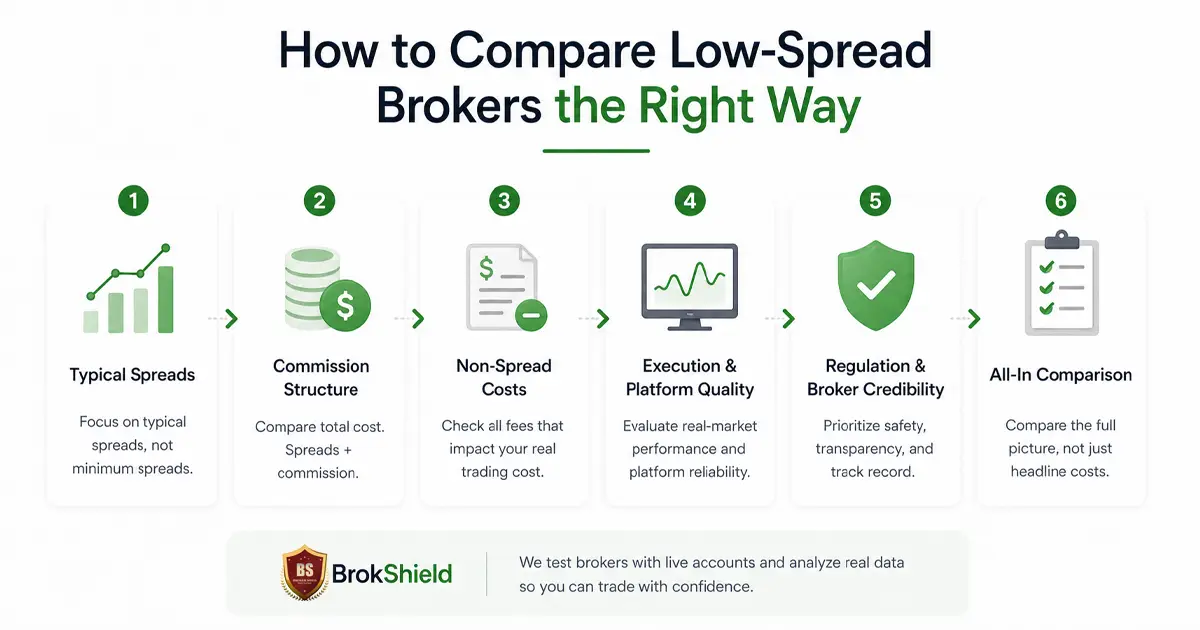
The cleanest approach is to compare brokers across a small set of decision factors that reflect real trading conditions.
Start with typical spreads, not minimum spreads. Minimum numbers are promotional. Typical spreads are closer to what you may experience in live markets over time.
Then add a commission structure. On raw spread accounts, commission can make a major difference. Two brokers can both advertise 0.1 pip EUR/USD spreads, but if one charges significantly more commission, the cheaper headline is irrelevant.
Next, review non-spread costs. Deposit and withdrawal fees, inactivity fees, overnight financing, market data charges, and conversion fees can all erode the value of a low-spread account. This matters even more for smaller traders, because fixed fees take a larger percentage of account equity.
After that, evaluate execution and platform quality. You want evidence that pricing remains competitive during active hours and that order handling is dependable on the platform you plan to use, whether that is MetaTrader, cTrader, TradingView integration, or a proprietary terminal.
Finally, confirm regulation, broker history, and operational credibility. A broker with slightly wider spreads but stronger oversight and cleaner business practices can be the better choice. BrokShield’s research approach reflects this reality by testing brokers with live accounts and reviewing a broad set of data points instead of ranking on headline cost alone.
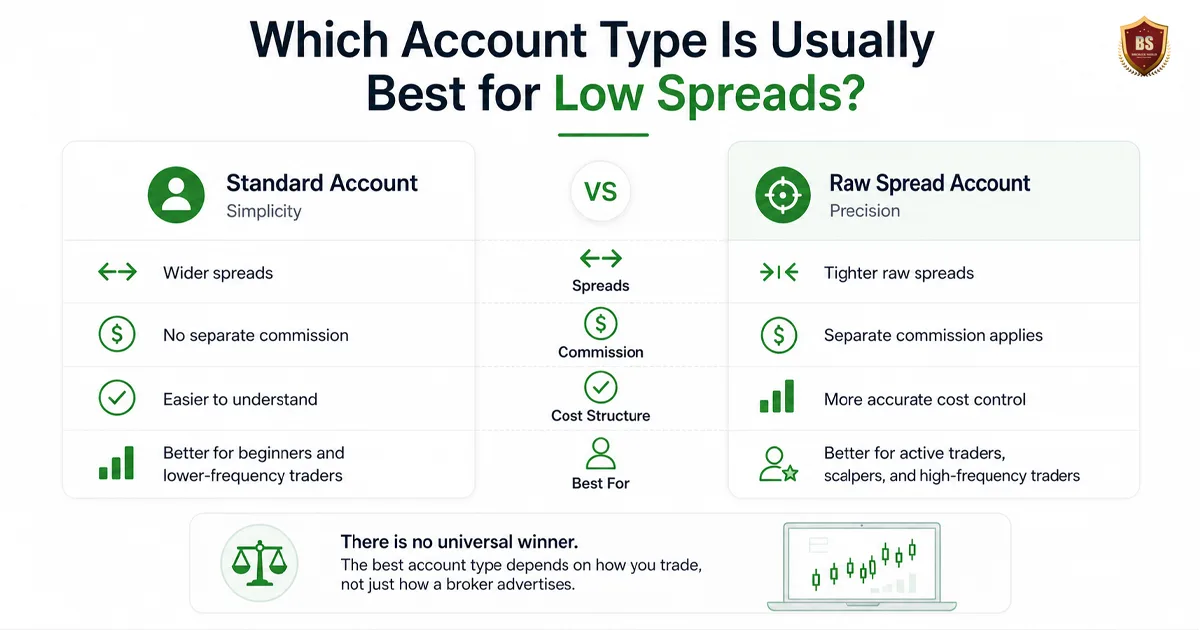
In many cases, traders choosing between standard and raw spread accounts are really choosing between simplicity and precision.
A standard account usually wraps broker compensation into the spread. That makes costs easier to understand and may suit beginners or lower-frequency traders. The spread is often wider, but there is no separate commission line to track.
A raw spread account typically offers tighter market pricing and adds a commission. This can work well for active traders, scalpers, and traders who need more accurate cost control. But it only works if your volume justifies it and the broker’s commission is competitive.
There is no universal winner. If you trade one or two times a week with modest position sizes, a simple standard account may be more practical. If you trade frequently and measure performance tightly, a raw spread account may produce lower all-in costs. The best setup depends on how you trade, not just how a broker advertises.
If a broker promotes ultra-low spreads without showing typical averages, treat that carefully. If pricing is hard to verify, that is a problem. If withdrawal terms are vague, legal disclosures are difficult to find, or the regulated entity is unclear, that matters more than a small spread difference.
Another red flag is aggressive bonus-style marketing built around “zero spread” claims. Zero spread may apply only during specific times, on limited instruments, or under account conditions that introduce commissions or other constraints elsewhere. Traders should always ask what the all-in cost looks like after every fee is included.
Customer support quality also gets overlooked. If something goes wrong with execution, funding, or verification, you want a broker that responds clearly and promptly. Cheap trading costs do not compensate for poor support when your money is already on the platform.

A day trader focused on major forex pairs may prioritize raw spreads, low commission, and execution speed. A swing trader may care more about overnight costs and platform reliability. A multi-asset trader might accept slightly higher forex spreads in exchange for better stock, index, or futures access under one account.
Beginners often benefit from simplifying the decision. If you are new, avoid choosing a broker based only on the lowest quoted spread. A clean fee structure, strong regulation, good education, and dependable customer support may be worth more than shaving a small fraction off pricing.
Experienced traders can be more selective. They should still verify live conditions, because there is often a gap between promotional pricing and actual trade experience. Testing with a small funded account before making a larger deposit is usually the safer move.

Before depositing, make sure you can answer a few practical questions with confidence. Which legal entity will hold your account? What is the typical spread on the instruments you trade most? What commission applies per side or per lot? Are there withdrawal or inactivity fees? How does the broker handle negative balance protection, margin calls, and order execution disclosures?
If those answers are hard to find, that is useful information by itself. A trustworthy broker should be easy to verify. In this category, clarity is part of the product.
The smartest traders do not chase the smallest number on a broker homepage. They look for the broker that stays competitive after spreads, commissions, execution quality, regulation, and account terms are all put on the same page. That is usually where a safer decision starts.

Emma Thompson

Robert Walker