If you are comparing forex and CFD brokers based on spreads, platform choice, and execution, this IC Markets review gets to the point quickly. IC Markets has built its reputation around low-cost trading and access to popular third-party platforms, but low advertised costs alone are not enough. What matters is how the broker is regulated, how its account structure works, and whether its setup actually matches your trading style.
IC Markets is generally positioned as an execution-focused broker rather than a feature-heavy investing platform.
That distinction matters. If you want broad research tools, stock investing features, or a highly customized in-house platform experience, it may feel limited. If you care more about raw spreads, platform familiarity, and fast order handling, it becomes more relevant.
The broker is widely known for offering MetaTrader 4, MetaTrader 5, and cTrader. That gives traders flexibility across manual trading, expert advisors, custom indicators, and algorithmic workflows. For many experienced forex traders, that matters more than branding. You are not learning a proprietary interface from scratch. You are working with tools already used across the industry.
Its appeal is strongest for short-term traders, scalpers, and traders who are sensitive to transaction costs. But there is a trade-off. A broker designed around tight pricing and execution quality may not be the most beginner-friendly choice if you need extensive hand-holding, education, or a simpler product lineup.
Regulation is where any broker review should start. Trading conditions can look excellent on paper, but oversight and client protection are what shape the risk profile.

IC Markets operates through multiple entities, and the specific entity available to you depends on your country of residence. That point is critical for traders in regions such as MENA, Southeast Asia, Africa, and Latin America, where product availability, leverage, and protections can differ by jurisdiction. You should never assume that every client receives the same regulatory coverage or account terms.
For practical evaluation, what matters is whether the broker is operating under recognized regulatory frameworks, how client funds are handled, and what dispute resolution mechanisms exist. A trader opening an account under one entity may have a different experience from a trader in another region, even if both are using the same brand and platforms.
This does not automatically make the broker more or less suitable. It simply means that country-specific availability should be checked before making a decision. A strong global brand presence helps, but entity-level details matter more than marketing language.
Fees are one of the main reasons traders consider IC Markets in the first place. The broker is often associated with competitive spreads, especially on major forex pairs, and account structures designed for active trading.
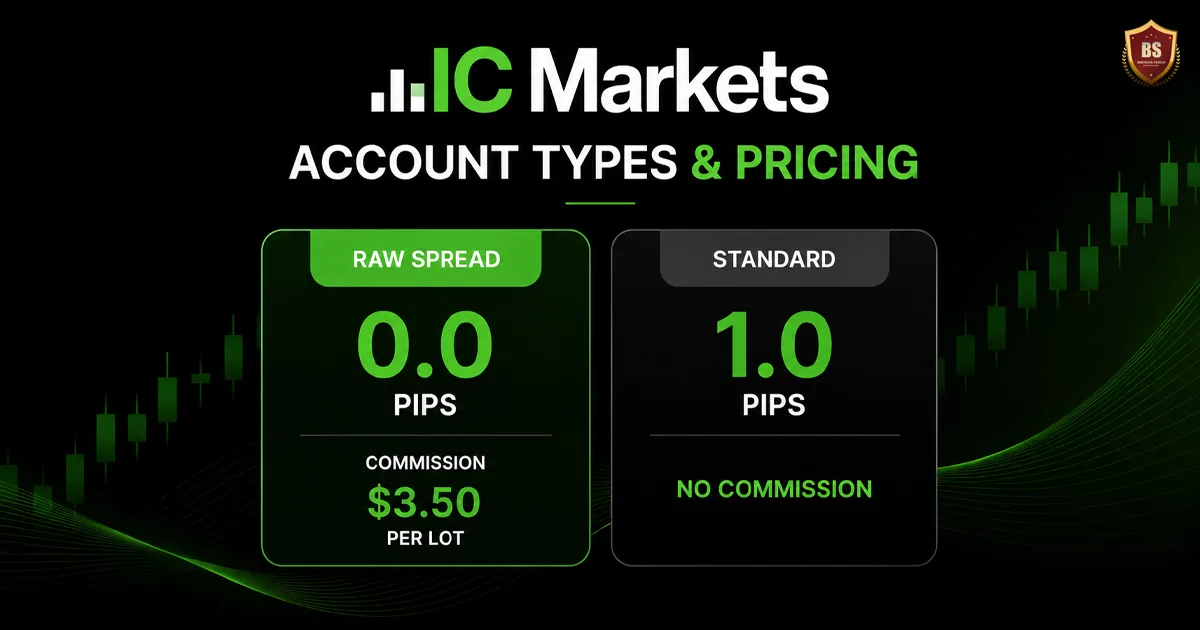
In practice, pricing usually comes down to whether you choose a commission-based account or a spread-only setup. That choice depends on your style. If you trade frequently, a raw spread account with a fixed commission can be easier to model and often cheaper overall. If you trade less often or prefer simpler cost presentation, a standard-style account may feel more straightforward.
The real question is not whether the spreads look low in a headline. It is whether the all-in trading cost makes sense after commission, swap rates, and any non-trading charges that may apply to your account. This is where many traders make poor comparisons. They focus only on minimum spreads and ignore total cost over time.
IC Markets tends to be more attractive for traders who already understand this distinction. If you are comparing brokers strictly on raw trading costs, it can be competitive. If your strategy holds positions overnight for longer periods, swap charges may matter more than tight entry spreads.
Platform access is one of the broker’s strongest selling points. MetaTrader 4 remains relevant for traders using legacy expert advisors and familiar workflows.
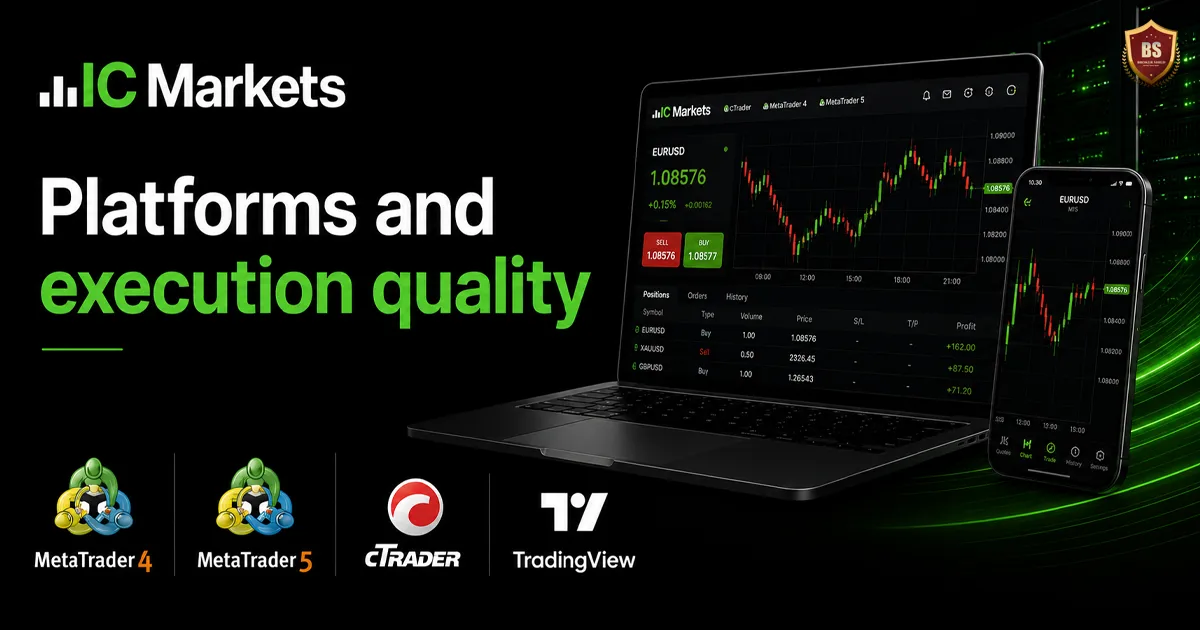
MetaTrader 5 offers broader functionality and is usually the better fit for traders who want a more modern setup. cTrader appeals to users who prefer a cleaner interface and more advanced depth-of-market style features.
That variety is useful because platform preference is rarely a minor detail. It affects charting, automation, order entry, and even psychological comfort during volatile conditions.
Execution quality is another reason IC Markets is often on shortlists for active traders. Fast execution and reduced dealing desk concerns are especially important for scalping and algorithmic strategies. Still, traders should keep realistic expectations. No broker can eliminate slippage in fast markets, major news events, or thin liquidity periods. The better question is whether execution remains consistently competitive under normal conditions and reasonably fair under stress.
For traders running automated systems, platform stability and VPS compatibility may also matter more than website design or educational extras. In that context, IC Markets is usually evaluated as a practical trading infrastructure choice rather than an all-around retail investing hub.
IC Markets typically offers access to forex and a range of CFDs, including indices, commodities, and other instruments depending on the entity and region. For many traders, that is enough. If your main focus is forex, major indices, and a manageable set of CFD products, the offering is broad enough for most use cases.
Where traders need to be careful is assuming that more instruments always means a better broker. Breadth matters less than whether the products you actually trade are priced competitively and supported well on your chosen platform.
If you are a specialist trader, the review process should be narrower. Check the exact spreads, margin requirements, trading hours, and contract specifications for your preferred instruments rather than relying on the total asset count.
IC Markets is usually a stronger fit for traders who already know what they want from a broker. That includes forex traders comparing execution models, cost-conscious users choosing between MT4, MT5, and cTrader, and active traders who want a broker built around trading conditions rather than broad retail investing features.
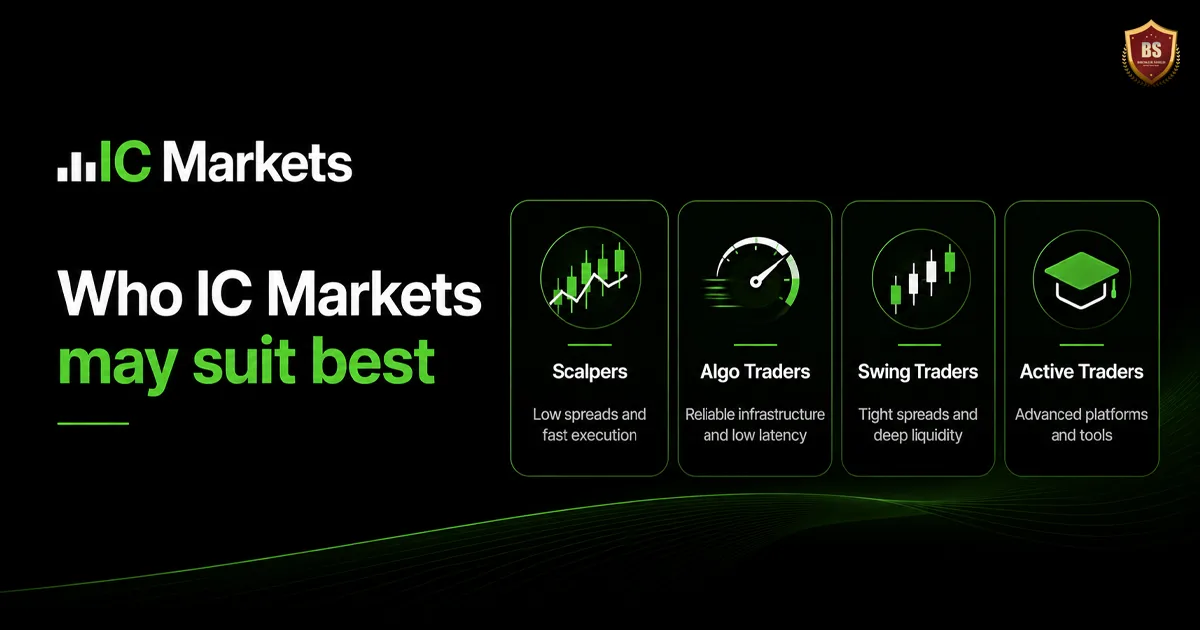
Beginners can still use it, but the experience may feel more technical than simplified. If you are brand new, the right broker is not always the one with the lowest spread. It may be the one with the clearest onboarding, the most suitable entity for your region, and a platform you can use confidently without mistakes.
Experienced traders are more likely to appreciate the practical benefits here. They tend to look past homepage messaging and focus on account mechanics, execution, and platform flexibility. That is where IC Markets has more substance.
No broker is the right fit for every trader, and that is especially true here. If you want a full-service investment platform with rich proprietary research, integrated long-term portfolio tools, or a highly guided user experience, IC Markets may not stand out.
The same goes for traders who do not want to compare entities, conditions, or platform differences in detail. A more simplified broker may be easier to evaluate, even if the trading costs are slightly higher.
Support quality, funding methods, and localized service can also vary in importance depending on where you live. A broker that looks excellent in a generic global review may still be less practical if your preferred payment methods are limited or if regional support is not strong enough for your needs.
That is why a data-driven review matters more than broad reputation alone. Even well-known brokers should be assessed against your country, account type, and strategy.
IC Markets remains a credible option for traders who prioritize platform choice, competitive pricing, and execution-focused trading conditions. Its strengths are clearest for active forex and CFD traders, especially those comfortable evaluating commissions, spreads, and platform differences with some precision.
It is less compelling if you want a highly simplified beginner experience or a broker built around features outside active trading. As with any broker, the deciding factors are not the headline claims. They are the entity available in your country, the actual all-in cost of your strategy, and whether the platform environment matches how you trade.
The smartest next step is not to ask whether IC Markets is good in general. It is to ask whether its specific setup is right for your market, your risk tolerance, and the way you place trades.

Emma Thompson

Robert Walker