 Copy trading usually looks simple right up to the point where real money is involved. You find a strategy provider with a strong track record, click follow, and expect the process to run on its own. In practice, the best broker for copy trading is not just the one with the biggest list of signal providers. It is the broker that combines credible regulation, stable execution, clear costs, and copy infrastructure that works under real market conditions.That distinction matters because copy trading adds an extra layer of risk to normal broker selection. You are not only trusting the broker with deposits, pricing, and withdrawals. You are also relying on its systems to mirror another trader’s positions accurately, quickly, and at the right size. If the broker gets the basics wrong, even a strong strategy can produce very different results in your account.
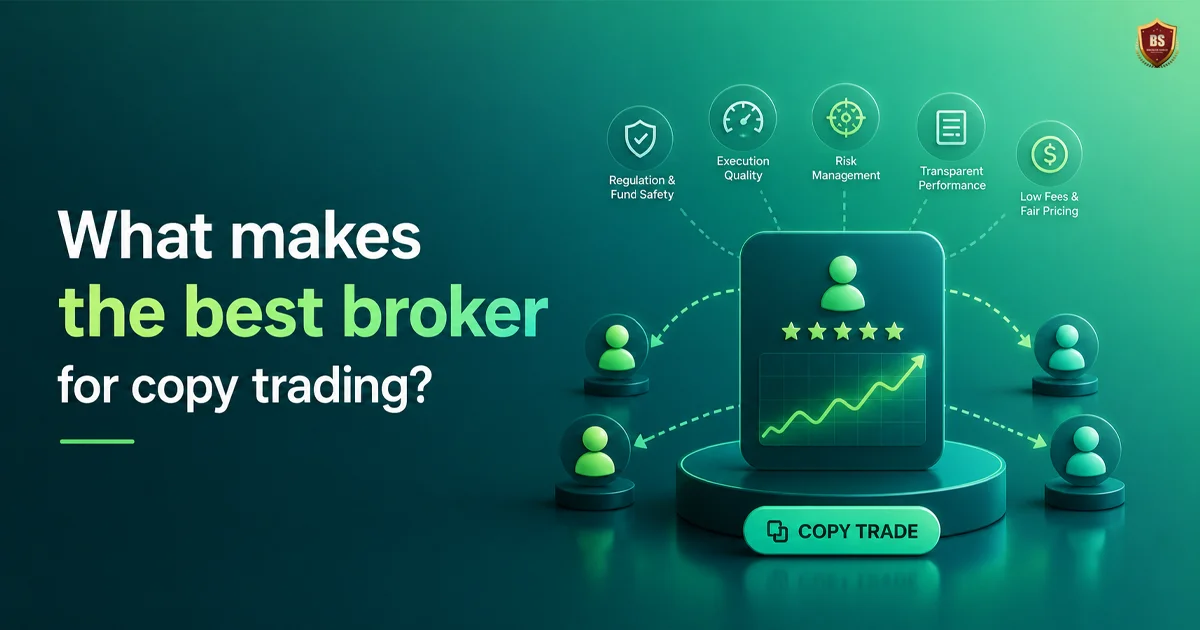 The short answer is reliability first, features second. Many brokers promote copy trading as a convenience tool, but the quality gap between platforms is wide. Some offer deep risk controls, transparent performance metrics, and broad account compatibility. Others mainly use copy trading as a marketing layer on top of weak execution or limited regulatory coverage.A strong copy trading broker should be evaluated on five core areas: regulation, trading costs, execution quality, platform structure, and copy-specific controls. If one of those is weak, the overall setup becomes less attractive.
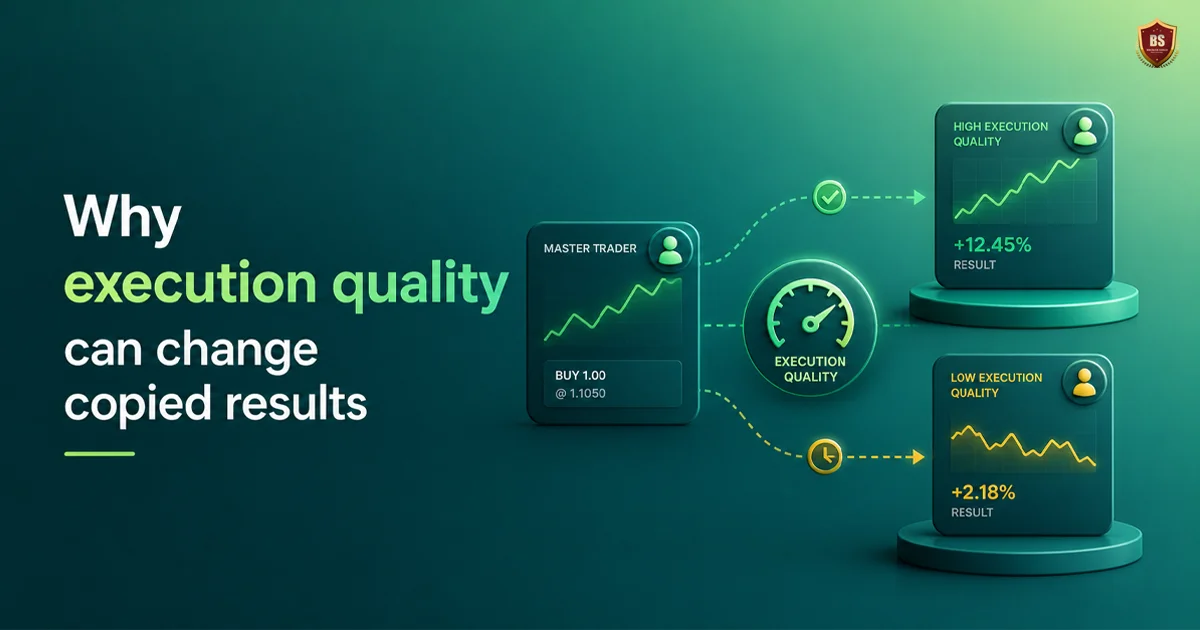 Execution is where copy trading becomes technical. When a strategy provider enters a trade, your account should receive a comparable execution with minimal delay and limited slippage. That sounds straightforward, but there are several moving parts: server speed, liquidity conditions, account type, market volatility, and the broker’s own routing model.If a broker’s execution is slow or inconsistent, copied trades may enter at worse prices than the source account. Over time, this creates performance drift. In fast markets, the gap can become significant. This is one reason why a copied strategy’s public track record should never be treated as a guaranteed reflection of what your account will achieve.A practical way to think about this is simple: if execution quality is weak, copy trading becomes approximation rather than replication.
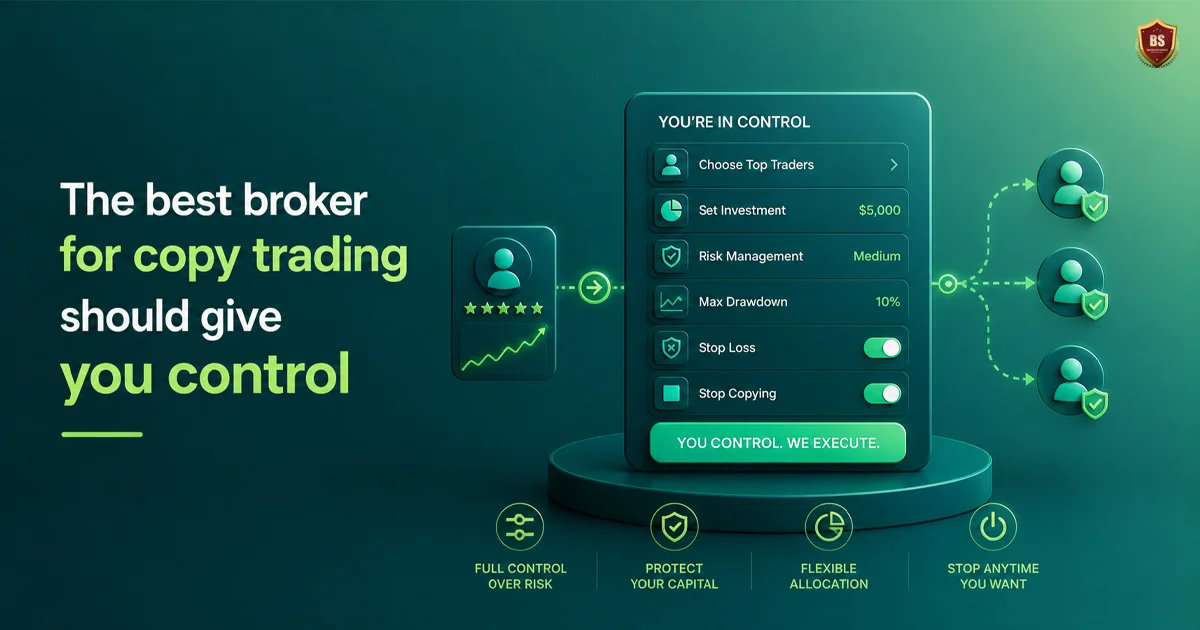 One of the most common mistakes in copy trading is treating it as passive investing. It is not. You are still exposed to leverage, market volatility, execution risk, and provider behavior. The broker should give you tools to manage those risks rather than assume the selected trader will do it for you.At minimum, look for the ability to set an allocation limit, close copied trades manually, stop copying instantly, and monitor account-level drawdown. Better brokers also let users cap losses or separate copied capital from self-directed trades.This is where many beginner-friendly promotions fall short. A polished dashboard may make copy trading look easy, but ease of use is not the same as risk control.
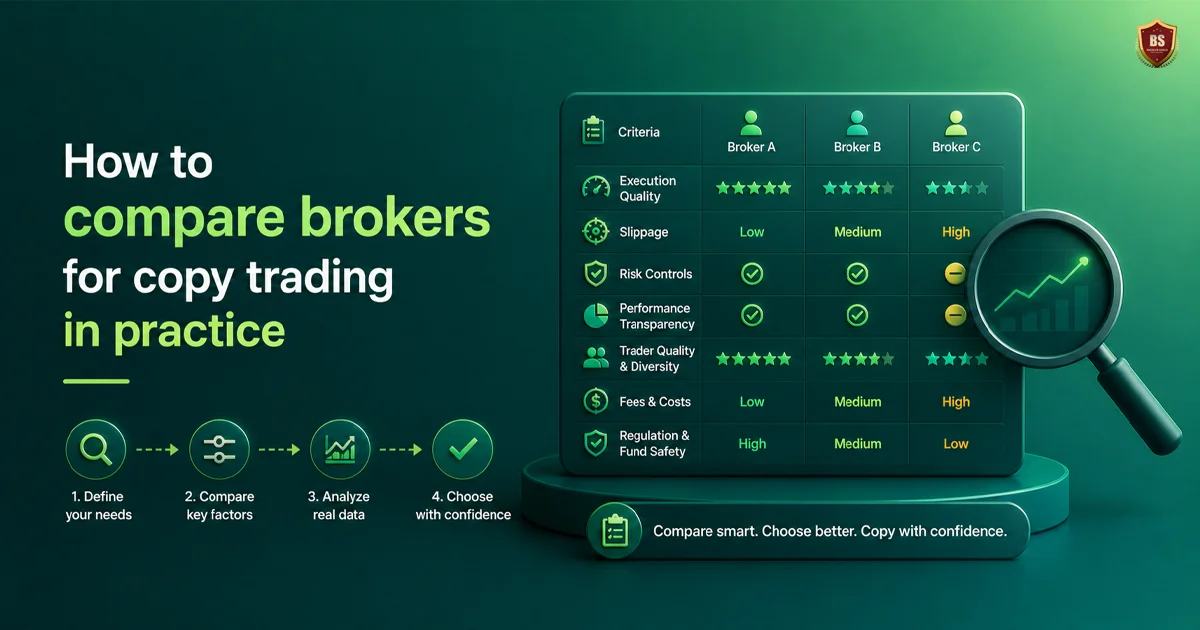 When narrowing options, start with the fundamentals and then move into copy-specific details. First, confirm regulation, country availability, and account funding practicality. There is little value in a strong platform if deposits, withdrawals, or legal access are problematic in your region.Then compare pricing for the instruments most likely to be copied. A forex-focused strategy needs different cost analysis than one trading indices, gold, or crypto CFDs. After that, review execution quality signals such as order speed, slippage reputation, and account type structure.Only once those basics are in place should you evaluate the copy trading layer itself. Look at provider transparency, allocation settings, platform stability, and whether the broker supports enough instruments and account compatibility for your needs.For many traders, this process quickly eliminates brokers that market copy trading aggressively but provide limited substance underneath. That is where a criteria-based review approach is more useful than promotional rankings. Platforms like BrokShield are built around this kind of structured comparison because copy trading quality depends on more than a single feature page.
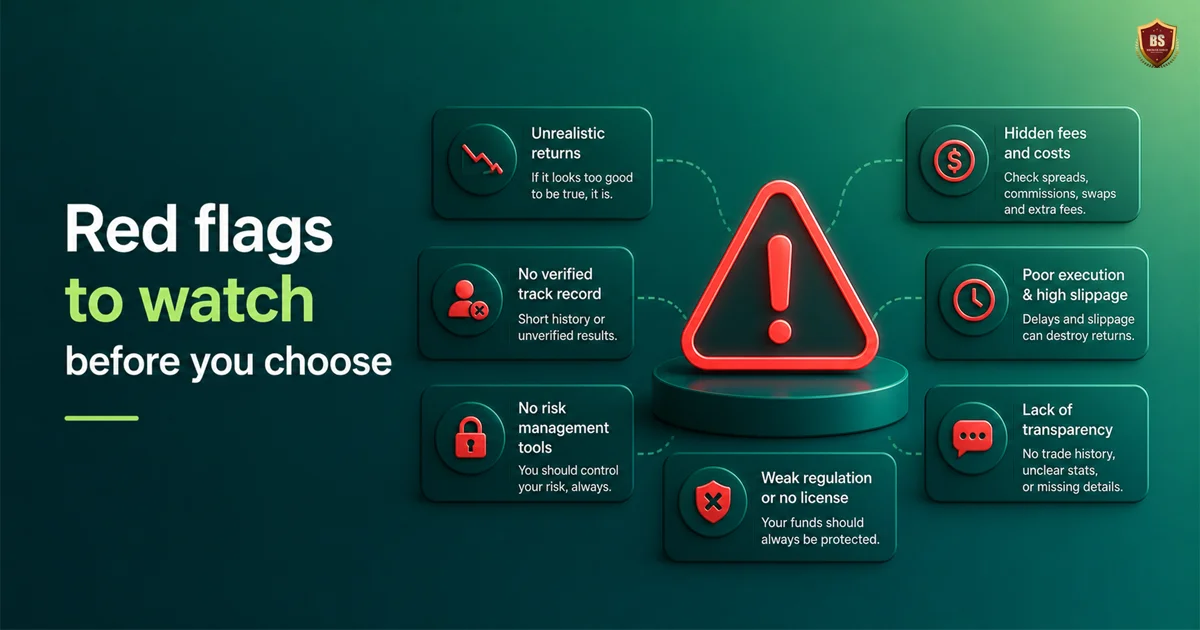 Some warning signs are easy to miss because they appear in the copy ecosystem rather than the broker’s main offer. Be cautious if performance data is very limited, if drawdown reporting is unclear, if top providers show extreme leverage usage, or if the broker offers few details on how copied trades are executed.Also pay attention to how fees are presented. If the pricing structure is hard to understand, that is already useful information. A broker suitable for copy trading should make costs, trading conditions, and platform mechanics easy to verify.Good broker selection is less about finding the most exciting option and more about reducing the number of unpleasant surprises later.The practical goal is not to find a broker that makes copy trading look effortless. It is to find one that lets you assess risk clearly, copy strategies under fair trading conditions, and stay in control when market conditions change.
Emma Thompson

Robert Walker