
Choosing the best broker by country is rarely about finding one global winner. A broker that looks strong in the UK may offer weaker funding methods in India, fewer instruments in South Africa, or different regulatory coverage in the UAE. Country-level availability changes the actual trading experience, and that is where many rankings fall short.
If you are comparing brokers across regions, the key question is not just who is popular. It is who is legally available in your market, who offers fair trading costs in your account currency, and who can support deposits, withdrawals, and customer service in a way that works where you live. That is the difference between a useful comparison and a generic top-10 list.
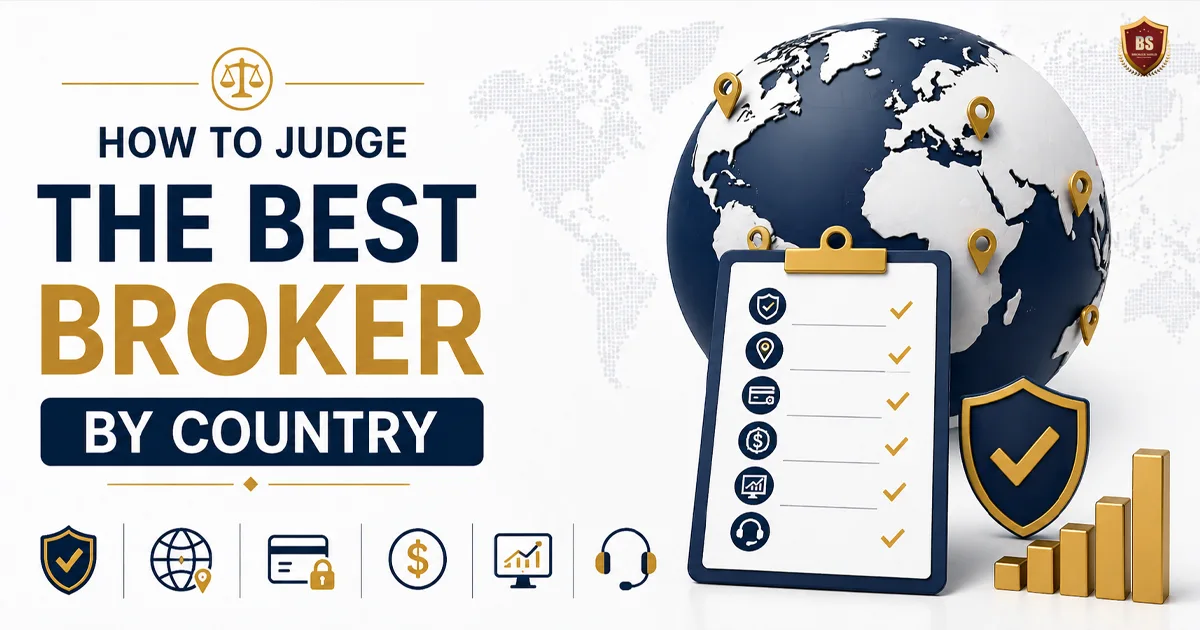
The best broker by country should be evaluated through local fit first, then platform quality. Traders often do the reverse. They start with spreads, bonuses, or brand visibility, then realize later that the broker does not support their preferred payment method, does not accept clients from their jurisdiction, or places them under a less protective offshore entity.
A more reliable approach starts with regulation and account availability. If a broker serves multiple countries through different legal entities, the protections can vary. Negative balance protection, leverage limits, compensation schemes, and complaint procedures may all depend on where your account is registered. The brand name may be the same, but the legal and operational conditions may not be.
After that, costs matter, but they need context. A low spread on paper is useful only if commissions, swap rates, conversion charges, and withdrawal friction do not erase the advantage. For active traders, execution quality and slippage can matter as much as headline pricing. For beginners, ease of funding and responsive support may have a bigger impact than saving a fraction of a pip.
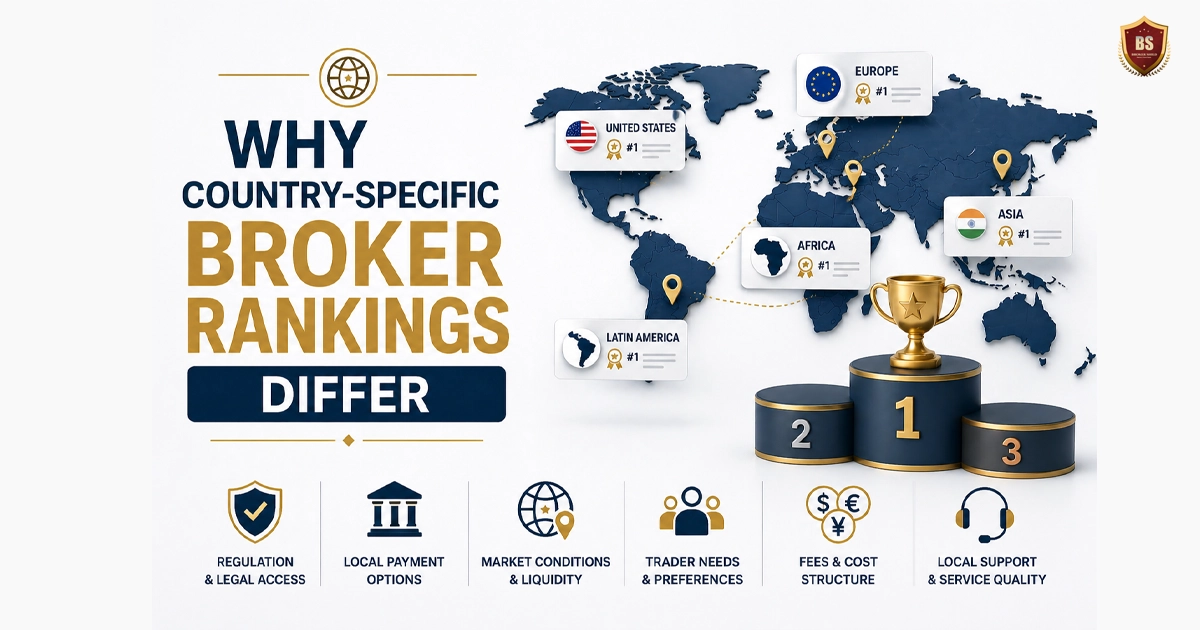
A broker ranking should change from one country to another because the market conditions change. Regulation is the obvious factor, but it is not the only one.
In Europe, traders may prioritize brokers regulated under stricter regional frameworks, with clearly defined client protections and lower leverage caps. In parts of Africa, Latin America, or Southeast Asia, traders may be comparing international brokers that accept local clients but operate through offshore entities. That does not automatically make a broker unsafe, but it does change the risk profile and the level of legal recourse available.
This is why the best broker in one country is not automatically the best choice elsewhere. The same broker may onboard German clients under one regulator and Kenyan clients under another. A serious comparison needs to reflect that distinction clearly.
Local payment support can quietly shape the whole broker experience. In India, bank transfer compatibility and processing reliability can matter more than small spread differences. In MENA markets, traders may look closely at regional payment methods and Arabic-language support. In Latin America, account funding speed and conversion costs often influence broker preference more than a polished website does.
Withdrawal reliability is especially important. A broker that looks competitive on pricing but causes repeated delays or extra banking friction is not competitive in practice.
Not every trader wants the same thing. Some countries have a larger base of forex-focused retail traders. Others lean more toward indices, stocks, commodities, or crypto CFDs, where permitted. The best broker by country therefore, depends partly on what traders in that market can access and what they actually trade.
Platform support matters here, too. A broker with MetaTrader 4 and 5 may suit traders who rely on expert advisors or familiar workflows. Another broker may be stronger for charting, web usability, or multi-asset access. Neither is objectively better in every country and for every trader.
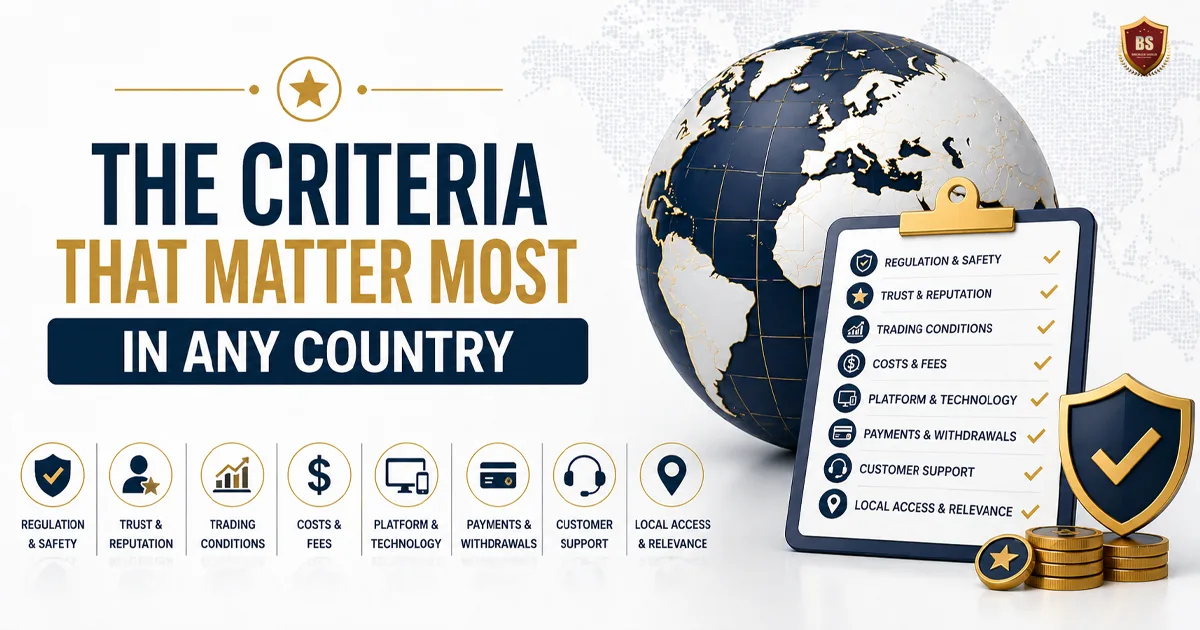
There are a few metrics that remain useful across regions, even though their weight may change.
Regulation should come first. Check which legal entity will hold your account, what protections apply, and whether the broker has a credible operating history. This is not just a compliance box. It affects dispute handling, client fund segregation, and overall accountability.
Fees come next, but compare the full cost structure. That includes spreads, commissions, overnight financing, inactivity rules, and any currency conversion charges. A broker can look cheap at entry and become expensive over time.
Execution quality deserves more attention than it usually gets. If a broker advertises tight spreads but fills poorly during volatility, the advertised pricing becomes less meaningful. Active traders, news traders, and scalpers should pay particular attention to this.
Instrument coverage also matters, especially for traders who want more than major forex pairs. Some brokers are strong in forex but thin on stocks or commodities. Others offer broad market access but weaker pricing on core FX pairs.
Customer support should not be treated as a minor feature. If support is slow, generic, or unavailable in your working hours, simple account issues can become expensive problems. For international traders, local language support and timezone coverage can be a practical advantage.
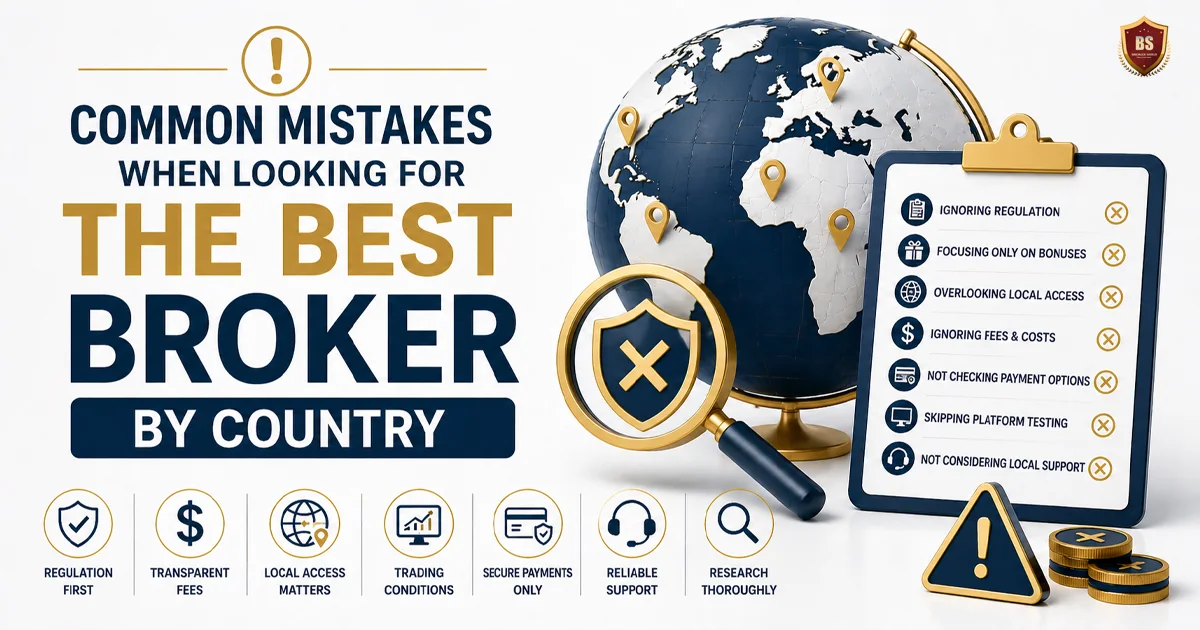
The biggest mistake is trusting global rankings that ignore jurisdiction. A broker can be excellent for traders in Australia and much less attractive for traders in Nigeria or Brazil because the account terms, legal entity, and payment setup are different.
Another mistake is comparing only the spread tables. Costs should be tested in real use. A broker with slightly wider spreads but easier withdrawals and better execution may be the better value overall.
Many traders also overlook account currency. If your local currency is not supported, repeated conversion costs can build up quickly. This is especially relevant in countries where traders fund accounts frequently in smaller amounts.
The last common error is treating reputation as proof. Brand recognition helps, but it is not enough. The right question is whether the broker’s actual conditions in your country match the public image.
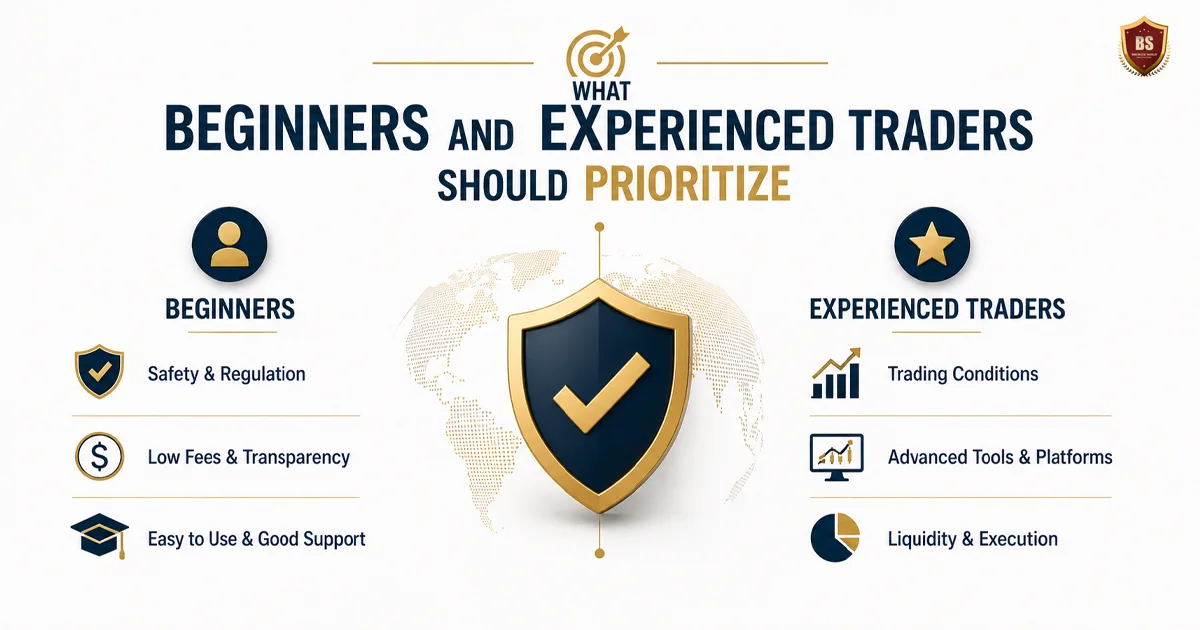
Beginners usually benefit from simplicity and protection. That means clear account terms, a manageable fee structure, responsive support, and a well-regulated onboarding path. A beginner does not need the most complex product range. They need a broker that is transparent and easy to use without operational surprises.
Experienced traders often focus more on cost efficiency, execution, platform stability, and instrument depth. They may also be more comfortable assessing regulatory trade-offs when choosing between stricter protection and more flexible trading conditions. Even so, flexibility should not come at the expense of basic trust signals.
This is where a structured comparison helps. Brokshield approaches broker research through criteria that can be checked: regulation, fees, platform access, market coverage, and local availability – instead of relying on broad marketing claims.
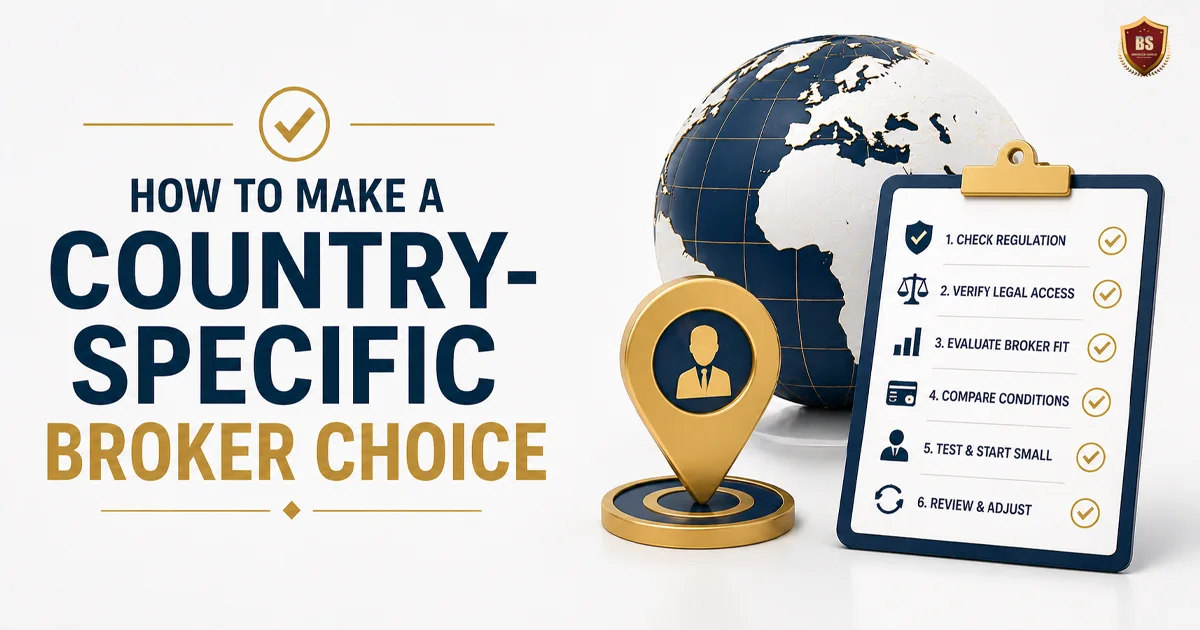
Start with a short list of brokers that legally accept clients from your country. Then verify which entity will open your account and what protections apply. After that, compare real trading costs based on your likely activity, not just promotional pricing.
Next, review payment methods that are realistic for you. A broker is not a strong fit if funding and withdrawals feel improvised. Then look at platform compatibility, especially if you use automated strategies, trade from mobile, or need access to specific asset classes.
Finally, test support before you deposit significant capital. A simple pre-sales question can reveal a lot about response speed and clarity. If a broker cannot answer basic account questions clearly, that is useful information.
The best broker by country is usually the one that performs well across several practical factors, not the one that wins a single category. The right choice depends on your location, your trading style, and the legal framework behind your account. If you compare brokers through that lens, you are far more likely to end up with a setup that works in real conditions, not just on a ranking page.
A good broker should make trading decisions easier, not create extra operational risk before the first trade is even placed.

Emma Thompson

Robert Walker