 A swing trader can tolerate a little more spread than a scalper. But a bad broker still shows up on every trade.If you hold positions for several days, the best broker for swing trading is not simply the one with the lowest advertised spread. What matters more is the full trading setup: regulation, overnight costs, platform stability, execution quality, available markets, and whether the broker actually serves your country under a credible entity. That is where many traders make the wrong comparison.Swing trading sits in the middle ground between day trading and longer-term investing. You are not in and out within seconds, but you are also not ignoring short-term price movement. That changes what a broker needs to do well.
The short answer is fit. A broker that works well for an index CFD swing trader may be a poor choice for someone trading forex majors, gold, or US stocks over three to ten days.
Still, a few criteria matter almost every time. Regulation comes first because account safety is not negotiable. A broker with strong oversight from recognized regulators generally offers better client protections, clearer operating standards, and fewer unpleasant surprises around withdrawals, account terms, or order handling.
After regulation, costs need a broader look. Swing traders often focus on spreads and commissions, but holding trades overnight introduces swap or financing charges. Those costs can be minor on some instruments and meaningful on others, especially if you keep positions open for a week or more. A broker with average spreads but more reasonable overnight pricing can be cheaper in practice than one that markets ultra-low entry costs.
Platform quality also matters more than many traders assume. Swing trading is less speed-sensitive than scalping, but you still need dependable charting, alerts, watchlists, and stable order placement. If your method relies on higher time frame structure and precise entries around support, resistance, or moving averages, weak charting becomes a real handicap.
Then there is market access. Some traders only need major forex pairs and gold. Others want indices, stocks, ETFs, or commodities in one account. The best choice depends on your strategy, not on the longest product list on a broker homepage.
A practical broker review for swing trading should separate marketing from usable conditions. These are the areas worth checking closely.
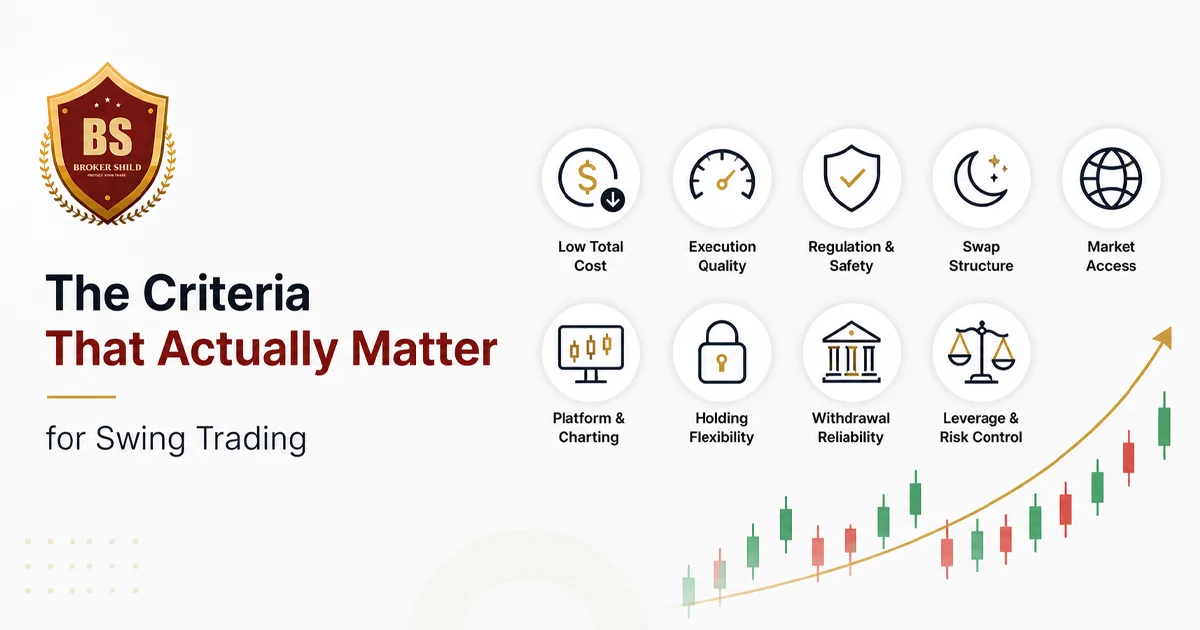
Start by confirming which legal entity will hold your account. Many global brokers operate several regulated entities, and your country determines which one applies. Two traders can open with the same brand and still receive different protections, leverage limits, or product access.
This is especially important for traders in regions where broker availability changes by jurisdiction. A broker may look excellent on paper, but if your local entity offers weaker protections or fewer instruments, the headline review does not tell the full story.
For swing traders, total cost is the real metric. Entry and exit costs matter, but financing can quietly become the bigger issue. If you trade forex CFDs, stock CFDs, or indices and hold them through multiple sessions, compare swap rates or overnight charges with the same care you give spreads.
This is where account type matters too. A raw spread account with commission may suit active swing traders who want tighter pricing on liquid markets. A spread-only account can be easier to understand, but not always cheaper.
Most swing traders do not need institutional software. They do need a platform that is stable, easy to navigate, and strong enough for chart-based decision making. Good order management, mobile access, alerts, and support for common indicators are usually more important than flashy extras.
If you use MetaTrader, cTrader, TradingView integration, or a proprietary platform, the key question is simple: can you analyze, execute, and manage positions without friction? If not, the broker is adding risk to your process.
Swing traders are not as execution-sensitive as scalpers, but poor fills still matter. Slippage around volatile events, rejected orders, and delayed execution can distort entries and exits. This is especially relevant if you place stop orders around breakouts or trade around macro catalysts.
A broker does not need to promise perfect execution. It needs to show consistent and reliable trade handling under normal conditions.
A broker may be excellent for forex and weak for stocks. Another may offer broad multi-asset access but higher trading costs on currencies. There is no universal winner across every strategy.
Country availability also matters. Payment methods, account currencies, local restrictions, and support coverage can all affect the actual user experience. A broker that works smoothly in Europe may feel very different for a trader in India, Nigeria, the UAE, or Brazil.
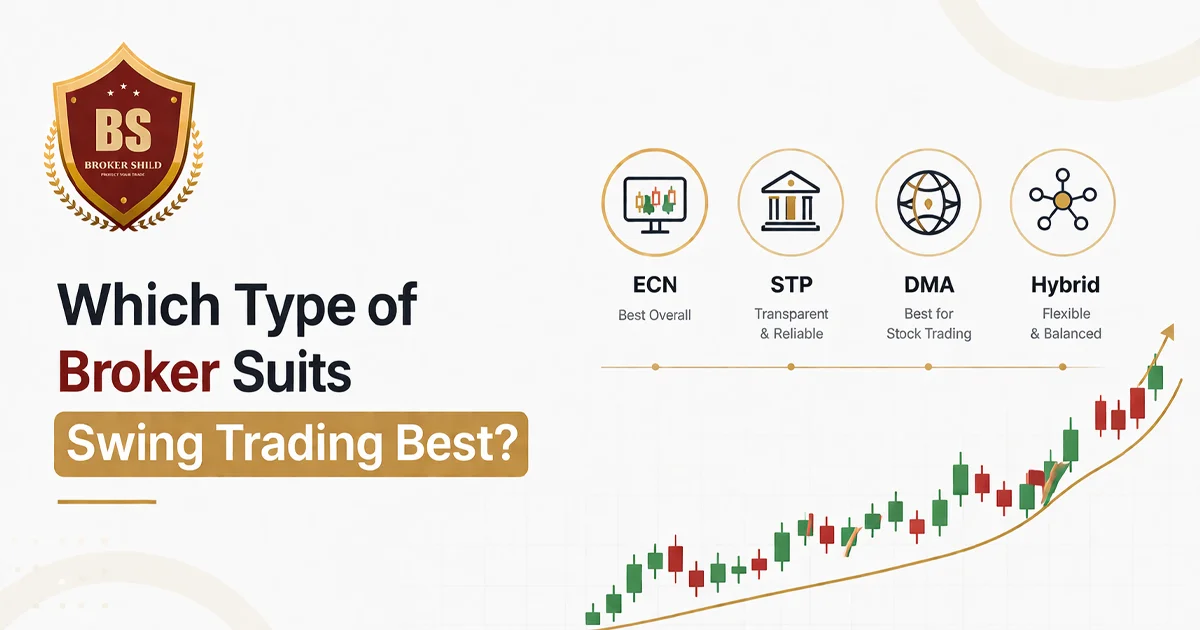
The answer depends on what you trade.
If your focus is forex swing trading, prioritize strong regulation, competitive spreads on major pairs, manageable overnight costs, and reliable platform support. For traders who mainly hold EUR/USD, GBP/USD, USD/JPY, or gold for several days, fee structure and execution consistency usually matter more than access to hundreds of niche instruments.
If you trade indices or commodities, check financing costs carefully. Index CFDs and commodities can be effective for swing trading, but overnight charges vary widely between brokers. A slightly wider spread may be acceptable if holding costs are more reasonable.
If you swing trade stocks, market access and pricing structure become more nuanced. Some traders prefer real shares for longer holding periods, while others use CFDs for flexibility and leverage where permitted. The better choice depends on your region, risk tolerance, and expected holding time.
For beginners, the best broker for swing trading is often the one that makes basic decisions easier: clear pricing, straightforward account types, decent educational support, and fewer operational surprises. Advanced traders may care more about platform depth, execution detail, and product range. Neither group benefits from choosing based on marketing slogans.
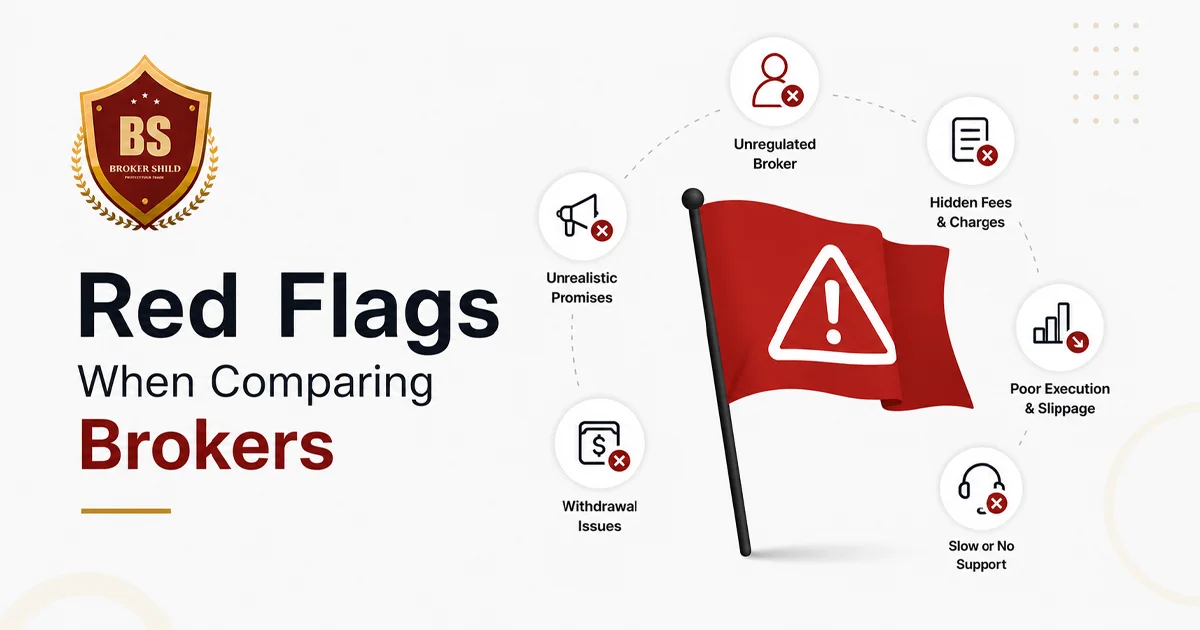
A broker can look competitive on a comparison table and still be a poor fit in practice. One common issue is pricing that looks attractive until you factor in swap rates, inactivity rules, or less favorable conditions on the instruments you actually trade.
Another problem is overemphasis on leverage. Swing traders should treat leverage as a risk tool, not a selling point. Higher leverage does not improve broker quality. In many cases, it simply increases the cost of a weak decision.
Support quality is another overlooked factor. You may not contact support often, but when funding, verification, or platform issues appear, response quality matters. Slow or unclear support is not just inconvenient. It can affect execution, withdrawals, and risk management.
Finally, be cautious with broad claims like lowest fees, fastest execution, or best platform without context. Useful comparisons are specific. They explain where a broker performs well, where it is average, and who it suits best.
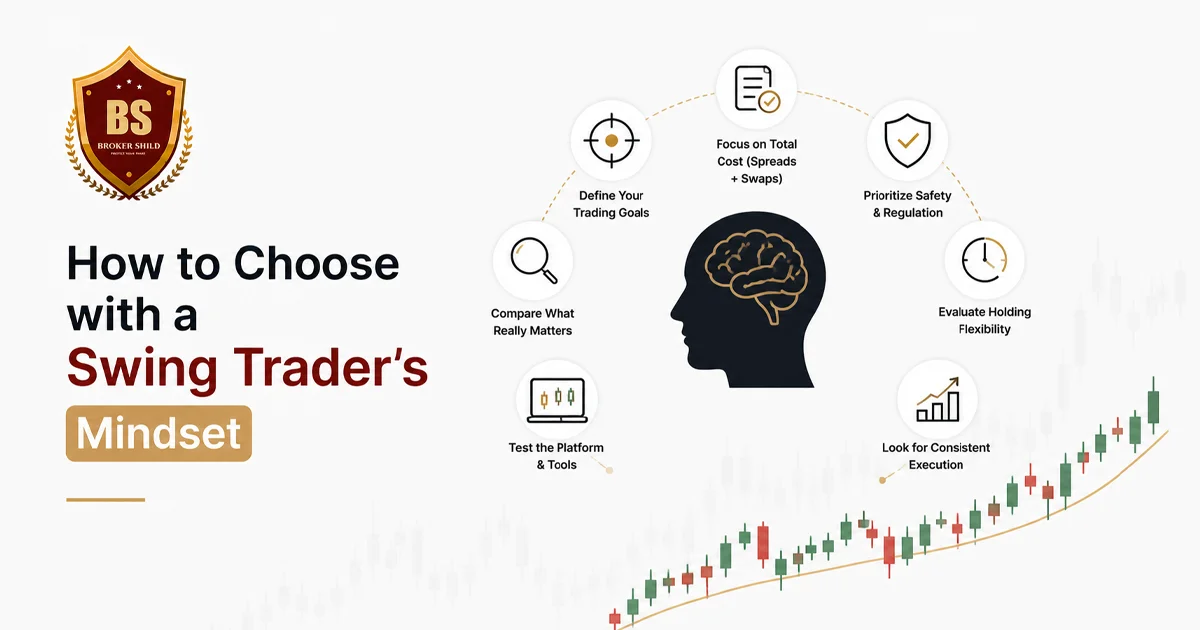
The most effective approach is to compare brokers against your actual trading behavior, not an idealized version of it.
If you usually hold trades for two to five days, review overnight fees on the instruments you trade most. If you depend on mobile charting and alerts, test the mobile platform before funding heavily. If you trade only major forex pairs, do not overpay for a broker whose main advantage is broad stock coverage.
It also helps to think in terms of friction. A strong swing trading broker reduces unnecessary friction in research, execution, funding, and position management. It should not force you to work around confusing pricing, weak charting, or unclear account terms.
This is where a criteria-based review process matters. Platforms like Brokshield are useful because they focus on real broker conditions, regulatory coverage, and structured comparisons instead of generic rankings. For skeptical traders, that kind of filtering saves time and reduces avoidable mistakes.
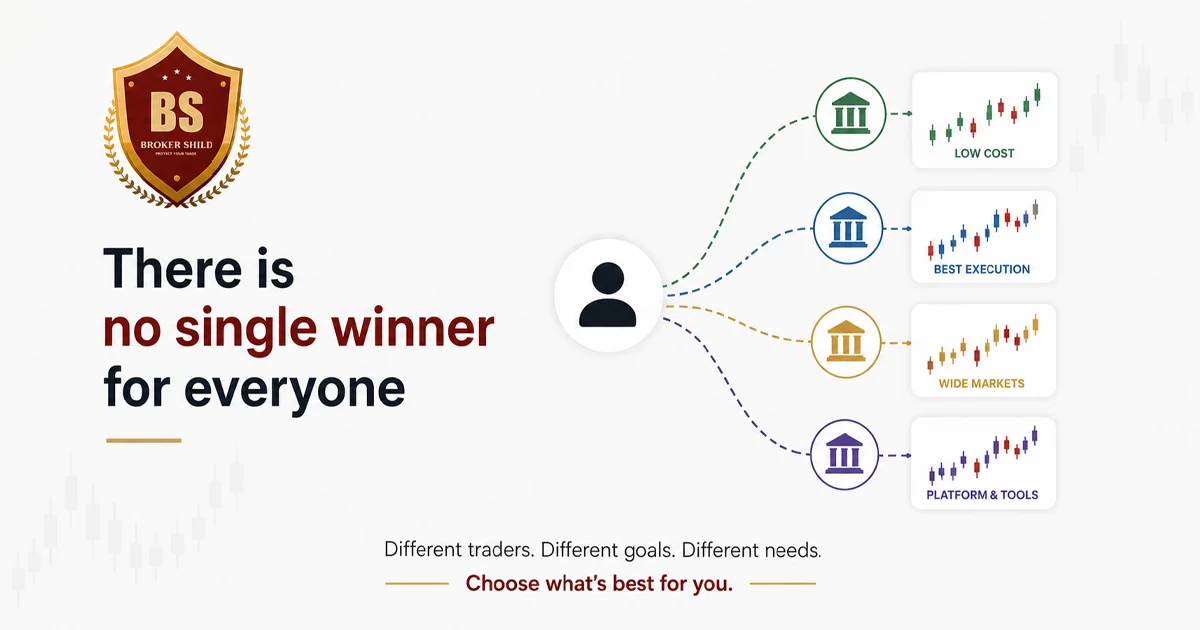
The best broker for swing trading is the one that fits your market, holding period, country, and risk profile with the fewest compromises.
For some traders, that means tighter forex pricing under a strong regulator. For others, it means broader multi-asset access, better stock market coverage, or a platform that makes trade management easier over several days. The right choice is rarely the loudest brand or the one with the most aggressive advertising.
A better broker decision usually comes from asking more specific questions. What do you trade most often? How long do you hold? Which regulated entity will serve your account? What does the full cost look like after three nights, not just at entry?
When you compare brokers through that lens, the shortlist usually gets much clearer. And that is the real goal – not finding a perfect broker, but finding one that supports your process without adding avoidable risk.

Emma Thompson

Robert Walker