
Scalping exposes broker quality faster than almost any other trading style. When your average trade may last seconds or minutes, a small spread increase, a delayed fill, or a restrictive execution policy can turn a workable setup into a bad trade. That is why finding the best forex broker for scalping is less about brand recognition and more about trading conditions you can actually verify.
A lot of brokers claim to support scalping. That statement alone means very little. The real question is whether the broker’s pricing, execution model, platform setup, and regulatory standing fit short-holding-period trading without creating unnecessary friction. For scalpers, the difference between a usable broker and an expensive one often shows up in details that casual traders overlook.
 The first factor is total trading cost. Scalpers usually place many trades, so costs compound quickly. A broker with raw spreads but high commissions may not be cheaper than a broker with slightly wider all-in pricing. What matters is the effective cost per round trip on the pairs you actually trade, during the hours you actually trade.Execution quality matters just as much. Fast execution sounds good in marketing copy, but scalpers need more than a vague promise. You want a broker that handles frequent entries and exits without imposing dealing desk friction, excessive requotes, or unusual execution delays in active market conditions. Slippage will always exist, especially around volatility, but the pattern matters. Occasional slippage is normal. Consistent slippage in one direction is a warning sign.Platform compatibility is another practical filter. Many scalpers use MetaTrader, cTrader, or proprietary platforms with one-click trading, depth of market, detachable charts, and stable order handling. If your method depends on fast manual execution or automated strategies, platform performance is not a side issue. It is part of the cost structure.Then there is policy risk. Some brokers allow scalping in theory but restrict strategies that resemble latency arbitrage, very high-frequency execution, or certain forms of automation. Others may widen spreads materially during sessions that matter most to intraday traders. The best setup is not simply a broker that says yes to scalping. It is a broker whose terms, infrastructure, and historical trading conditions align with how scalpers actually trade.Start with regulation and broker credibility. Low costs do not compensate for weak oversight, poor transparency, or unclear client fund protections. Traders in different regions also need to check whether a broker legally accepts clients from their country and under which entity the account will be opened. This matters because leverage, protections, and product access can differ by jurisdiction.Next, compare pricing in context. Looking at a published minimum spread is not enough. Scalpers should focus on average spreads on major pairs, commission per lot, and whether spreads stay competitive during the London and New York overlap when liquidity is deeper. A broker that advertises near-zero minimum spreads but widens sharply during active sessions may not be competitive in real use.Execution data is harder to verify, but there are still useful signals. Look for clarity on execution type, availability of market execution, support for VPS hosting if you run automated systems, and whether the broker discloses order handling practices. If a review process includes live testing, compare actual fills and order responsiveness under normal market conditions, not just demo account behavior.Funding and withdrawal policies also deserve attention. For scalpers, cash access may not affect every trade, but it affects account management and trust. Delays, high conversion costs, or limited local payment methods can create friction, especially for traders in regions where international transfers are less convenient.Customer support is often ignored until something breaks. For short-term traders, that can be costly. A broker with responsive support and clear escalation paths is generally safer than one with attractive pricing but inconsistent service.
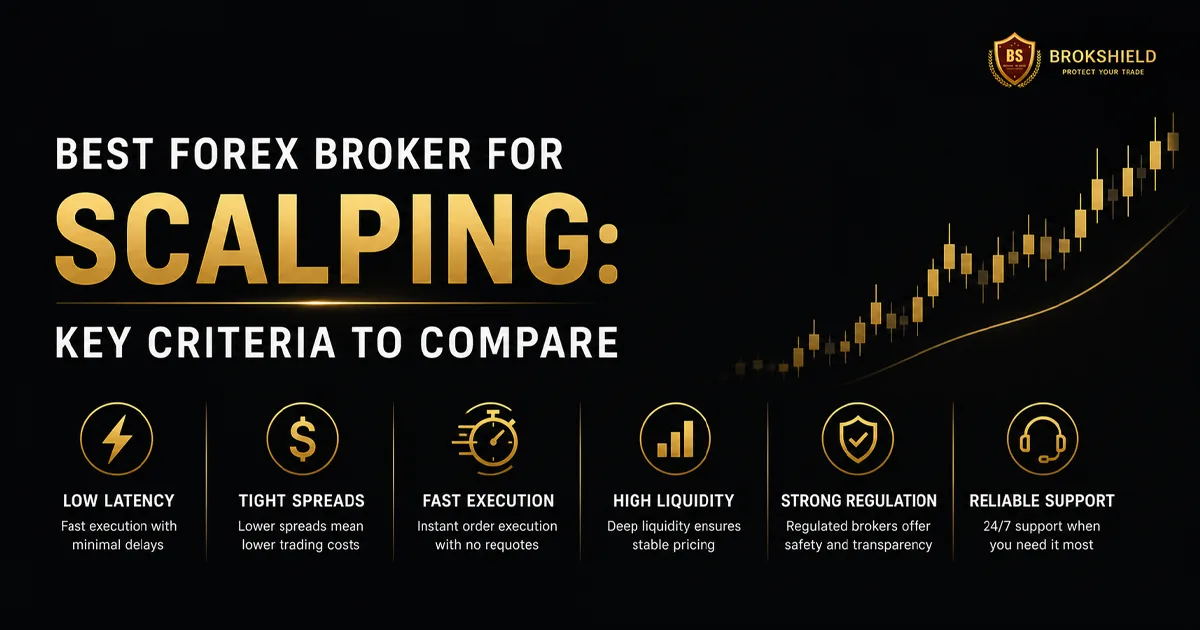 A practical comparison should focus on six areas: regulation, all-in cost, execution quality, platform support, instrument range, and account rules. The weight of each factor depends on your method.If you scalp only EUR/USD and GBP/USD manually during liquid sessions, spreads, commission, and platform speed may dominate your decision. If you run automated systems across forex and indices, VPS compatibility, order handling, and platform stability may matter more. If you trade from a country with tighter payment or regulatory constraints, local availability may become the deciding factor even when another broker looks slightly better on paper.This is where many rankings become less useful. There is rarely one universal best forex broker for scalping for every trader. There is usually a best fit based on region, strategy, and cost profile. A broker with excellent cTrader conditions may not be the strongest choice for someone who needs broad MetaTrader ecosystem support. Another broker may offer strong raw pricing but weaker asset coverage or more limited funding methods.
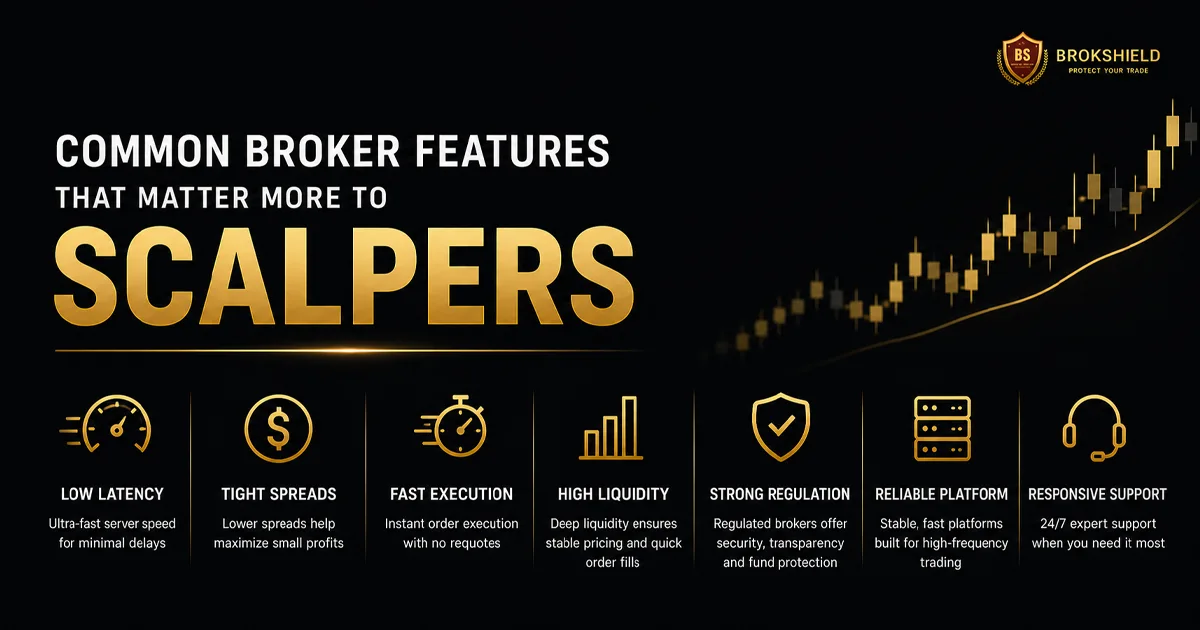 Low latency is helpful, but it should not be confused with guaranteed execution outcomes. The path between your device, the platform, and the broker’s infrastructure affects speed, which is why some traders use VPS hosting near the trading server. For manual scalpers, stable one-click execution and clean order ticket design can matter just as much as raw milliseconds.Depth of market can also be useful, especially on platforms designed for active traders. It does not automatically create an edge, but it can improve visibility into available pricing and order placement. For traders who work with partial exits or fast entries during momentum moves, this becomes more relevant.Order types are another overlooked area. Scalpers often need precise stop-loss and take-profit handling, along with the ability to enter and exit quickly without extra confirmation windows. A platform that introduces friction at the order stage may be acceptable for swing trading, but not for very short-term trading.Swap rates are less important for classic intraday scalpers who close positions quickly, but they still matter if trades are occasionally held longer than planned. That is especially true when volatility changes your exit timing.
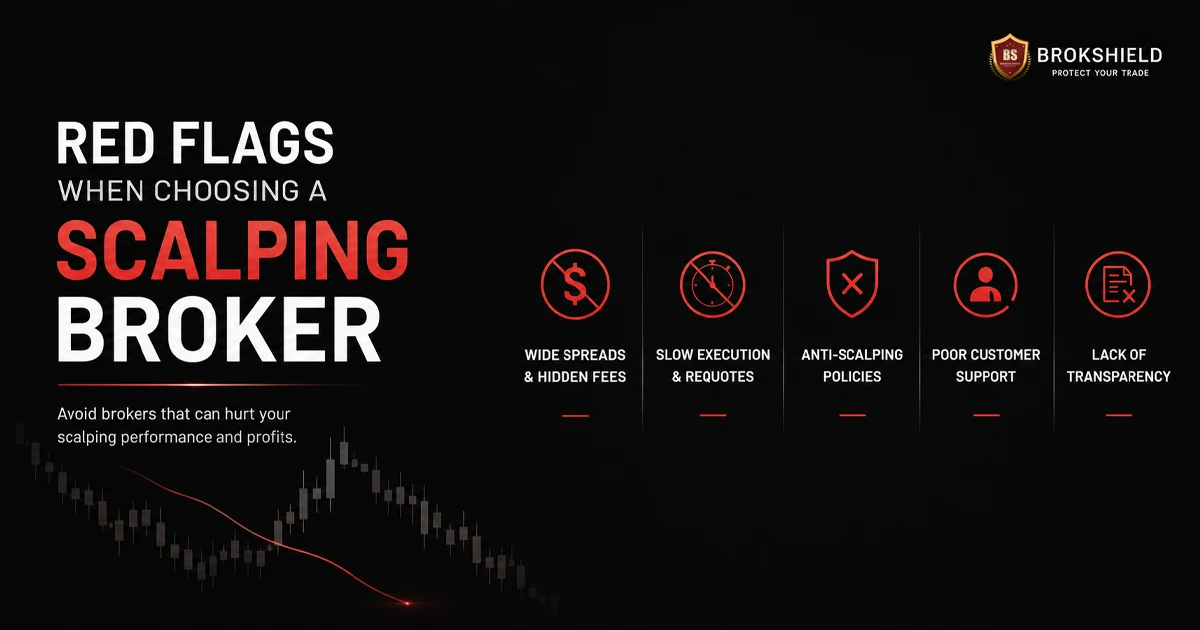 Be cautious with brokers that rely heavily on vague claims such as ultra-fast execution or institutional pricing without showing enough detail on account structure or commissions. Marketing language is easy to produce. Consistent trading conditions are harder to maintain.Another red flag is poor transparency around account types. If the broker makes it difficult to understand the difference between spread-only and commission-based pricing, or if fee disclosures are incomplete, cost comparison becomes unreliable. That is a problem for any trader, but especially for scalpers because small pricing differences compound.Watch for inconsistent country availability and entity disclosures. Global brokers often operate multiple regulated entities, and the conditions offered to traders in Europe may differ from those in Africa, Asia, or Latin America. If a review does not clearly separate those conditions, the comparison can become misleading.Also pay attention to platform restrictions. Some brokers support expert advisors, while others limit certain automation styles. Some allow hedging, while others do not under specific entities. These are not minor details if your strategy depends on them.
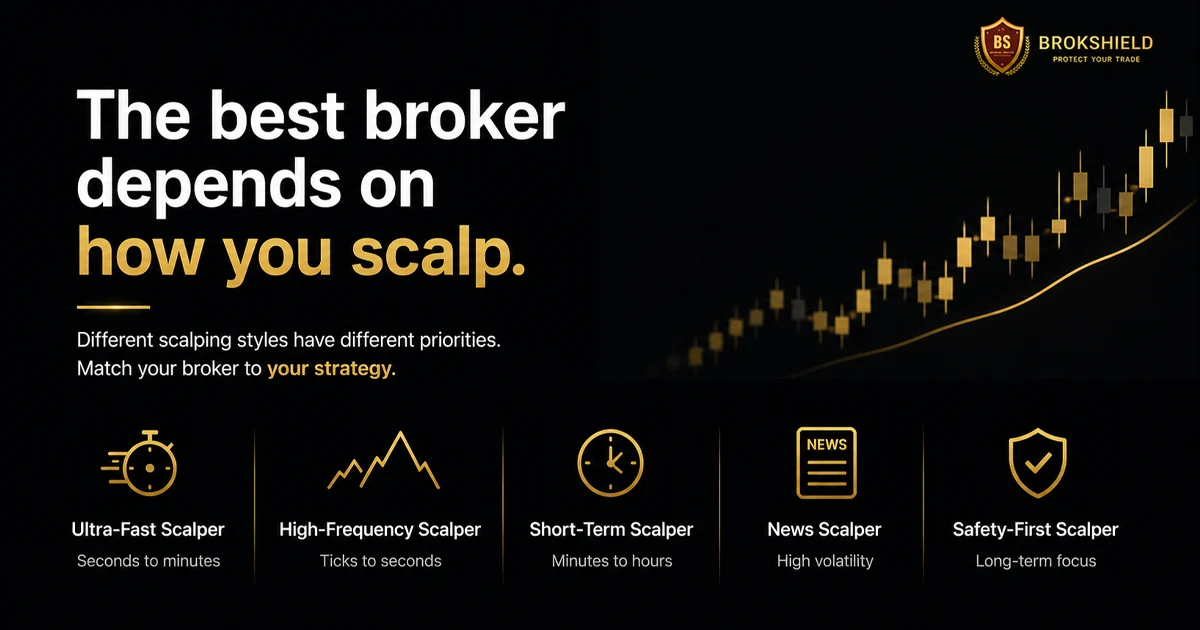 A manual news scalper, a London session momentum trader, and an automated mean-reversion trader do not need exactly the same broker. News-focused scalpers may care more about execution behavior during volatility than headline spreads. Momentum traders may prioritize liquid-session pricing and chart responsiveness. Automated traders will usually care more about uptime, VPS compatibility, and stable order handling over time.This is why a criteria-based approach works better than a simple one-size-fits-all ranking. Brokshield’s comparison style is useful here because it focuses on measurable broker conditions rather than generic claims. For scalpers, that approach is not just cleaner editorially. It leads to better decisions.If you are narrowing your options, test the broker the way you plan to trade. Use the platform you intend to use, trade the instruments you actually follow, and pay attention to average cost, fill quality, and ease of execution over several sessions. A broker can look excellent on a spec sheet and still feel inefficient in live conditions.The right choice is usually the broker that stays competitive when your strategy is under pressure, not the one with the most aggressive homepage claim. For scalpers, that difference is everything.
Emma Thompson

Robert Walker