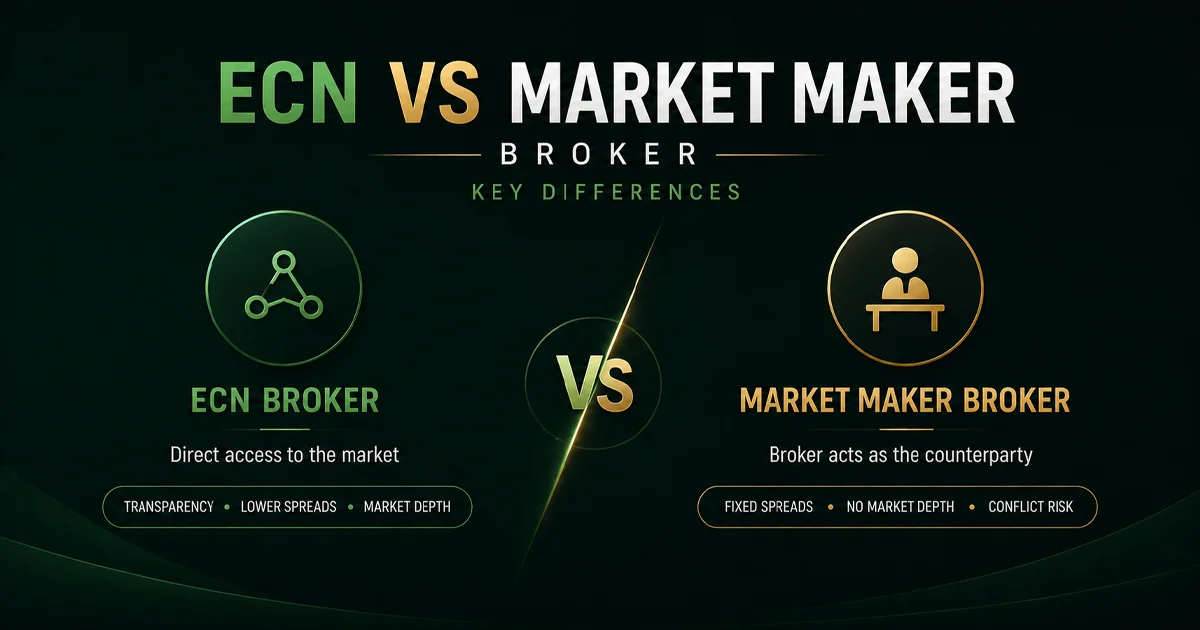
If two brokers show the same EUR/USD pair on the same platform, the trading experience can still be very different. That is the real issue behind the ECN vs. market maker broker debate. The label affects pricing, order handling, trading costs, and sometimes even how transparent the broker is about execution.
For traders comparing brokers, this matters less as a marketing term and more as a practical filter. A broker can advertise tight spreads, fast execution, and low minimum deposits, but those claims only mean something when you understand how orders are being processed in the first place.
At a basic level, an ECN broker routes orders into a network of liquidity providers, where prices come from external market participants. A market maker broker typically sets its own bid and ask prices and may internally take the other side of client trades or manage exposure in-house.
That sounds simple, but real-world broker models are not always cleanly divided. Some brokers operate as hybrids. They may use market making for smaller accounts and STP or ECN-style routing for larger or more active clients. This is why the broker’s execution policy, pricing structure, and regulatory standing matter more than the headline label alone.
For the trader, the most noticeable difference usually shows up in spread behavior, commissions, slippage, and execution consistency during volatile periods.
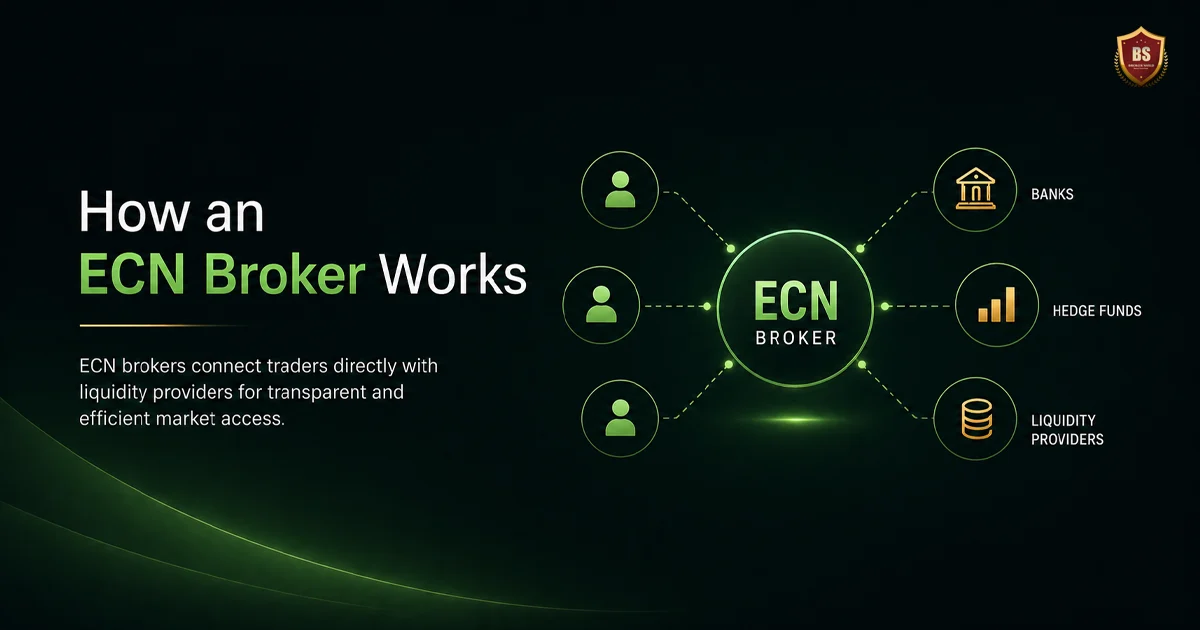
An ECN, or electronic communication network, connects participants such as banks, liquidity providers, and other market actors. In this setup, the broker generally acts as an intermediary, giving the trader access to prices coming from outside sources rather than creating a dealing desk price internally.
With an ECN model, spreads are often variable and can become very tight during liquid market hours. On major forex pairs, the raw spread may fall close to zero at times, but the broker usually charges a separate commission per trade. This is why a low spread alone does not tell you the full cost.
ECN brokers are often preferred by scalpers, intraday traders, and experienced users who care about raw pricing and execution detail. However, variable spreads can widen sharply during major news releases or low-liquidity sessions. That can make costs less predictable than they first appear.
Another point is order execution. ECN environments can allow both positive and negative slippage because orders interact with available market liquidity. For some traders, that is a sign of a more market-based execution process. For others, it introduces uncertainty they would rather avoid.
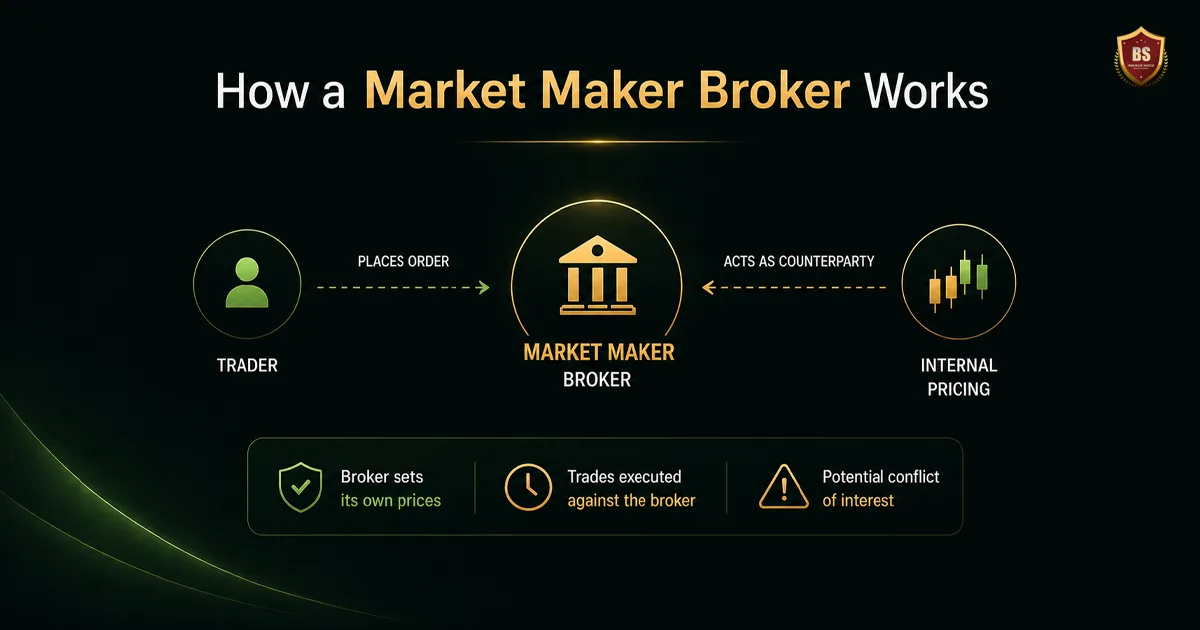
A market maker broker provides its own prices and stands ready to buy or sell to clients. In practice, this can create a smoother and more controlled trading environment, especially for retail traders with small position sizes.
Market makers often offer fixed spreads or relatively stable variable spreads, at least under normal market conditions. Many beginner-friendly brokers use this model because it supports simpler pricing, lower minimum deposits, and easier account structures. In some cases, trading costs are built into the spread, so there may be no separate commission.
The concern many traders raise is conflict of interest. If the broker may take the other side of the trade, the assumption is that the broker benefits when the client loses. That concern is not unreasonable, but it should not be treated as automatic proof of poor conduct. A well-regulated market maker can still offer fair pricing, reliable execution, and strong client protections.
On the other hand, a poorly supervised broker can misuse either model. That is why regulation and execution quality matter more than the sales language around “no dealing desk” or “institutional pricing.”
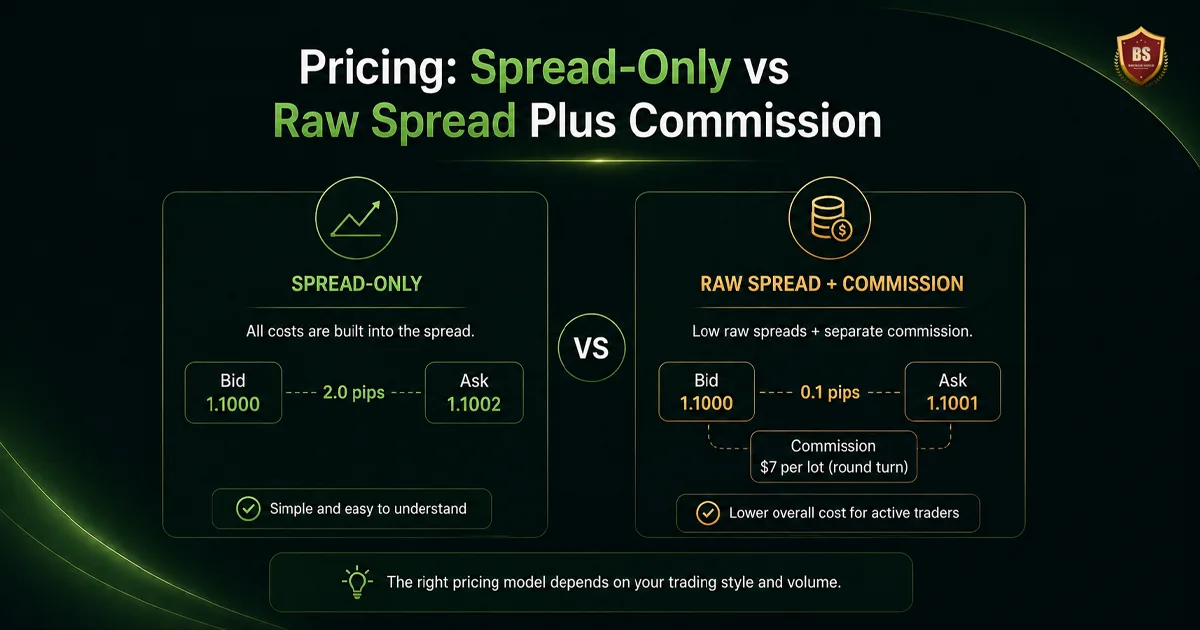
For most traders, cost comparison starts here. Market maker brokers commonly bundle their fee into the spread. That makes pricing easier to understand, especially for new traders. If EUR/USD is quoted at 1.2 pips with no commission, the cost is visible upfront.
ECN brokers usually separate the spread from the commission. You might see a 0.1 pip raw spread, but once commission is added, the all-in cost may be similar to or only slightly better than a market maker account.
This is where many comparisons go wrong. A raw spread is not the same as the total trading cost. To compare brokers properly, you need the average spread during your trading hours, the commission per lot, and any extra platform or swap costs if you hold positions overnight.
For low-frequency traders, the difference may be small. For scalpers and high-volume traders, even a fraction of a pip can have a material effect over time.

A broker’s execution model tells part of the story. Execution quality tells the rest.
An ECN setup can look attractive on paper, but if the broker has poor liquidity relationships, weak infrastructure, or slow order processing, the benefit of raw spreads can disappear quickly. Likewise, a market maker broker can provide consistent fills and stable pricing that suit many retail traders better than a technically superior but less predictable ECN environment.
This is why serious broker evaluation should look at slippage patterns, rejection rates, requotes, order speed, and behavior during high-impact events. Some market maker brokers are known for clean retail execution. Some ECN-branded brokers still deliver inconsistent fills. The branding alone is not enough.
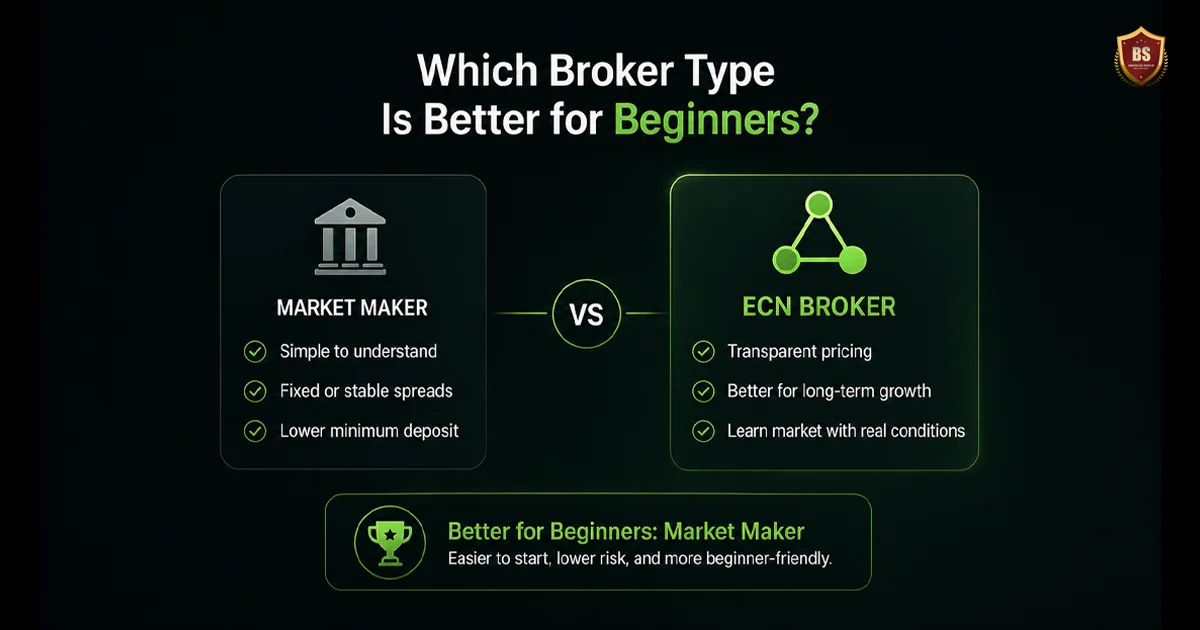
For many beginners, a market maker broker is easier to start with. The pricing is often simpler, minimum deposits are lower, and account conditions may be more forgiving. If the broker is well regulated and transparent about fees and execution, that can be a sensible entry point.
Beginners do not always benefit from raw spreads if they are also dealing with commission calculations, variable spread shocks, and fast-changing execution conditions. Simplicity has value when you are still learning position sizing, platform navigation, and risk management.
That said, a beginner should not choose a market maker just because it seems easier. The broker still needs credible regulation, clear client fund safeguards, and a verifiable operating history.
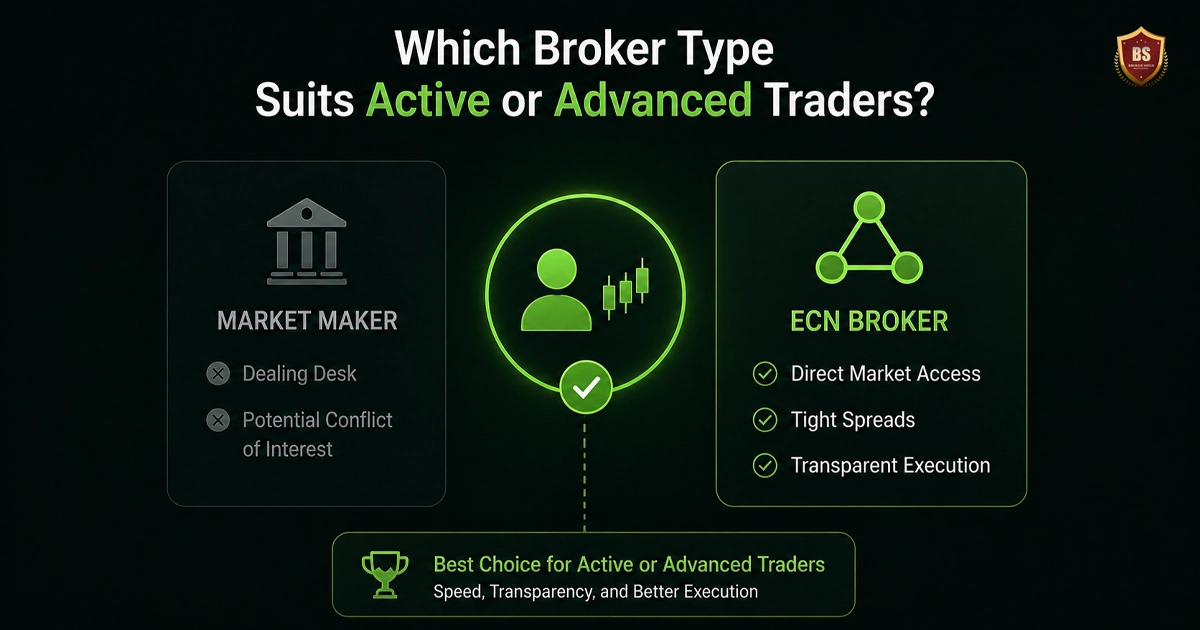
Active traders often lean toward ECN-style accounts because they want tighter market pricing and fewer questions around dealer intervention. This is especially true for scalpers, algorithmic traders, and users who trade during liquid sessions and monitor execution metrics closely.
But even here, it depends on strategy. If your system depends on predictable transaction costs, a fixed-spread or stable-spread market maker may sometimes be easier to model than a raw-spread account that widens aggressively during volatility.
Advanced traders should also check whether the broker allows their trading style without restrictions. Some brokers discourage scalping, news trading, or certain automated strategies, regardless of whether they call themselves ECN or market makers.

The safest approach is not to assume one model is honest and the other is risky. Instead, check the same core factors every time.
Start with regulation in a recognized jurisdiction and verify that the legal entity serving your country is the one actually holding your account. Then review the broker’s execution policy, average spread data, commission schedule, and negative balance protection if applicable.
It also helps to look for clarity around order types, slippage disclosures, and whether the broker publishes meaningful information about how trades are handled. Vague language is rarely a good sign. Transparent brokers explain their model in plain terms.
For global traders in regions where broker access varies by country, local availability and legal onboarding rules matter too. A broker that looks strong in one jurisdiction may offer very different protections in another.
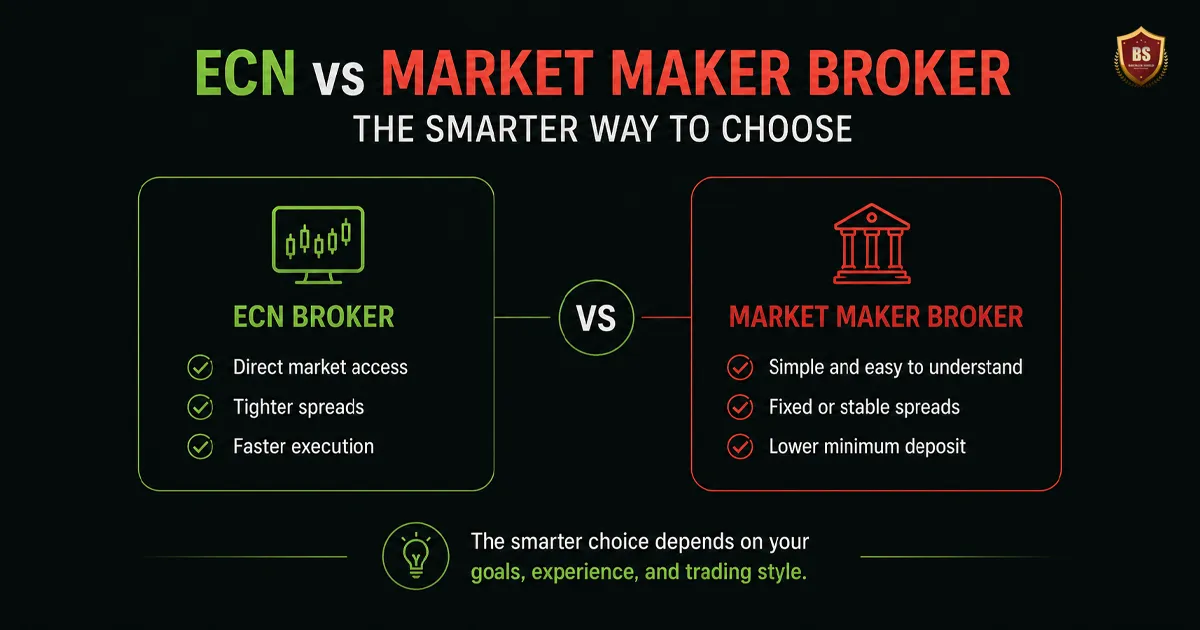
The better question is not which label sounds more professional. It is which broker delivers the best combination of regulation, pricing, execution, and transparency for your trading style.
If you trade frequently, compare all-in costs and execution behavior under real market conditions. If you are newer to the market, prioritize clarity, platform reliability, and strong oversight over advanced branding terms. If a broker uses a hybrid model, that is not automatically a problem as long as it is explained clearly and supported by consistent trading conditions.
At Brokshield, this is exactly where data matters. A broker should be judged by what traders can verify, not by whichever execution label is most marketable.
A good broker model is the one you can understand, measure, and trust before your money ever reaches the platform.

Emma Thompson

Robert Walker