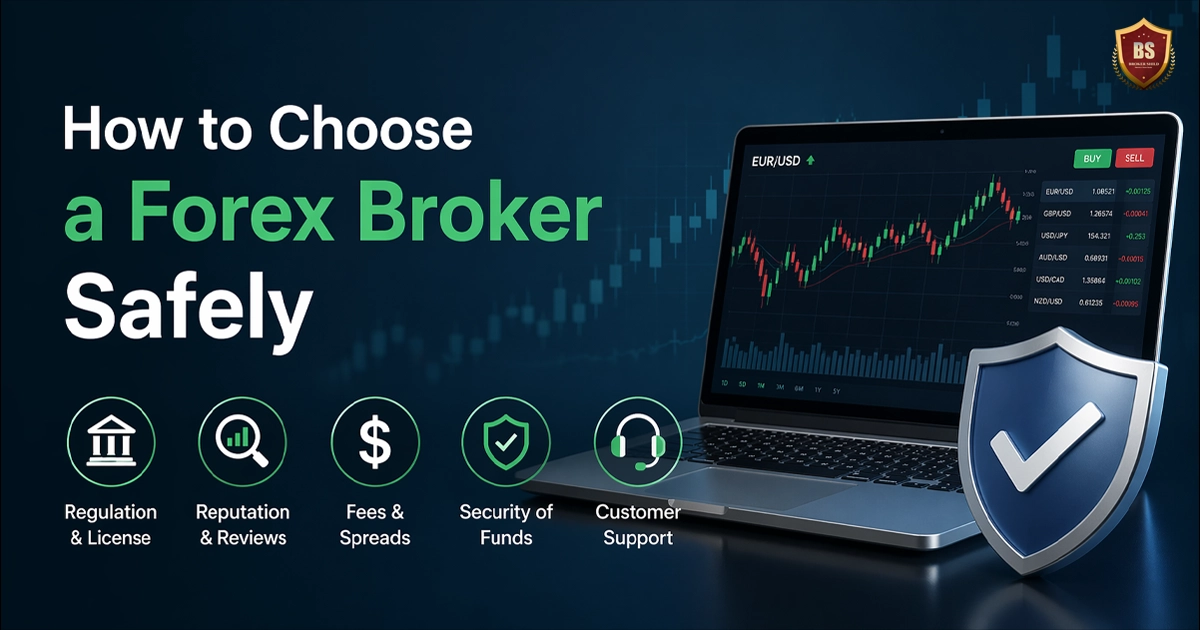
A broker can look polished, promise tight spreads, and advertise fast execution – then fail where it matters most: regulation, withdrawals, or basic account reliability. That is why learning how to choose a forex broker starts with risk control, not marketing. Before you compare platforms, bonuses, or trading tools, you need to confirm that the broker is legally available in your country, properly regulated, and structured to handle client money responsibly.
For many traders, the biggest mistake is starting with the wrong question. They ask, “Which broker has the lowest spread?” when they should ask, “Which broker can I trust with my deposit?” A low-cost broker that is poorly supervised can become expensive very quickly. On the other hand, a well-regulated broker with slightly higher trading costs may be the better choice if it offers stronger client protections, cleaner execution, and fewer operational surprises.
Regulation is the first filter because it tells you whether the broker operates under a recognized legal framework. In the US, forex trading rules are stricter than in many other markets, and not every global broker can legally onboard US clients. That alone makes country-specific availability a critical part of broker selection.
A regulated broker is not automatically a great broker, but an unregulated or weakly regulated broker should usually be removed from consideration immediately. You want to verify who licenses the broker, which entity will hold your account, and whether that entity is approved to serve clients in your jurisdiction. Some broker groups operate several subsidiaries, and the protections can differ depending on which entity you join.
This is where many traders get caught out. They see a trusted brand name, but their account is actually opened under an offshore arm with different rules, fewer protections, or weaker dispute handling. If you are in the US, you also need to confirm that the broker is authorized to accept US clients rather than simply accessible online.
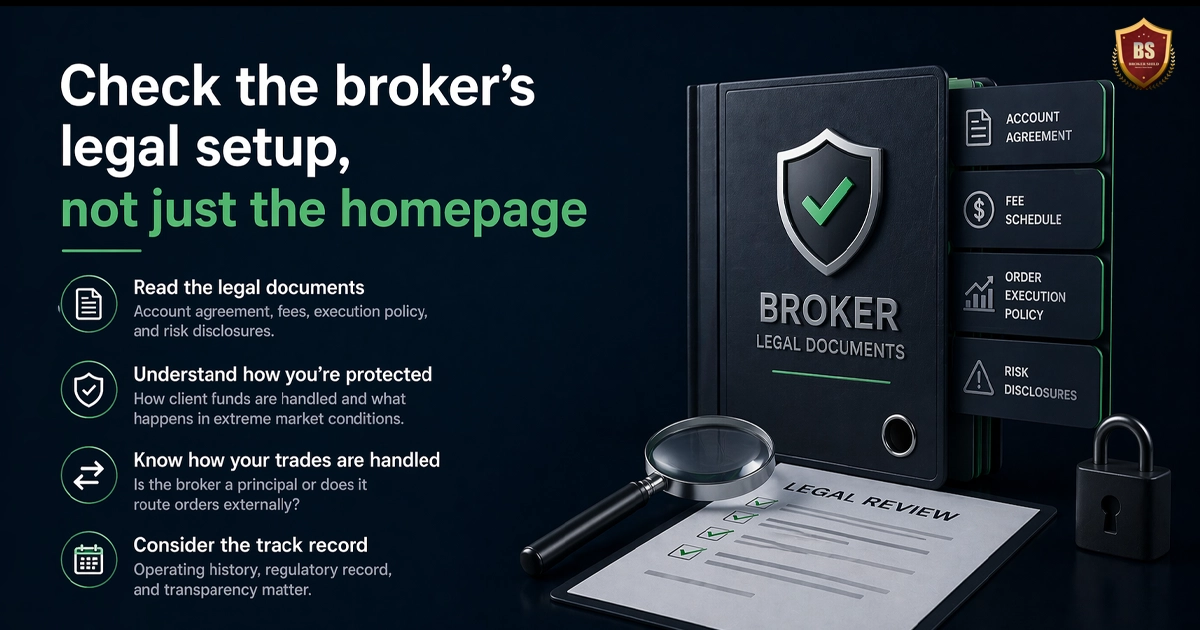
A broker’s homepage is marketing. The legal documents tell the real story. You should review the account agreement, fee schedule, order execution policy, and risk disclosures before funding an account. That may sound excessive, but hidden costs and operational limits often appear in the fine print.
Look for clarity on how client funds are handled, what happens during extreme market volatility, and whether the broker acts as principal to your trade or routes orders externally. Neither model is automatically bad, but the broker should explain it clearly. A vague or evasive broker is already giving you useful information.
Operating history matters too. A broker with a long track record, a stable brand presence, and a consistent regulatory record usually deserves more trust than a newly launched platform with aggressive promotions. That does not mean older is always better. It means you should weigh survival, transparency, and supervision more heavily than branding.
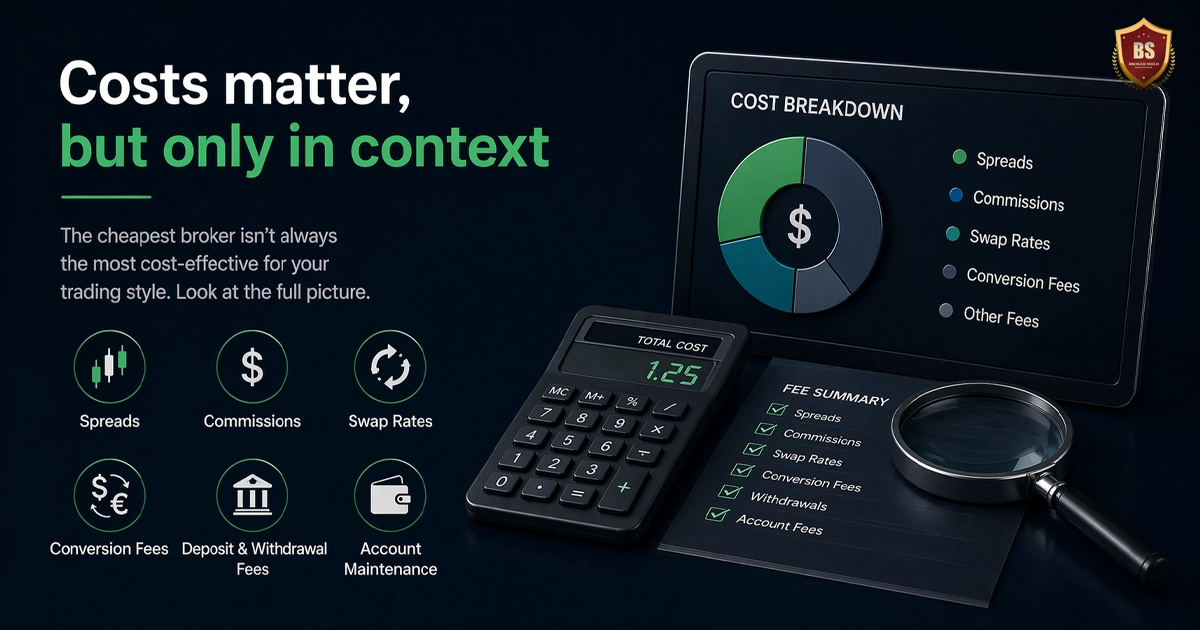
Trading costs are a major part of broker selection, but they should be measured correctly. Spread-only pricing can look simple, while commission-based pricing can be cheaper for some strategies. The right choice depends on how often you trade, what pairs you trade, and whether you hold positions overnight.
If you scalp or trade actively, execution quality and average all-in cost matter more than a headline minimum spread. If you trade less often, inactivity fees, deposit and withdrawal costs, or overnight financing may have a bigger impact than a fraction of a pip on EUR/USD.
When comparing costs, focus on the full picture: spreads, commissions, swap rates, conversion fees, and any charges tied to withdrawals or account maintenance. Brokers sometimes compete hard on one visible number while recovering revenue elsewhere. A platform with “zero commission” pricing can still be expensive if spreads widen frequently or if non-trading fees are high.
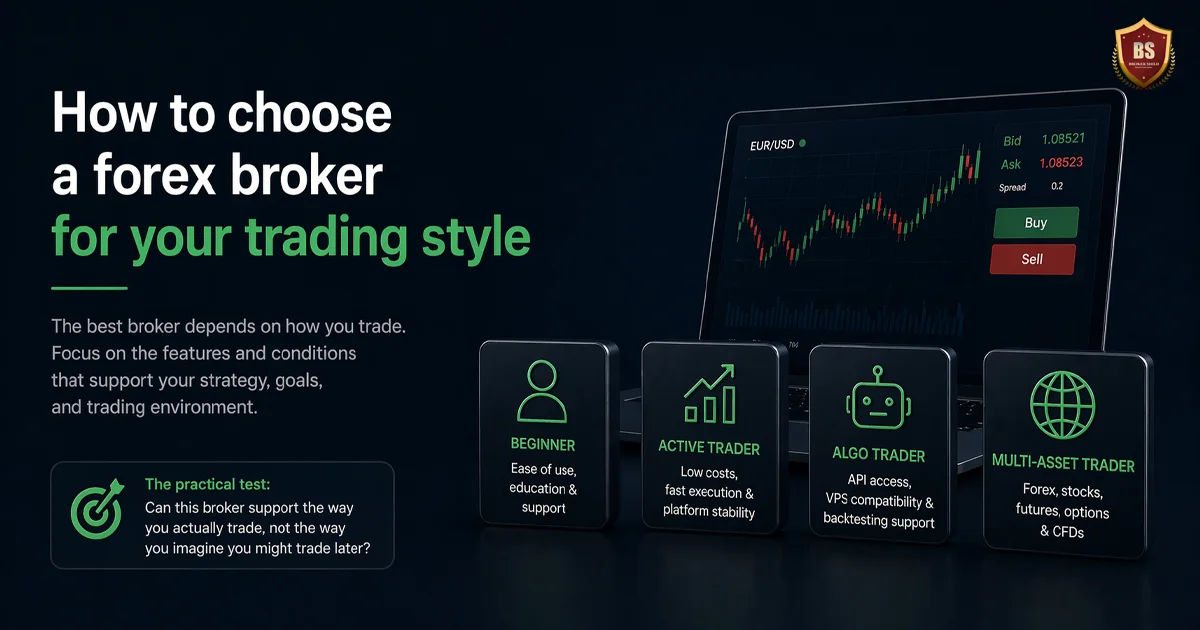
The best broker for a beginner is not always the best broker for an experienced short-term trader. This is where many rankings become less useful. Broker quality is not one-size-fits-all.
If you are new to forex, ease of use matters. You may benefit from a simpler platform, a reasonable minimum deposit, strong educational support, and responsive customer service. Research tools and account clarity are often more valuable than advanced order types you may never use.
If you trade frequently, platform stability, execution speed, order controls, and cost consistency become much more important. If you use automated systems, you will need to check whether the broker supports your software environment, VPS compatibility, or API access. If you plan to trade multiple asset classes, then forex should not be evaluated in isolation. You should look at the broker’s stock, futures, options, or CFD access based on what is legally available in your country.
The practical test is simple: can this broker support the way you actually trade, not the way you imagine you might trade later?
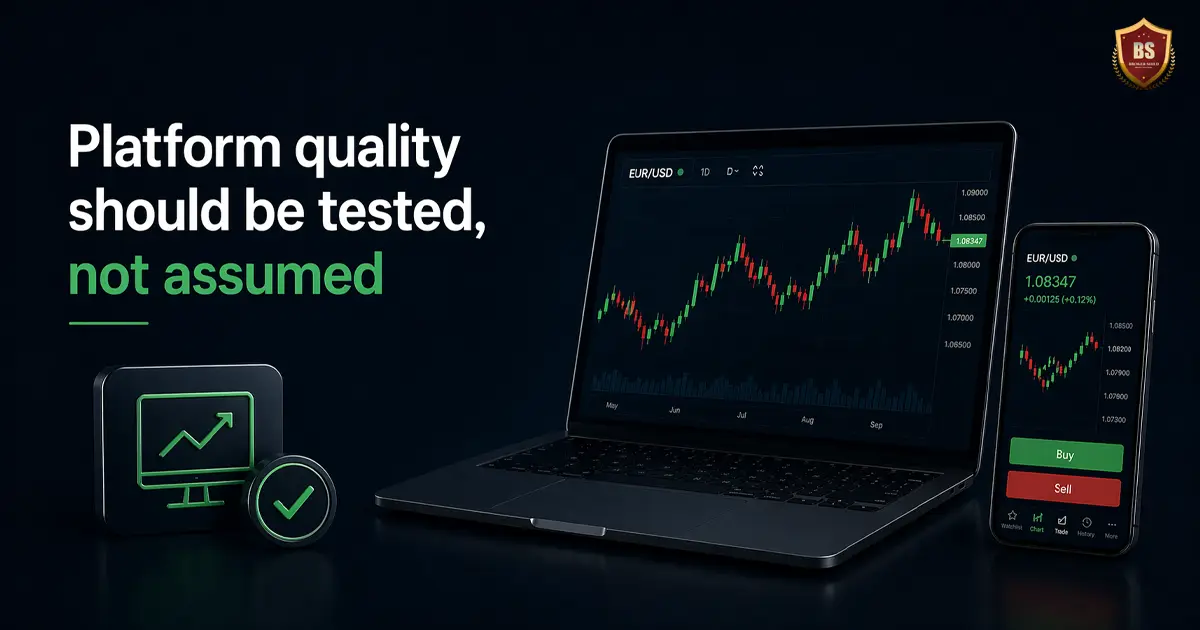
A recognizable platform name does not guarantee a good trading experience. Brokers can offer the same front-end platform but differ significantly in pricing, execution, available instruments, and support quality. That is why platform testing matters.
Use a demo account if available, but do not stop there. Demo trading can help you review charting, order entry, watchlists, and mobile usability, but it will not always reflect live spreads, slippage, or withdrawal processes. If a broker passes your initial checks, a small live account often reveals much more than a demo.
Pay attention to practical details. Is the platform stable during busy market periods? Are orders easy to modify? Are margin requirements clear? Can you find fee information without hunting through menus? Friction in these basic areas tends to become more frustrating once money is on the line.
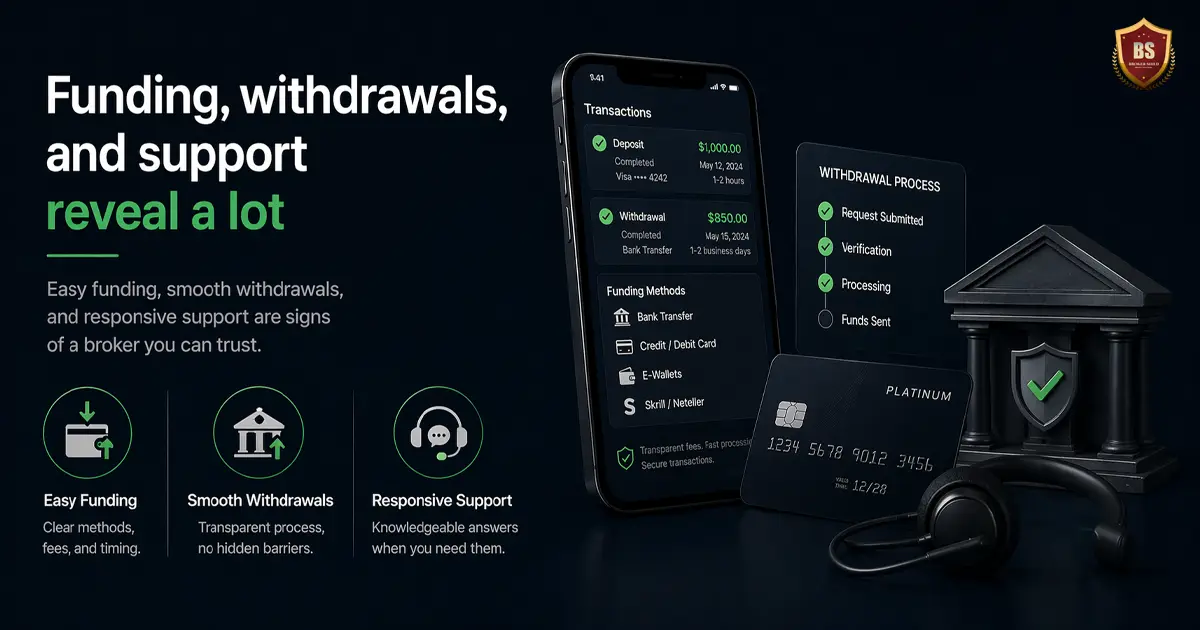
Some of the most serious broker complaints are not about charts or spreads. They are about getting money out. That is why deposit and withdrawal testing is a critical part of evaluating a broker.
A trustworthy broker should state funding methods, expected processing times, and any fees clearly. Delays can happen, especially around compliance checks, but repeated friction, vague explanations, or changing requirements are warning signs. The withdrawal process should feel controlled, not adversarial.
Customer support is another useful stress test. You do not need perfect service, but you do need competent service. Ask a few specific questions before opening an account. For example, ask which entity will hold your account, what protections apply in your jurisdiction, and how rollover costs are calculated. The quality of the answers often tells you how the broker treats clients after onboarding.

Some warning signs should carry more weight than an attractive offer. These include unclear regulation, unrealistic promotions, aggressive sales contact, hard-to-find fee disclosures, and inconsistent legal language across the website and account documents.
Be cautious with brokers that rely heavily on incentives to get deposits through the door. Forex trading already carries substantial risk. A broker that leads with pressure, urgency, or oversized promises is not behaving like a serious financial institution.
Reviews can help, but they should be interpreted carefully. A handful of angry comments does not prove misconduct, and a page full of glowing testimonials does not prove trustworthiness. The more reliable approach is to compare public reputation against verifiable facts: regulation, disclosures, operating history, and firsthand account testing. That research-driven approach is one reason some traders use platforms like BrokShield when narrowing down regulated brokers by country and trading needs.
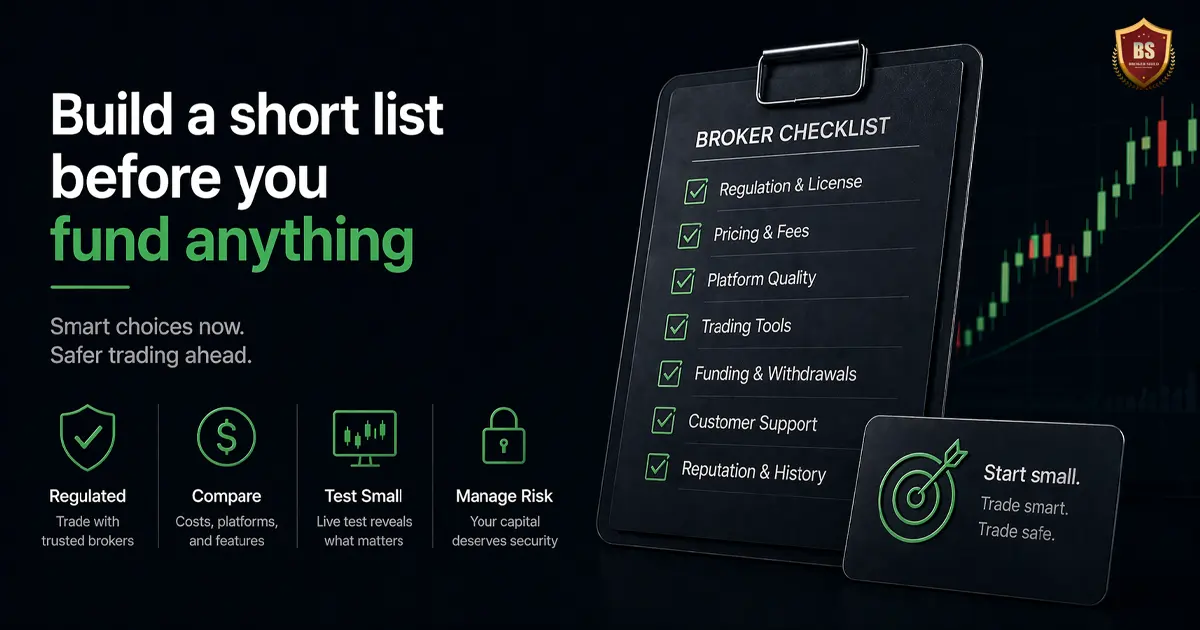
A smart selection process usually ends with two or three candidates, not ten. Once you have filtered for legal availability, regulation, pricing structure, platform fit, and funding reliability, the decision becomes clearer.
At that stage, compare the trade-offs honestly. One broker may have lower costs but weaker platform tools. Another may offer stronger research and support but require a higher minimum deposit. The right answer depends on what you value most and what risks you are trying to avoid.
If you are still unsure, start small. No rule says your first deposit must be large. A modest live test can tell you more about execution, support quality, and withdrawal handling than hours of reading marketing copy.
The safest way to choose is to treat broker selection like due diligence, not shopping. A forex broker is not just a platform you use. It is a financial counterparty you rely on when markets move fast, and mistakes get expensive.

Emma Thompson

Robert Walker