A broker can look competitive on the surface and still be the wrong fit once you check execution, funding rules, or whether the account is even available in your country. That is why a solid forex broker selection guide starts with verification, not features. If you compare brokers in the right order, you can rule out weak options quickly and focus on the ones that match your trading needs.
Most traders make the same early mistake. They compare spreads first, or they choose based on a familiar brand name, a bonus, or a polished website. Those details matter, but they matter after the basics are confirmed. Broker selection is really a risk-filtering process. You are not just choosing where to place trades. You are choosing where to hold funds, how orders are handled, and what practical limitations you may face when markets move fast.
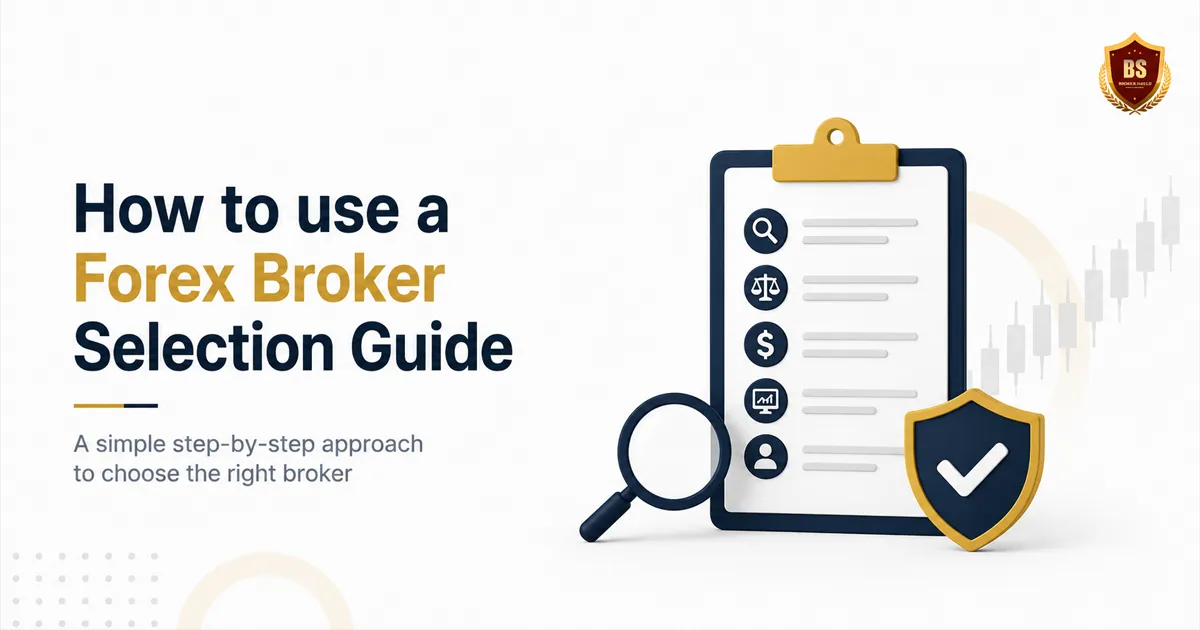
The most reliable way to compare brokers is to move from trust factors to trading conditions, then to usability. In plain terms, start with regulation and legal availability, then review costs and execution, and only then look at platforms, tools, and extras.
This order matters because a broker with attractive pricing is still a poor choice if the entity serving your region has weak oversight or limited client protections. The same applies to the product range. A broker may offer forex, indices, commodities, and crypto CFDs, but that variety means little if withdrawals are slow or customer support is hard to reach when there is a problem.
For beginners, this process reduces the chance of choosing based on marketing. For experienced traders, it creates a cleaner way to compare like for like. A scalper, a swing trader, and a multi-asset trader can all use the same framework, but they will weight the factors differently.
The first question is simple: which legal entity will hold your account, and who regulates it? Many brokers operate under multiple entities. The protections, leverage limits, product access, and complaint channels can differ depending on your country of residence.

A broker regulated by a recognized authority generally offers a stronger baseline of accountability than one operating through lightly supervised offshore structures alone. That does not mean every offshore entity is automatically unsafe, and it does not mean every major license guarantees a perfect client experience. It does mean regulation should be treated as the starting point for due diligence.
You should also check whether client fund segregation is clearly stated, whether negative balance protection applies, and whether compensation arrangements exist under the relevant entity. These are not minor details. They affect what happens if something goes wrong.
Country-specific availability is equally important. Traders in India, Southeast Asia, MENA, Africa, Europe, and Latin America often face different payment options, onboarding restrictions, and product limitations. A broker that serves one region well may offer a weaker setup elsewhere. Good comparisons reflect the conditions available to your country, not generic global claims.
Regulation tells you that a broker operates within a supervisory framework. It does not tell you that spreads are competitive, execution is consistent, or support is responsive. That is why regulation is necessary, but not sufficient.
Think of it as the first filter. Once a broker passes that filter, the next step is checking how it performs in real trading conditions.
Pricing is where many comparisons become too shallow. A broker with low advertised spreads can still be expensive once commissions, swap rates, conversion charges, and non-trading fees are included. If you only compare the headline spread on EUR/USD, you may miss the bigger cost picture.
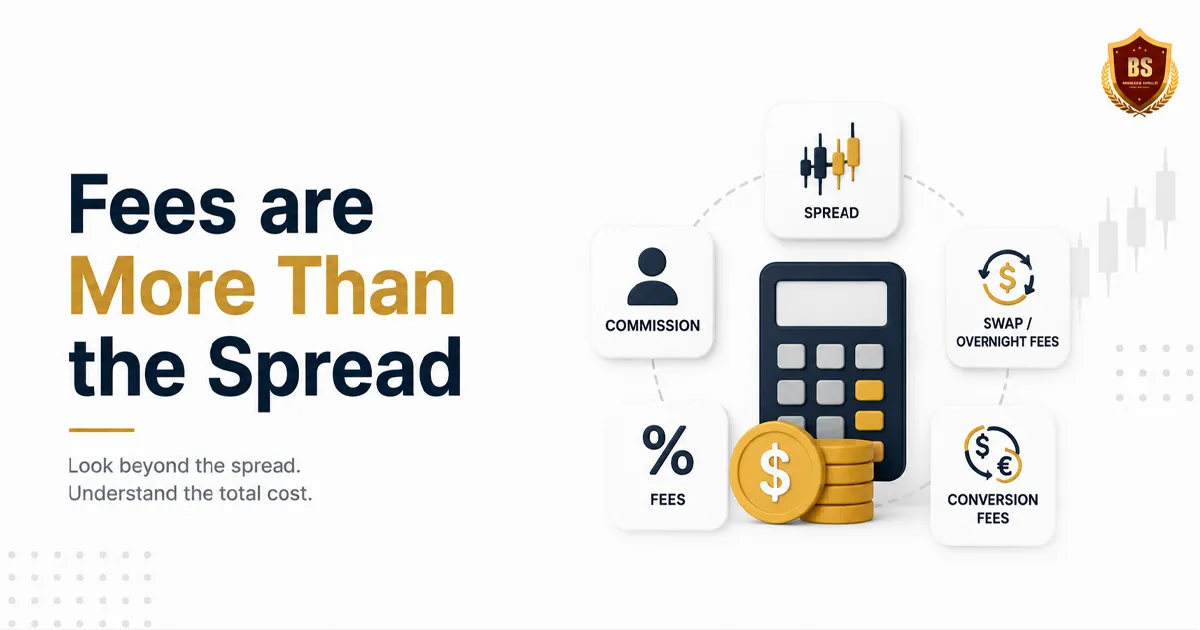
The right cost structure depends on how you trade. For high-frequency traders, the spread-plus-commission model deserves close attention because even small differences add up quickly. For swing traders, overnight financing may matter more than a slight spread advantage. For traders funding in a different base currency, conversion costs can become an ongoing drag.
Deposits and withdrawals also deserve a practical review. Some brokers support efficient local payment methods in one country but offer only costly or slow international transfers in another. A low-cost trading account can become inconvenient if moving money in and out is difficult.
When comparing fees, look at the total trading cost under your typical strategy, not the cheapest number shown on a homepage.
Execution is harder to evaluate than fees, which is exactly why it matters. Brokers can advertise fast execution and tight spreads, but your real experience depends on slippage, order handling, liquidity conditions, and how the platform performs during volatility.
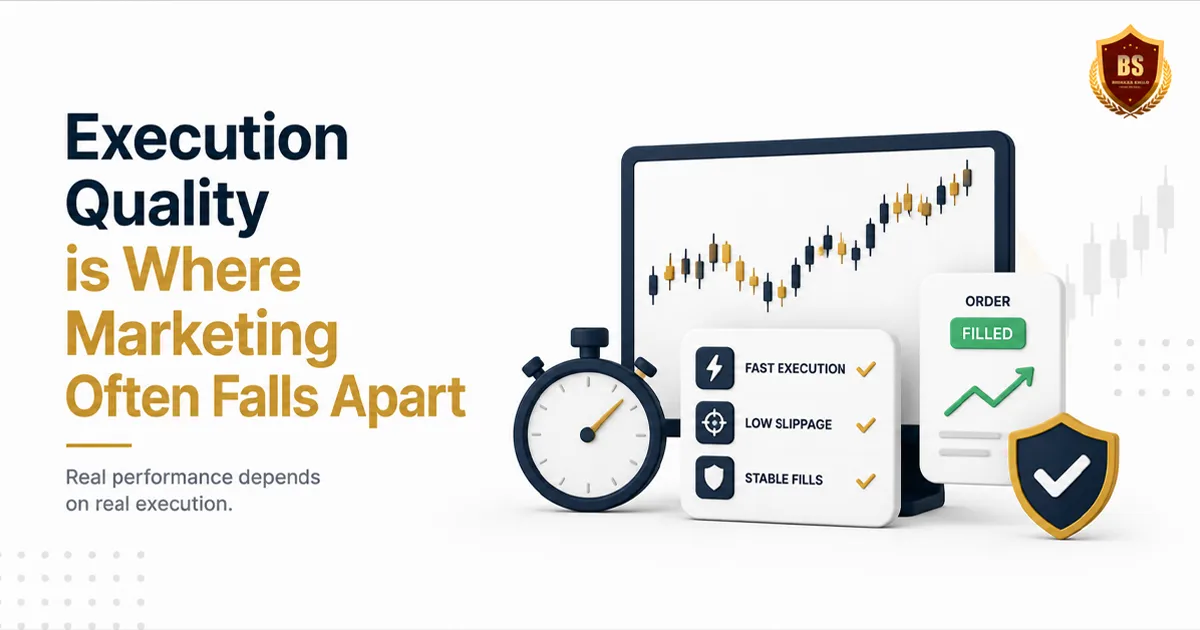
For scalpers and intraday traders, execution quality can be as important as price. Delays, excessive requotes, or inconsistent fills can change the economics of a strategy. For longer-term traders, execution may be less sensitive on each trade, but it still matters during news events or when managing risk around stop-loss orders.
This is one area where hands-on testing helps. A demo account can show you the platform layout, but a live account often reveals more about spread stability, order speed, and funding reliability. The key is to test with realistic expectations. No broker delivers perfect fills in all market conditions. What you are looking for is consistency, transparency, and no obvious mismatch between claims and actual trading behavior.
Platform choice is not just a matter of preference. It affects workflow, charting, automation, mobile usability, and how quickly you can react to the market.
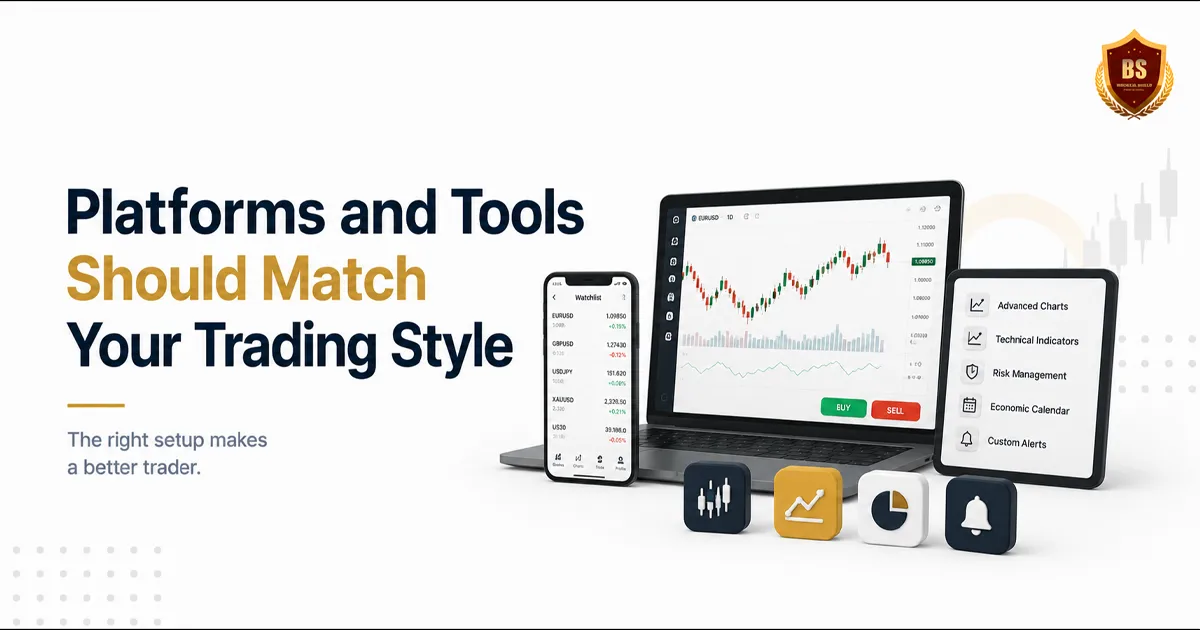
Some traders want the familiarity of MetaTrader. Others care more about advanced charting, order types, copy trading features, or integrated research. There is no universal best platform. The better question is whether the broker supports the tools your strategy actually requires.
A beginner may benefit from a clean interface, clear risk controls, and a strong educational structure. An advanced trader may care more about platform stability, VPS compatibility, API access, or depth of market features. The mistake is choosing based on feature volume rather than feature relevance.
It is also worth checking how consistent the experience is across desktop, web, and mobile. Many traders manage positions on mobile even if they analyze on desktop. If the mobile app is limited or unreliable, that becomes part of the broker assessment.
A broad list of instruments can be useful, especially for traders who want access to forex plus indices, commodities, stocks, or crypto CFDs. Still, more is not always better. If your focus is on major and minor currency pairs, the quality of forex conditions matters more than the size of the full catalog.
Pay attention to the instruments you are actually likely to trade. Check average spreads, margin requirements, trading hours, and whether those instruments are available under your local entity. Product range can help differentiate brokers, but only after the core broker quality is confirmed.
Customer support is often ignored until there is a problem. That is a mistake. A broker may look efficient during signup and still become frustrating when you need help with verification, withdrawals, or platform issues.
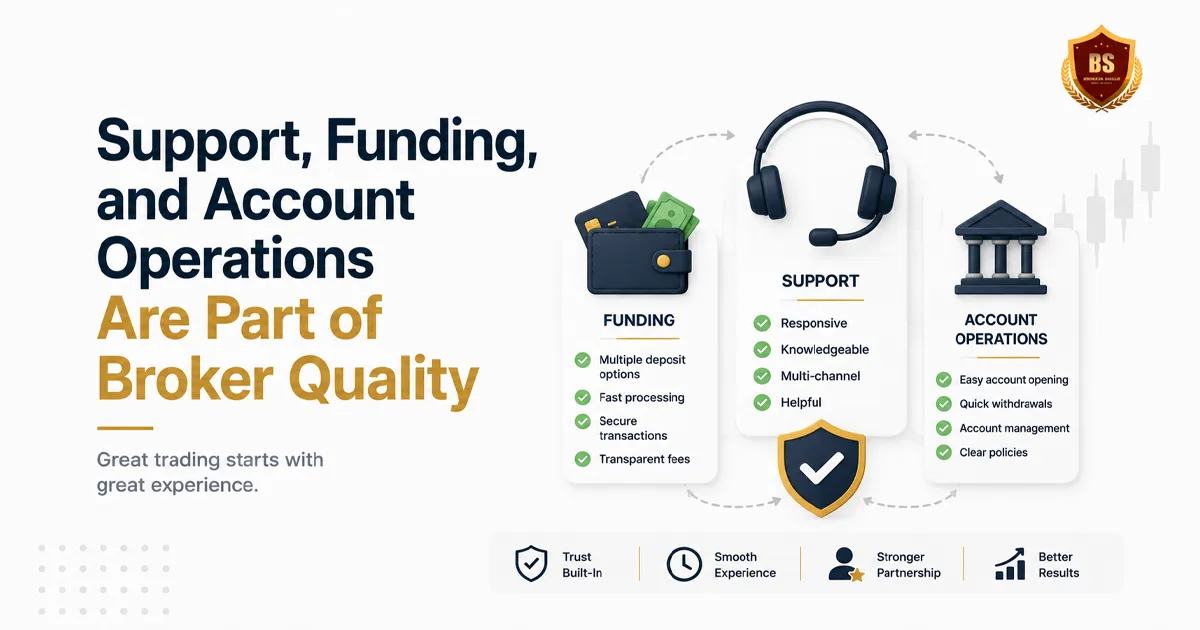
Responsive support, clear documentation, and straightforward account procedures matter because they reduce operational risk. The same applies to funding methods. Local bank transfers, card support, and region-specific payment systems can make a major difference, especially for traders outside the US and Western Europe.
This is where a structured comparison platform such as Brokshield can be useful. The value is not just listing broker features. It is separating marketing claims from verifiable conditions and country-specific realities.
Before opening an account, confirm five things. First, the broker entity serving your country is properly regulated and clearly identified. Second, the total cost fits your strategy, including commissions and non-trading fees where relevant.
 Third, the platform supports your trading workflow on the devices you use. Fourth, funding and withdrawal methods are practical for your region. Fifth, support quality and account policies are clear enough that you know what to expect.
If two brokers look similar, the better choice is usually the one with clearer disclosures, more consistent conditions, and fewer unanswered questions. Small differences in transparency often matter more than small differences in headline pricing.
A good broker should not require guesswork. The right choice is rarely the one with the loudest message. It is the one that stands up to careful checking, fits the way you trade, and remains reliable after the signup process is over.

Emma Thompson

Robert Walker