A withdrawal request that sits in “pending” for days gets traders’ attention fast. Few issues damage confidence more quickly than forex broker withdrawal problems, because they affect the one part of trading that should be straightforward – getting your own money back. Sometimes the cause is administrative and fixable. Sometimes it points to weak internal controls, poor payment infrastructure, or a broker you should not trust with more capital.
The key is not to treat every delay as proof of misconduct, or every explanation as acceptable. A useful assessment starts with evidence: the broker’s stated withdrawal policy, the funding method used, verification status, processing timelines, and whether the delay is isolated or part of a pattern.
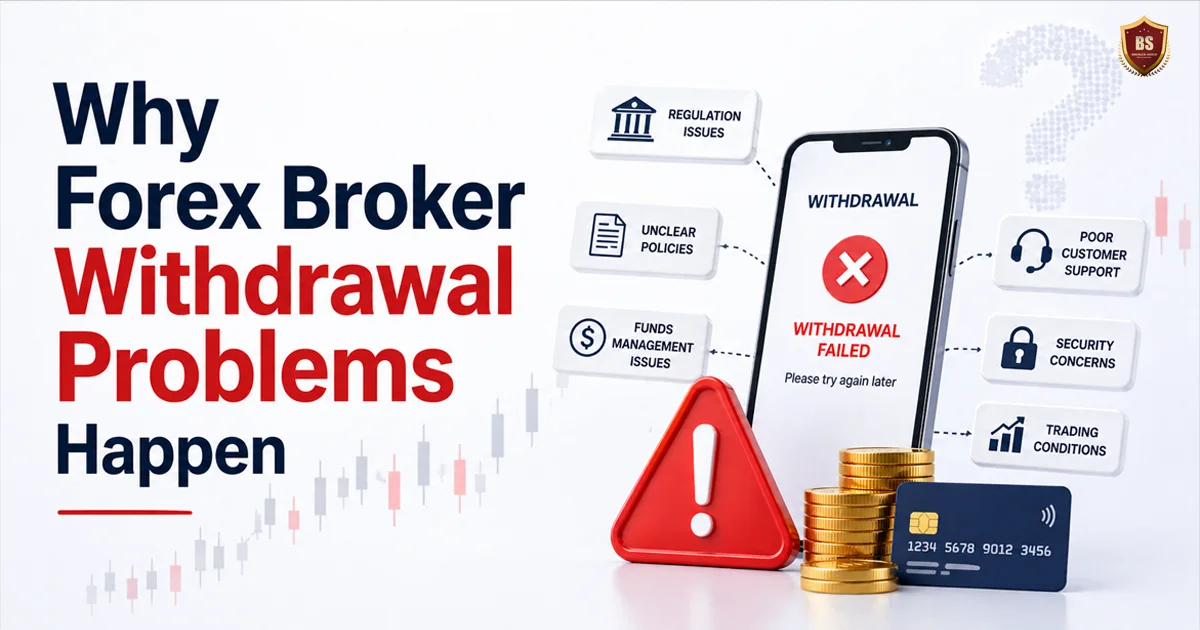
Not all withdrawal issues have the same meaning. In many cases, the first delay comes from compliance checks. Regulated brokers usually need completed KYC verification before releasing funds, and they may ask for updated documents if your ID expired, your address changed, or your payment method details do not match your account name. If you funded with a card and request withdrawal to a different destination, the broker may reject it until the audit trail is clear.
Payment rails also matter. Bank wire withdrawals tend to move more slowly than e-wallets, and cross-border transfers can add intermediary bank delays the broker does not fully control. Traders in regions with tighter banking restrictions or currency controls may face longer settlement times even with legitimate brokers.
Then there are operational problems. Some brokers process withdrawals only on business days, some review requests manually above certain thresholds, and some have weaker back-office systems than their marketing suggests. A broker can offer competitive spreads and still perform poorly when it comes to post-trade administration.
The more concerning category involves brokers that create friction selectively. This can look like repeated requests for the same documents, unexplained status changes, pressure to keep funds in the account, or support teams that stop giving direct answers once a large withdrawal is requested. A single delay does not prove intent. A pattern of obstruction does.
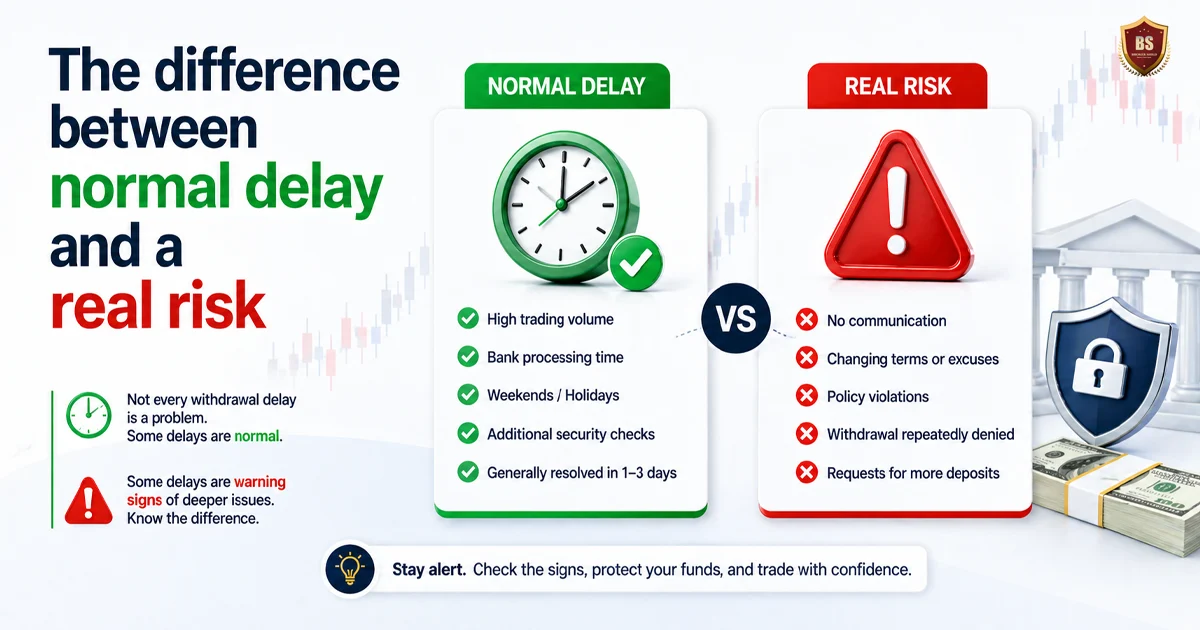
A normal delay usually has a clear reason, a defined timeline, and consistent communication. For example, if a broker states that card withdrawals are processed within one to three business days, asks once for a missing proof of address, and then completes the payment within that window, the issue is more administrative than structural.
A higher-risk situation tends to look different. The timeline keeps moving. The broker cites vague “security reviews” without specifying what is being checked. Support replies become generic. Your dashboard may show the request as approved while no funds arrive, or as pending without any date commitment. If the broker also has weak regulatory standing or limited transparency around legal entities, the withdrawal issue becomes more serious.
This is where context matters. A delay at a well-regulated broker with segregated client money rules and a documented payment process is not the same as a delay at an offshore entity with unclear oversight. The symptom may look similar to the trader, but the risk profile is not.
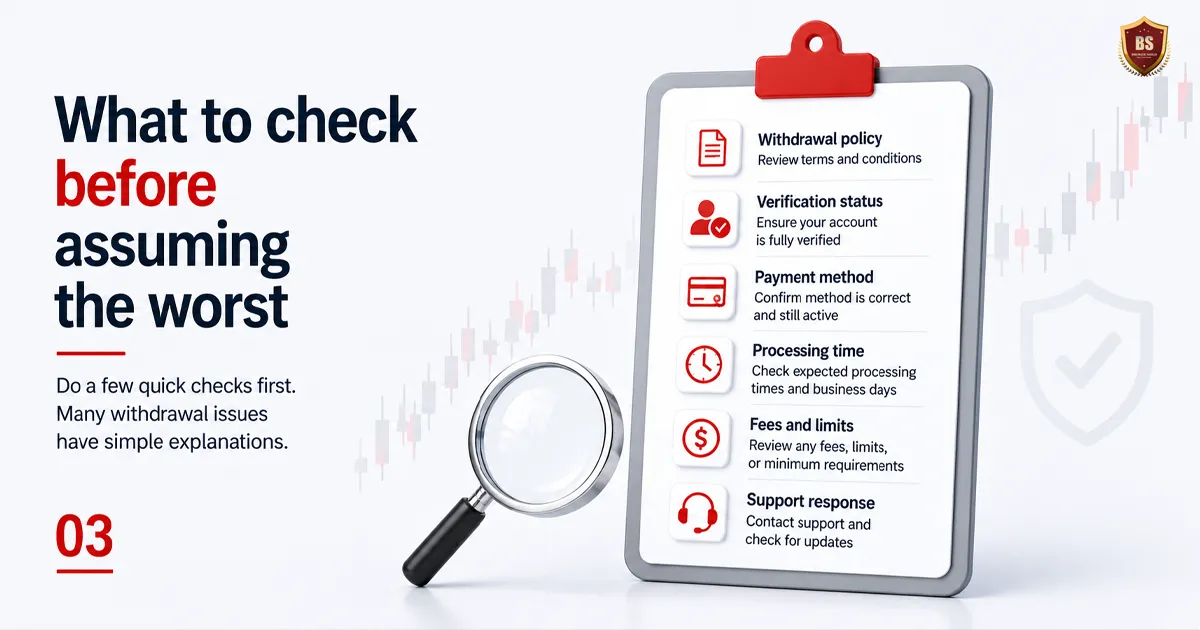
Start with your own account records. Confirm that your profile is fully verified and that the name on the trading account matches the bank account or payment wallet. Check whether the broker requires withdrawals back to the original funding source up to the deposited amount before profits can be sent elsewhere. This is common and often misunderstood.
Next, review the broker’s published withdrawal terms. Look for stated processing times, minimum withdrawal amounts, supported methods by country, and any conditions tied to bonus programs or inactive accounts. The goal is not to excuse unnecessary delays. It is to separate disclosed rules from ad hoc obstacles.
Also check whether the issue is method-specific. If bank wire is delayed but local transfer or e-wallet withdrawals are being reported as normal by other users in your region, the bottleneck may sit with the payment channel rather than the broker’s treasury process. For traders in India, MENA, Africa, or parts of Latin America, local payment infrastructure can make a major difference in actual withdrawal speed.
Finally, document the sequence carefully. Save screenshots of the withdrawal request, status updates, confirmation emails, and support responses. If escalation becomes necessary, vague recollections are less useful than a clean timeline.
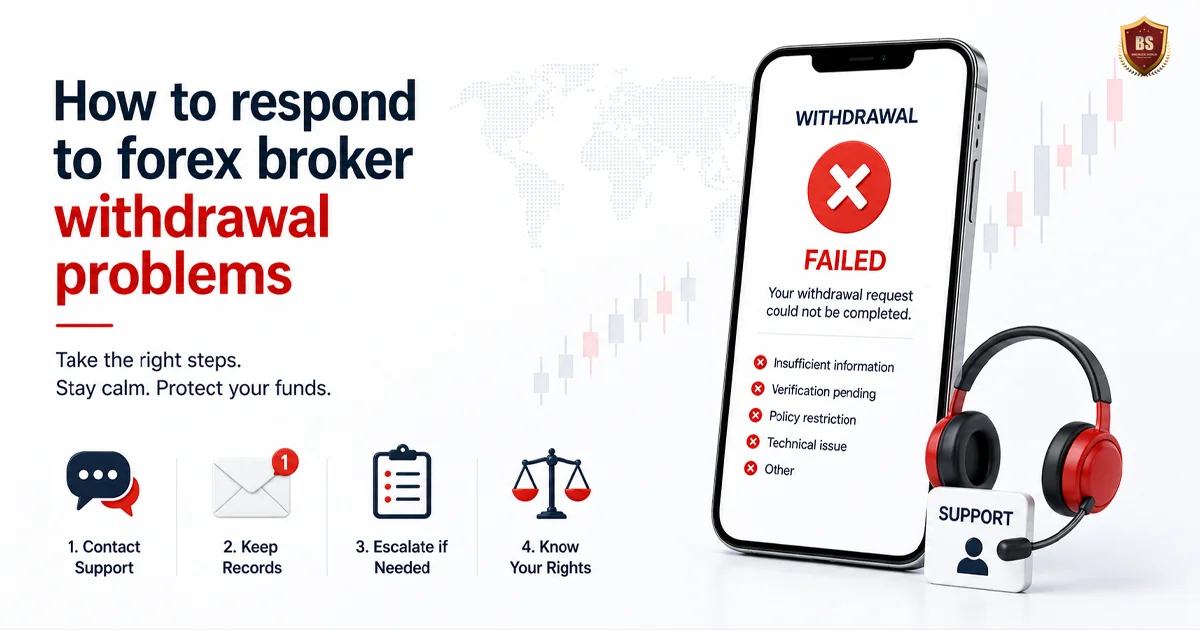
The first step is simple: ask a precise question instead of sending a general complaint. Request the exact status of the withdrawal, the date it entered processing, whether any additional verification is required, and the expected completion window. Specific questions tend to produce more useful answers.
If support gives a generic response, follow up in writing and reference the broker’s own policy. Keep the tone factual. State the amount, method, request date, and any completed verification steps. This helps in two ways – it signals that you are organized, and it creates a paper trail.
If the issue continues, escalate through the broker’s formal complaints process. Regulated brokers usually have one, even if it is not prominently displayed. Ask for a complaint reference number and the expected review period. If the broker operates multiple legal entities, confirm which entity holds your account. That detail matters if regulatory escalation becomes necessary.
At this stage, stop adding more funds. That may sound obvious, but traders sometimes continue depositing while trying to resolve an earlier withdrawal delay, especially if they are told larger volume or additional verification will help. It rarely improves the situation.
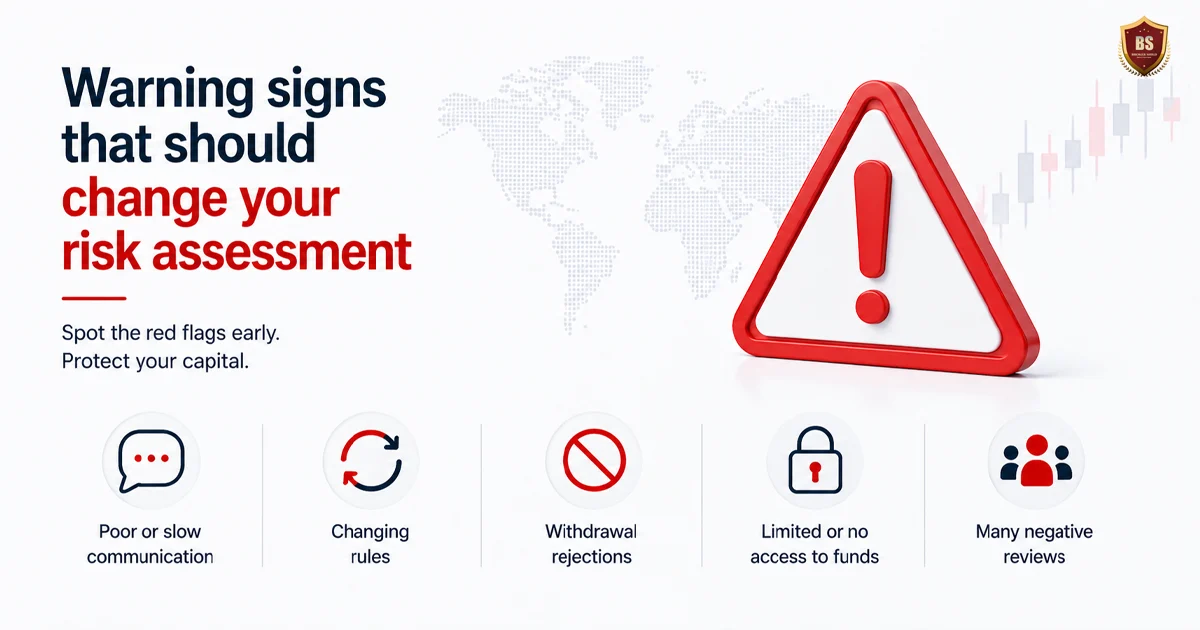
Some warning signs deserve more weight than others. One is inconsistency between what the broker advertises and what support later says. If the website promises fast withdrawals but the terms are vague or the support team cannot explain the process clearly, that gap matters.
Another is selective friction after profitable trading. If deposits were instant, small withdrawals worked, but larger or profit-heavy requests trigger repeated reviews, internal checks, or account limitations, the issue may be more than operational inefficiency.
Pay attention to entity structure too. Some brands present themselves as global brokers, but clients from different countries are onboarded under different legal entities with different levels of protection. A trader comparing brokers should look beyond the brand name and verify which regulated entity actually handles their funds. This is one area where platforms like Brokshield can add value by separating marketing presentation from account-level reality.
Poor complaint handling is another major signal. A broker does not need to be perfect to be trustworthy, but it should be able to explain delays, provide a timeline, and communicate clearly. Silence, contradiction, or pressure tactics are harder to excuse.
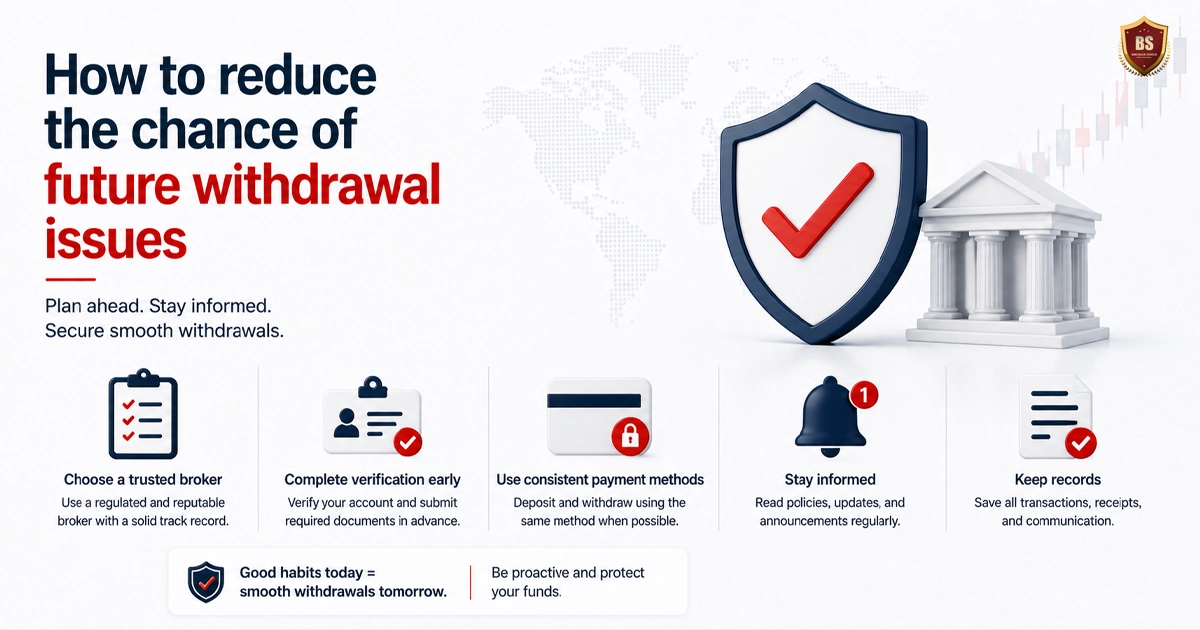
The best protection starts before the first deposit. Review the broker’s regulation, legal entity, payment methods in your country, and real withdrawal terms, not just homepage claims. If the broker offers several funding methods, choose one that is both documented and practical for withdrawals in your jurisdiction.
It also helps to test the process early. Many experienced traders make a small deposit, place limited trades, and request a modest withdrawal before scaling up. That does not guarantee future performance, but it can reveal weak support, confusing procedures, or country-specific payment issues before the account balance becomes significant.
Keep your documents current and your records organized. If you change address, replace a card, or switch bank accounts, update the broker before making a large withdrawal request. Administrative mismatches are common, and they are easier to fix proactively than during a time-sensitive payout.
A more nuanced point is broker fit. The broker with the lowest spread is not always the best choice if withdrawal reliability, local payment support, or service quality is weaker. Trading costs matter, but so does the quality of the cash-out process. For many traders, especially those operating across borders, reliability in funding and withdrawals is part of the total cost of choosing a broker.
Forex broker withdrawal problems are not always a sign of bad intent, but they are always worth taking seriously. When money leaves your trading account slowly, the right response is not panic or blind trust – it is structured verification, careful documentation, and a clear reassessment of broker risk. A broker earns trust not when deposits are easy, but when withdrawals are handled with the same clarity. That is the standard worth using before you trade bigger.

Emma Thompson

Robert Walker