A broker says it is “regulated”. The footer shows a license number. The homepage mentions multiple jurisdictions. That still does not tell you whether the entity offering your account is actually authorized to serve you. A forex broker regulation checker helps separate a real license from a vague claim, and for most traders, that is the first filter worth applying before spreads, bonuses, or platform features.
Many traders think regulation is a simple yes-or-no question. It is not. A broker can be regulated somewhere and still not be the right or safest option for your country, account type, or level of protection.
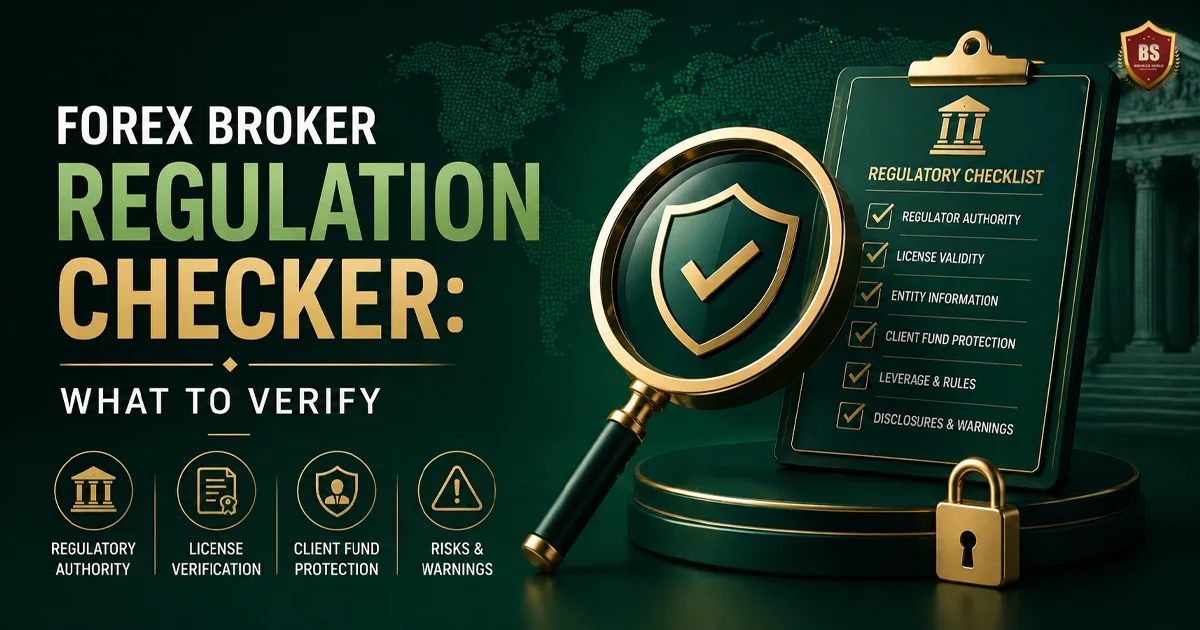
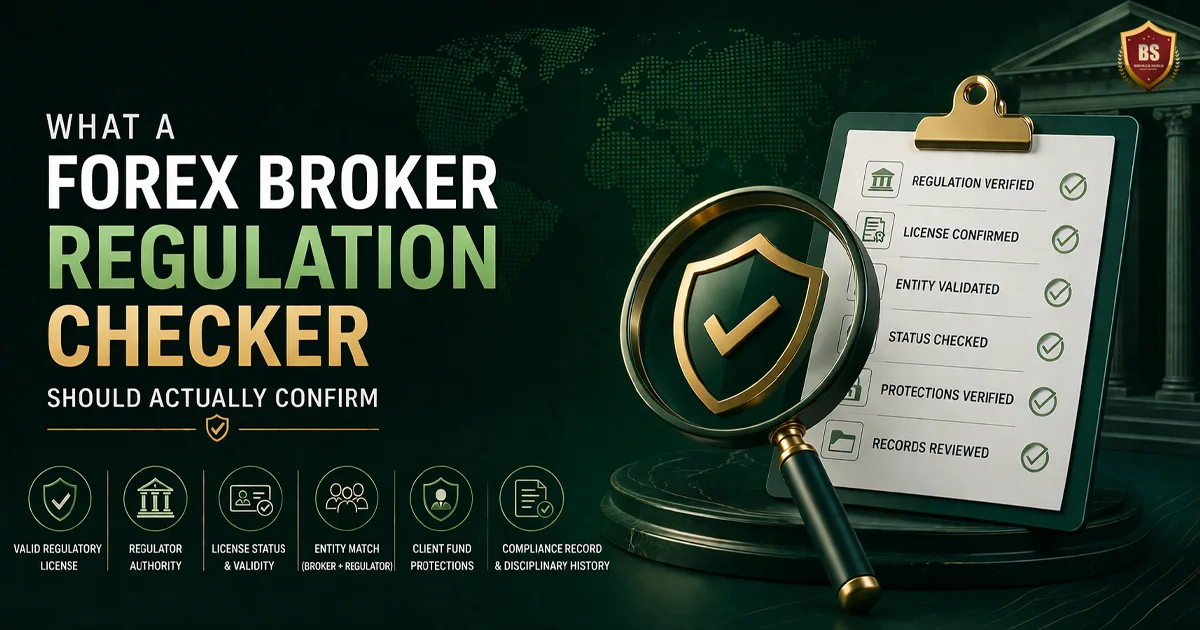
A useful forex broker regulation checker should verify four things at once. First, the regulator itself should be legitimate and relevant. Second, the license number should match the legal entity behind the broker brand. Third, that entity should be authorized to offer the services being advertised. Fourth, the broker should be allowed to onboard clients from your country.
This is where traders often get caught out. They verify the brand name, but not the entity name. Or they find a registration and assume it covers leveraged forex trading, when it may only apply to another business activity. In some cases, the website markets a top-tier license while your account is opened under a different offshore entity with weaker protections.
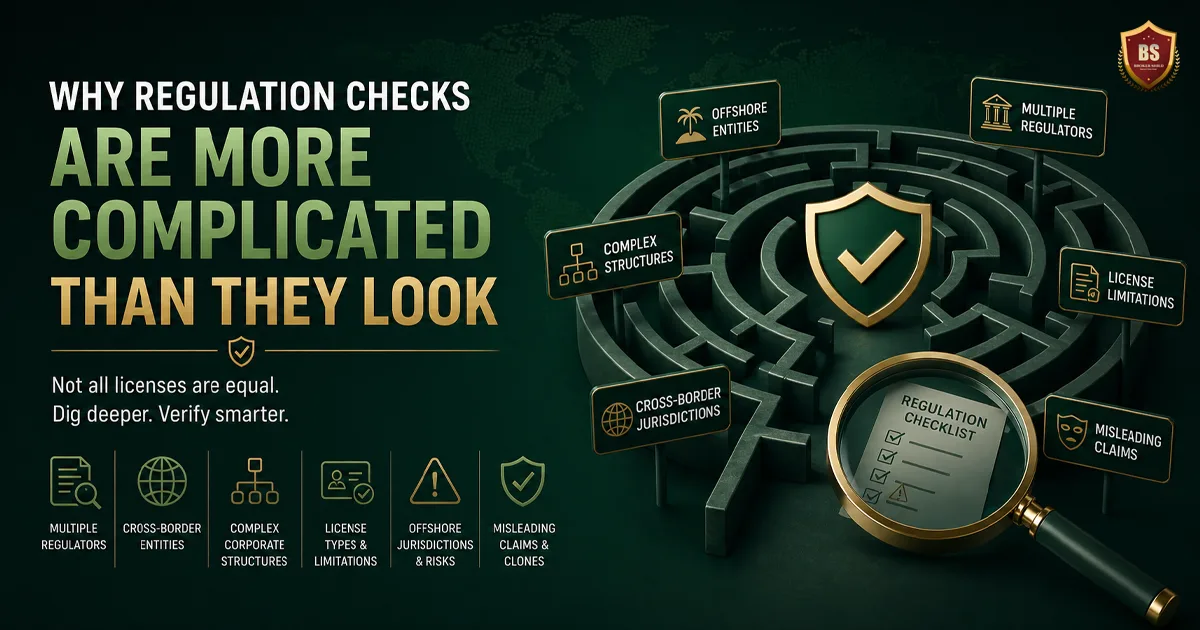
Broker groups often operate through several legal entities. One may serve clients in the UK, another in the EU, another in the Middle East, and another in offshore jurisdictions. The trading name may stay the same while the legal protections, leverage limits, compensation arrangements, and complaint procedures change significantly.
That matters because your relationship is with the legal entity listed in the terms and account opening documents, not with the marketing brand on the homepage. If the entity serving your account is different from the one highlighted in promotional material, your actual level of protection may be lower than expected.
Country availability adds another layer. A broker may hold a valid license in one region but cannot legally solicit or serve clients in another. For traders in India, parts of Africa, Southeast Asia, LATAM, or MENA, this is especially relevant because many international brokers segment users by region and assign them to different subsidiaries.
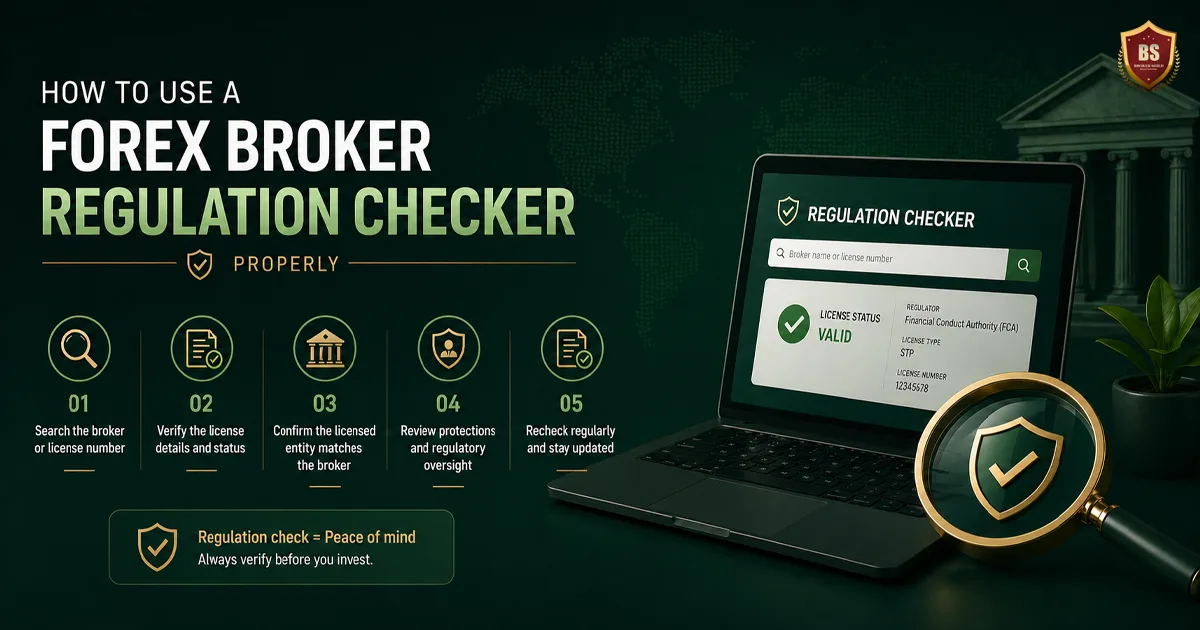
The right process is straightforward, but it requires attention to detail.
Start with the broker’s disclosed legal entity, not the brand name. Look for the company name in the footer, client agreement, or account terms. Then compare that exact entity name with the regulator’s public register. The license number should match, and the status should be active, current, and relevant to the services offered.
Next, check whether the regulated entity is the one onboarding clients from your country. If the broker operates multiple entities, identify which one applies to your location. This step is often skipped, yet it is one of the most important. A valid license in one jurisdiction does not automatically mean your account falls under it.
Then review what type of authorization the firm actually has. Some permissions are broader than others. You want to see that the entity is approved for the investment or derivatives services connected to forex and CFD trading, not simply registered as a general financial business.
Finally, compare the regulatory claim with the broker’s operational details. Deposit methods, leverage offered, compensation disclosures, risk warnings, and client agreement language should align with the jurisdiction being cited. If the broker advertises one standard of protection but offers trading terms that clearly belong to another entity, that mismatch deserves scrutiny.
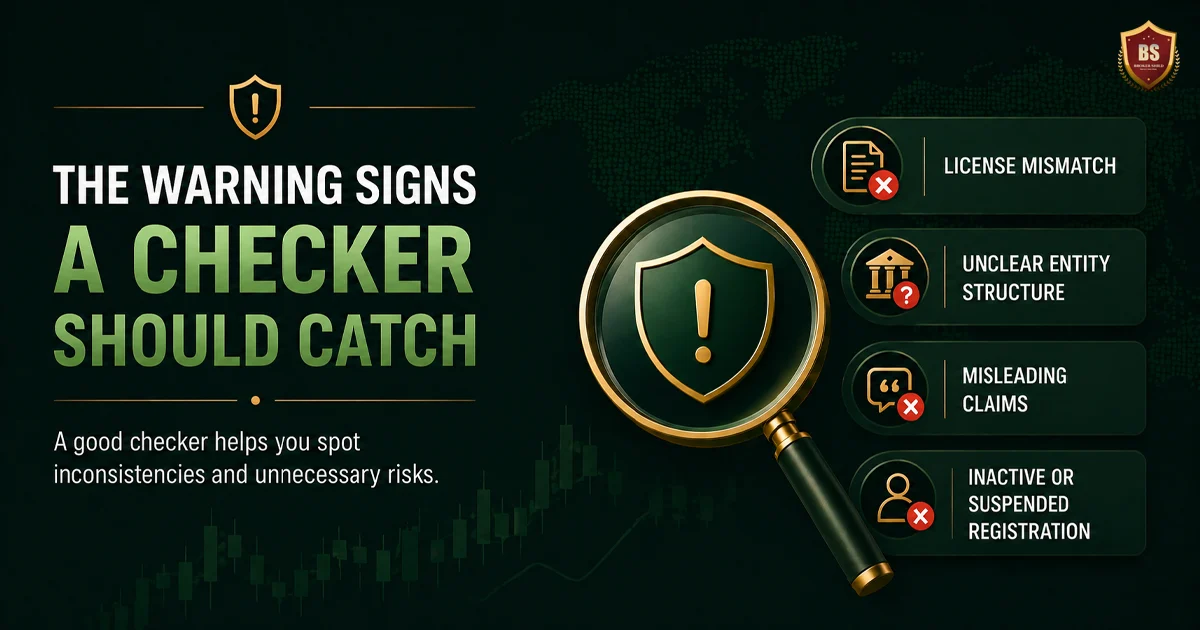
A good checker is not just a database lookup tool. It should help you spot inconsistencies.
One common red flag is a license number that appears valid but belongs to a different company. Another is a broker using regulator logos prominently while giving little clarity on which entity serves which countries. Some brokers also rely on broad language such as “authorized,” “registered,” or “compliant” without clearly stating the license scope.
You should also pay attention to inactive or suspended registrations, cloned firm warnings, and websites that mention a regulated affiliate while directing clients to an unregulated or lightly regulated subsidiary. The issue is not always fraud. Sometimes it is simply poor disclosure. But from a trader’s perspective, weak disclosure still creates unnecessary risk.
This is why data structure matters. Brokshield approaches regulation as a broker-level and entity-level check, not as a marketing badge. That distinction is useful because it reflects how traders are actually onboarded.
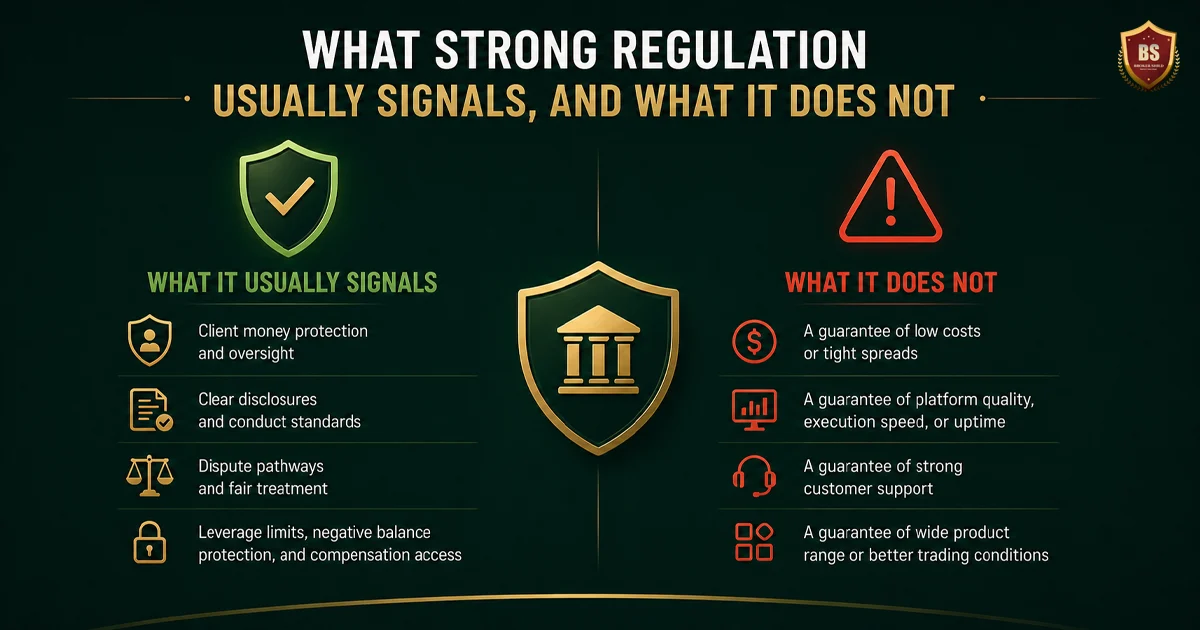
Regulation is a trust filter, but it is not a guarantee of broker quality across every category. A well-regulated broker can still have wide spreads, limited instruments, weak support, or slow withdrawals. On the other hand, weaker jurisdictions are not automatically proof of abuse, but they generally offer fewer safeguards if something goes wrong.
In practical terms, stronger oversight often means stricter rules on client money handling, clearer disclosures, conduct standards, and dispute pathways. Depending on the jurisdiction, it may also mean leverage caps, negative balance protection, and access to compensation mechanisms. Those features matter most when markets move sharply or when a dispute arises.
Still, regulation should be viewed as the starting point, not the final decision. Once a broker passes the trust screen, traders should compare pricing, platform quality, execution model, product range, and country-specific funding support.
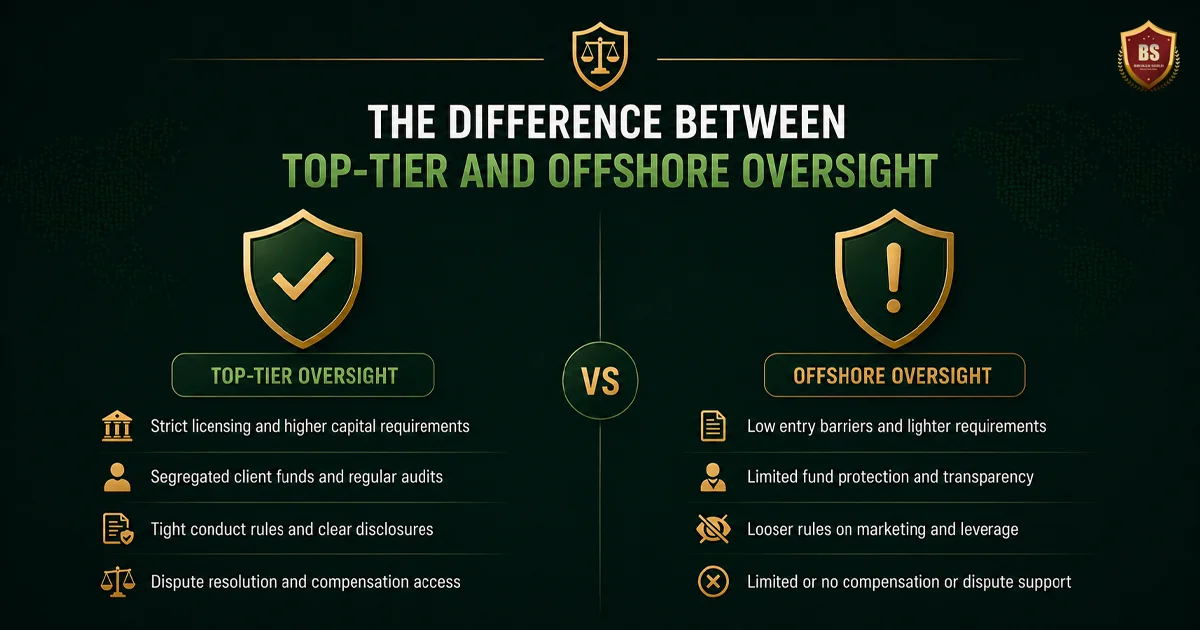
Not all regulators impose the same standards. Some are known for tighter supervision, stronger reporting requirements, and more meaningful enforcement. Others provide a legal framework but less intensive oversight.
That does not mean every offshore-regulated broker is unsafe, or every top-tier regulated broker is ideal for every trader. It means the margin for error is different. If a dispute occurs, the options available to you may depend heavily on the jurisdiction governing your account.
For beginners, stronger regulation is usually worth prioritizing even if leverage is lower or promotions are less aggressive. For advanced traders, the choice can be more nuanced. Some may accept a different jurisdiction to access certain account structures or instruments, but that trade-off should be deliberate, not accidental.
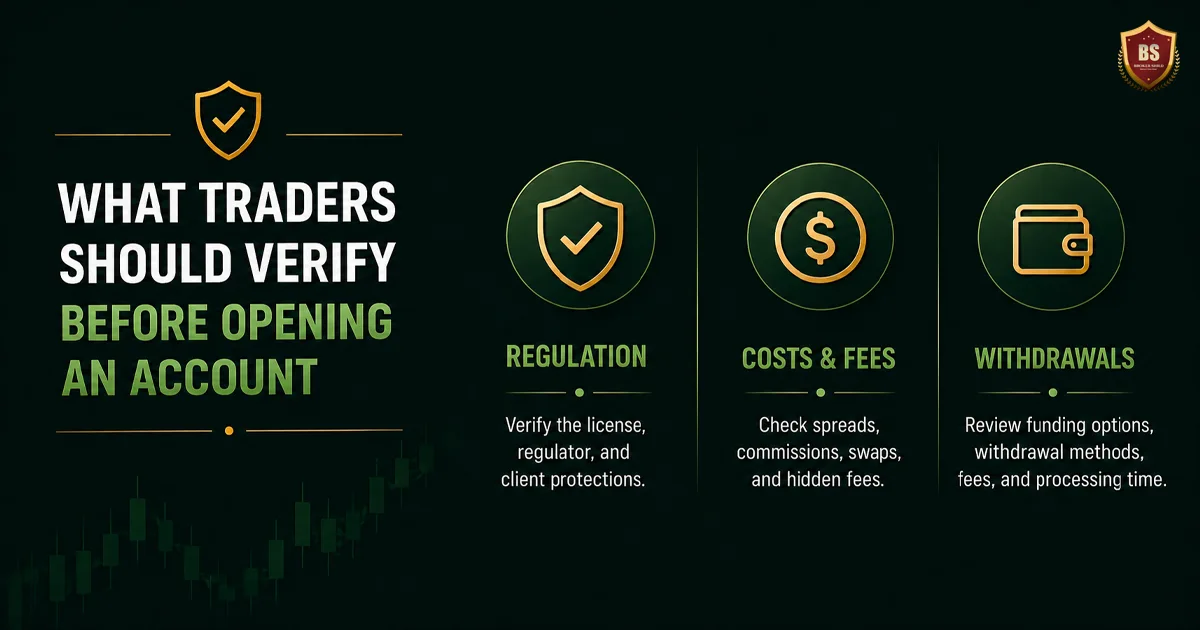
Before funding any broker, check the legal entity, license status, country eligibility, and the exact terms attached to your account. Read the client agreement closely enough to confirm who the counterparty is. If that sounds basic, it is. It is also where many costly mistakes begin.
You should also check whether the broker clearly explains how client funds are held, whether negative balance protection applies to your jurisdiction, and which complaint route exists if there is a dispute. These are not small details buried in legal text. They define your position if something goes wrong.
If a broker makes verification difficult, that alone tells you something. Reliable firms generally make their entity structure and regulatory details easy to find and consistent across the site, onboarding flow, and legal documents.
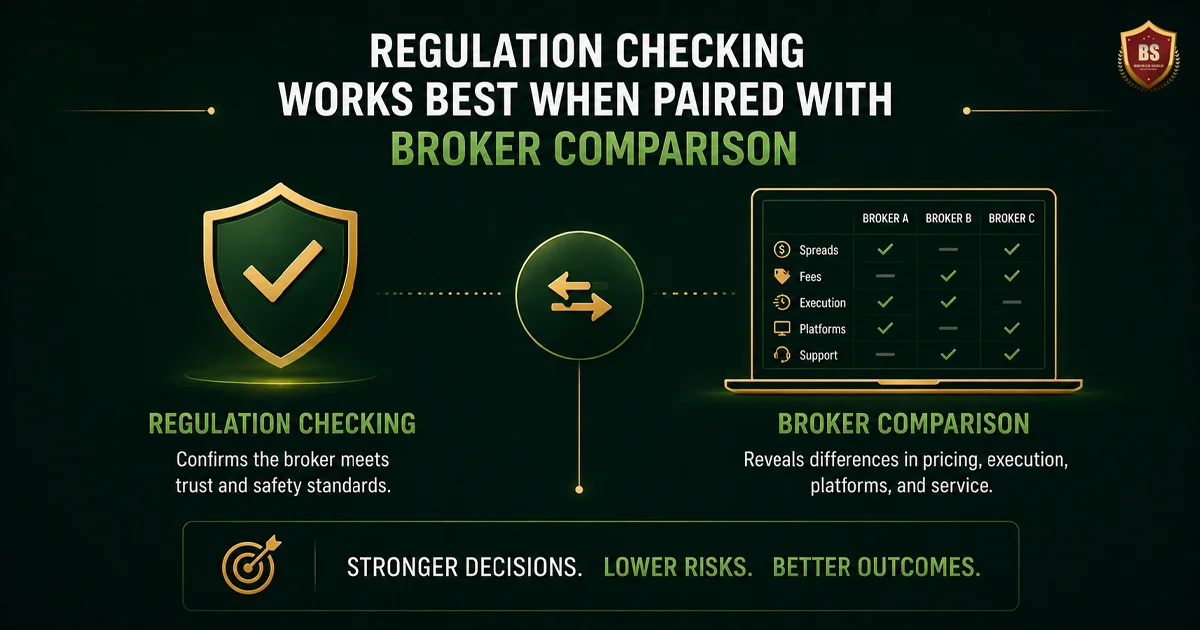
A forex broker regulation checker is most useful when it sits inside a broader review process. Once the entity and license are verified, the next question is whether the broker’s actual offering fits your needs. Safety matters first, but traders also need realistic information on spreads, commissions, platforms, execution, and local payment support.
That is where structured comparison becomes more valuable than isolated claims. Two brokers may both be regulated, yet one may serve your country through a better entity, offer clearer disclosures, and provide more practical funding options. Regulation gets a broker onto the shortlist. Real trading conditions decide whether it stays there.
If you treat regulation as a checkbox, you may miss the details that define your actual risk. If you treat it as a framework for verification, you make better decisions from the start. The goal is not to find the broker with the loudest compliance message. It is to confirm who is serving you, under what rules, and whether those rules are good enough for the way you trade.
That extra five minutes of checking is rarely exciting, but it is often the difference between a broker that looks credible and one that is actually built for trust.

Emma Thompson

Robert Walker