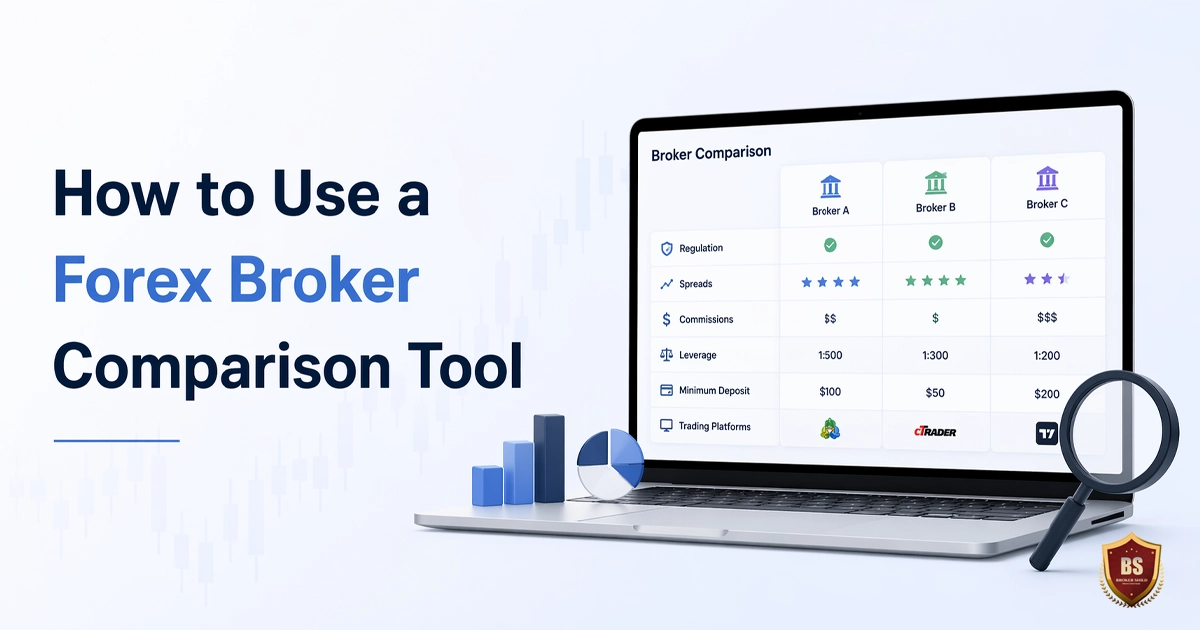
 A broker can look competitive on the surface and still be the wrong fit once you check regulation, fees, platform limits, or whether it even accepts clients from your state or country. That is why a forex broker comparison tool matters. It turns scattered broker claims into a structured side-by-side review, which is exactly what traders need before sending money to a platform.
The problem is not lack of information. It is too much marketing and not enough verification. Many traders compare only spreads, see a low minimum deposit, and stop there. That shortcut can get expensive fast if the broker has weak oversight, high non-trading fees, poor execution, or limited withdrawal options.
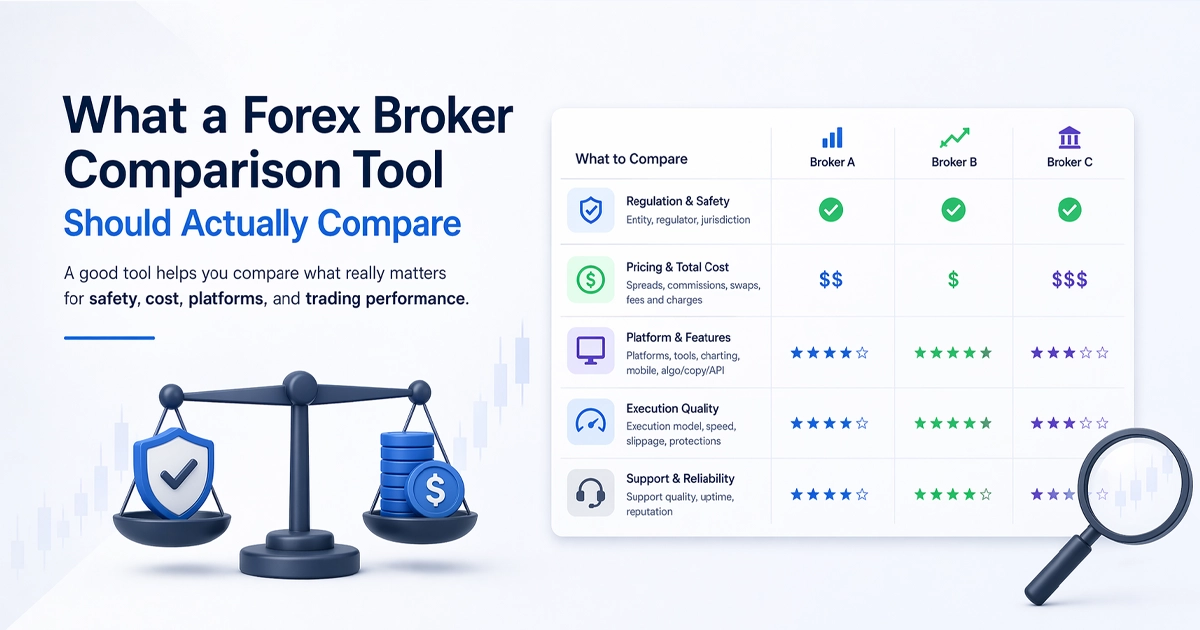
A useful tool does more than sort brokers by a star rating or a sponsored position. It should help you compare the parts of a broker relationship that affect both safety and trading results.
Regulation comes first. If a broker is not properly regulated for the market it serves, the rest of the comparison is secondary. A serious comparison should identify the legal entity, the regulator, and the jurisdiction you would actually onboard under. This matters because the same brand may operate through different entities with different protections depending on where you live.
Pricing is next, but it needs context. Traders often focus on spread alone, even though total cost may include commission, swap rates, conversion fees, inactivity fees, and deposit or withdrawal charges. A broker with a slightly wider spread can still be cheaper overall if its commission structure is simpler or its account terms better match your style.
Platform access is another major filter. If you rely on MetaTrader, TradingView integration, or a broker’s proprietary platform, that should be visible in the comparison. The same goes for charting quality, order types, mobile usability, and whether algorithmic trading, copy trading, or API access is supported.
Execution quality is harder to market and more important than many beginners realize. Slippage, requotes, order handling, and speed under volatile conditions can shape real trading outcomes. A comparison tool will not always measure every execution variable directly, but it should at least flag execution model, available order protections, and whether live testing has been part of the review process.
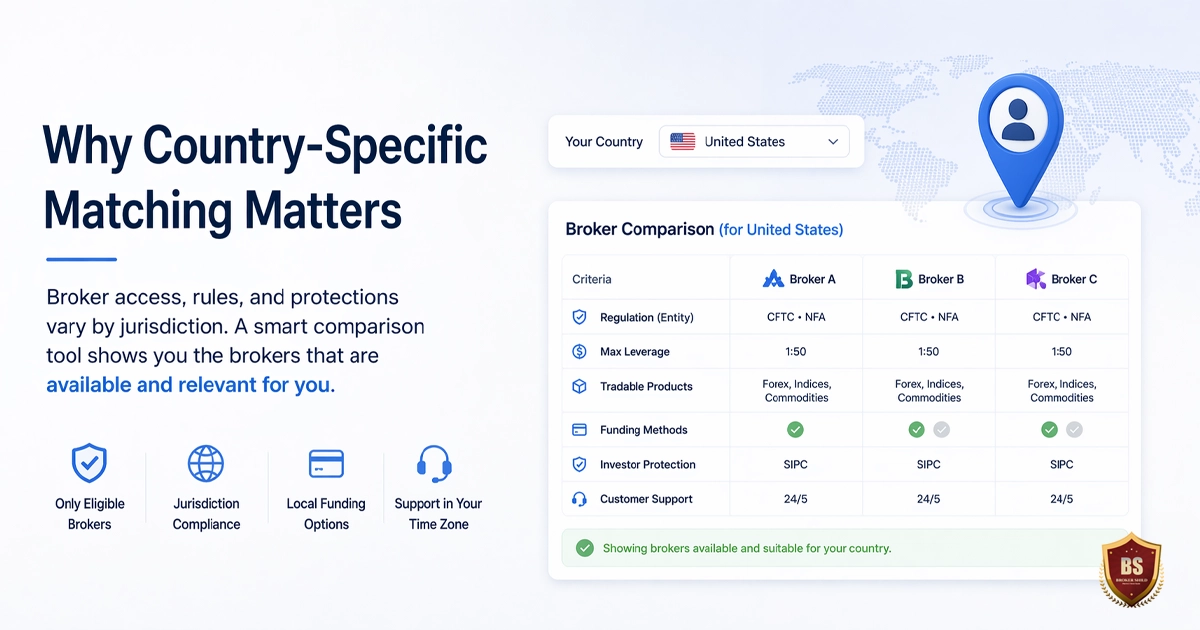
One of the biggest broker comparison mistakes is assuming that a broker available in a review is available to you. In reality, broker access depends heavily on jurisdiction. A broker may be strong for traders in one region and unavailable, restricted, or offered under different terms elsewhere.
This is where a forex broker comparison tool becomes more than a convenience. It acts as a filter against false options. If you are a US trader, for example, the pool of eligible brokers is narrower, leverage rules differ, and product access is more limited than in many offshore markets. Comparing brokers without a country filter wastes time and can push traders toward providers they cannot legally or practically use.
Country-specific comparison also affects funding methods, account currency options, investor protections, and customer support coverage. These details often seem minor until you need a withdrawal processed quickly or a support response during active market hours.
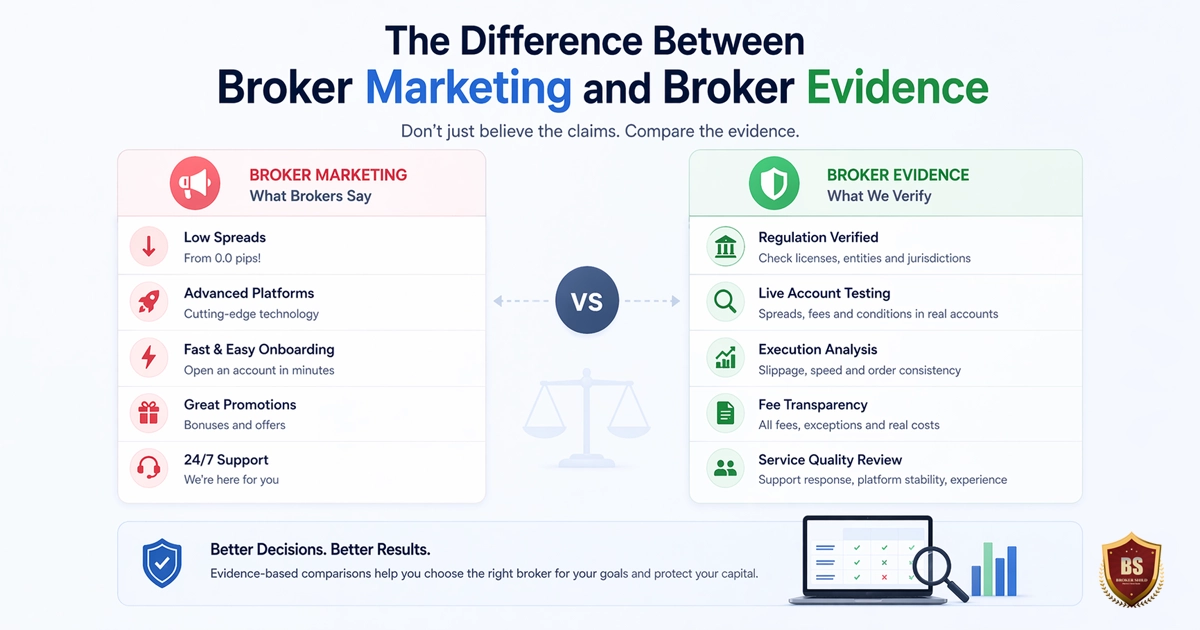
Broker websites are built to convert. That is not a criticism. It is simply the reality. Promotions highlight low spreads, advanced tools, and fast onboarding. They rarely emphasize account restrictions, less favorable legal entities, fee exceptions, or service gaps.
A credible comparison tool should act as a counterweight. Instead of repeating the broker’s own claims, it should verify them. That means checking regulation records, reviewing live account conditions, testing platforms, and comparing fee disclosures against actual account behavior where possible.
This is why research depth matters. A thin comparison may help you sort by headline features, but it will not help much when two brokers look similar on paper. More detailed broker analysis can reveal meaningful differences in execution consistency, platform stability, support quality, and account administration.
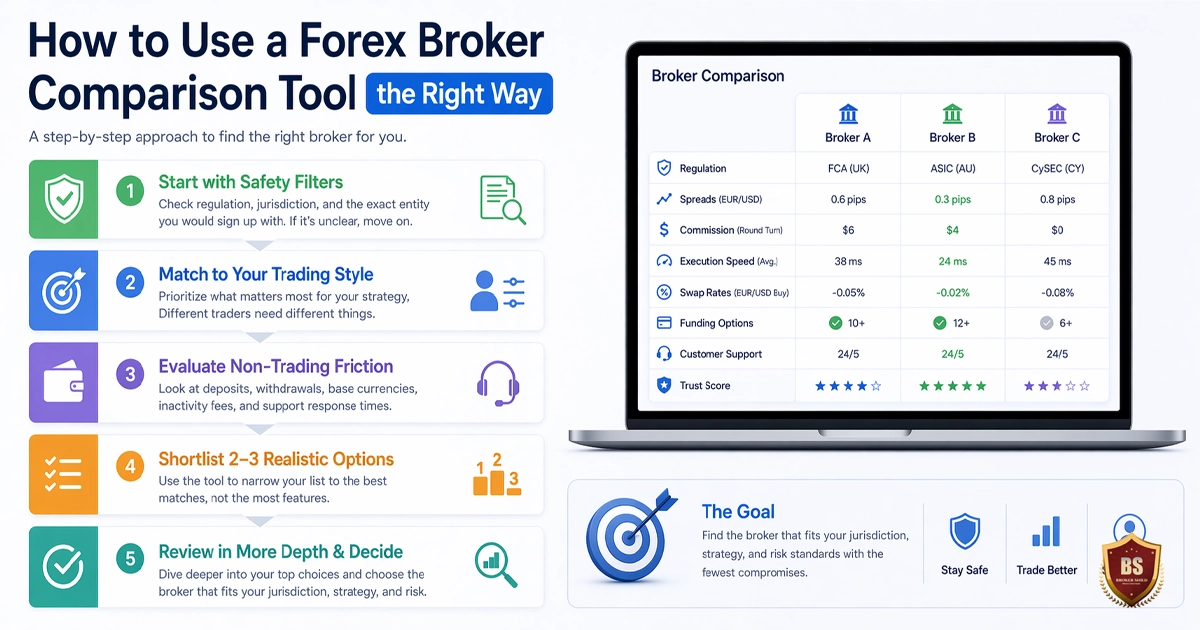
Start with safety filters, not promotional features. First remove any broker that lacks strong regulation for your jurisdiction or does not clearly disclose the entity you would sign up with. If the legal structure is vague, that is already useful information.
After that, compare brokers based on your trading style. A day trader and a longer-term swing trader should not use the same priority list. If you trade frequently, focus on spread, commission, execution, and platform speed. If you hold trades overnight, swap rates and financing costs deserve more attention. If you are new, ease of use, educational support, and account simplicity may matter more than shaving a fraction of a pip off pricing.
Then look at non-trading friction. Deposits, withdrawals, base currencies, inactivity policies, and support response times often get ignored because they are less exciting than charts and leverage. They still affect your experience and your risk.
Finally, narrow your list to two or three realistic options and review them in more depth. Comparison tools are best used as decision filters, not as a replacement for judgment. The goal is not to find a broker with the most features. It is to find the one that fits your jurisdiction, strategy, and risk standards with the fewest compromises.
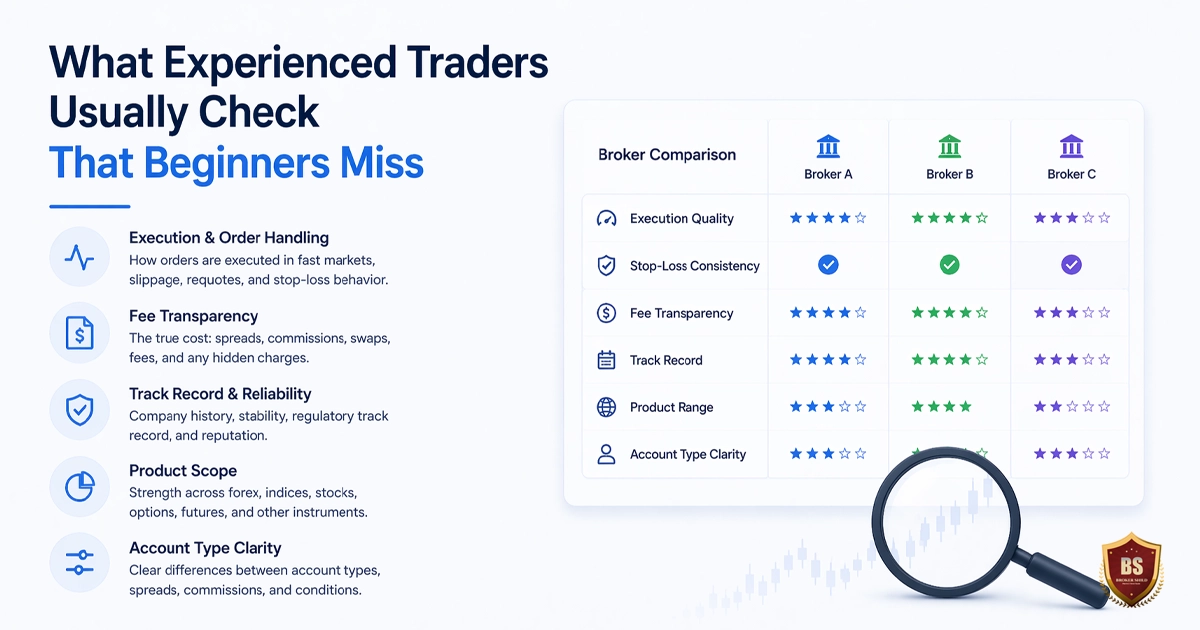
Beginners often compare visible features. Experienced traders look for operational details. They want to know how orders are handled during fast markets, whether stop-loss behavior is consistent, how transparent the fee schedule really is, and whether the broker has a long enough record to inspire confidence.
They also pay closer attention to product scope. A broker that looks strong for forex may be weaker for index CFDs, stocks, options, or futures. If you expect your trading to expand beyond currencies, it makes sense to compare brokers with a broader view of your likely needs.
Another overlooked issue is account type complexity. More account types do not always mean more choice in a useful sense. Sometimes they create confusion around which spread or commission structure actually applies. A strong comparison should clarify these differences instead of leaving users to interpret promotional labels.
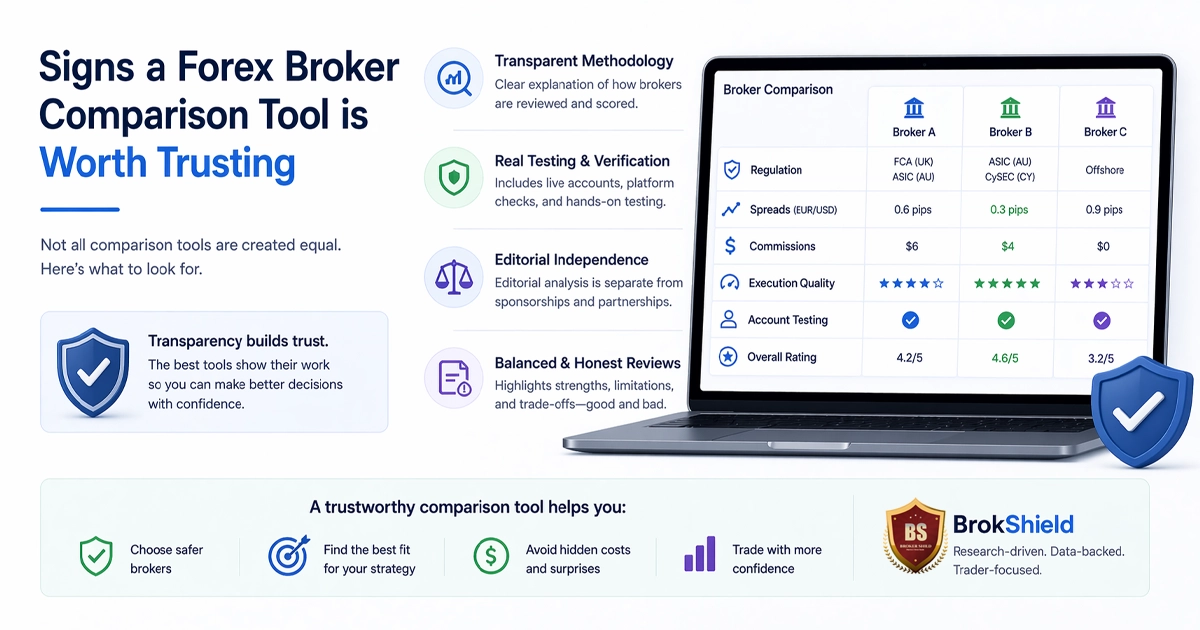
The best comparison tools show their work. They explain how brokers are reviewed, what criteria are measured, and whether testing includes live accounts or direct platform checks. They also separate editorial analysis from commercial relationships.
That transparency matters in a category where incentives can distort rankings. If every broker is described as excellent, the comparison is not helping you manage risk. A trustworthy platform will point out limitations, trade-offs, and broker-specific weaknesses alongside strengths.
This is where a research-driven provider such as BrokShield stands apart from generic ranking pages. A comparison process built on regulation checks, live account testing, and large-scale data review gives traders a more reliable starting point than a simple top-ten list.
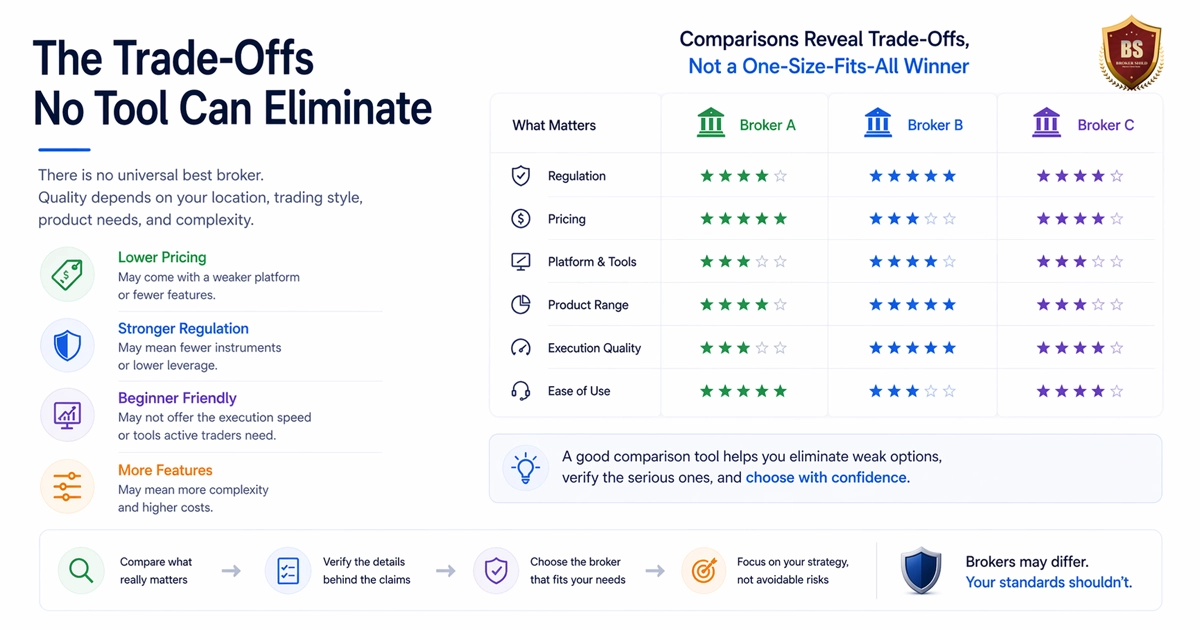
Even the best forex broker comparison tool cannot produce a perfect answer for everyone. There is no universal best broker because broker quality depends on where you live, how you trade, what products you need, and how much complexity you are willing to manage.
A broker with excellent pricing may offer a weaker platform. Another may have stronger regulation but fewer instruments. One may be ideal for beginners and less attractive for active traders who need tighter execution or advanced tools. Good comparisons do not hide these trade-offs. They make them easier to evaluate.
That is the real value here. A comparison tool should not push you toward the loudest broker. It should help you eliminate weak options, verify the serious ones, and choose with more confidence than you had before.
Before you fund any account, slow the process down just enough to compare what actually affects safety and performance. A careful broker choice will not guarantee trading success, but it can help you avoid mistakes that have nothing to do with your strategy and everything to do with where you place your trust.

Emma Thompson

Robert Walker