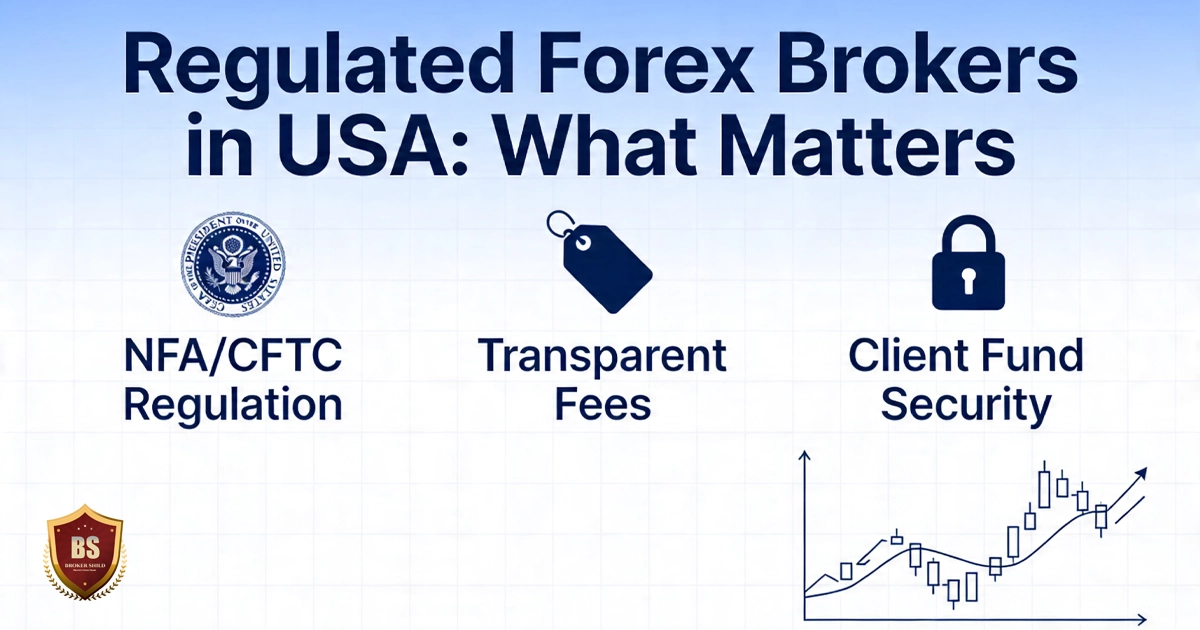
For a retail forex broker to legitimately serve US clients, regulation is not a vague marketing claim. It means the firm is subject to US oversight and follows a defined ruleset for retail forex activity. In practice, that usually means registration and compliance tied to US regulatory requirements, including standards around capital, reporting, customer protections, and business conduct.
This is where many traders get misled. Some brokers highlight regulation in another country and present that as if it covers US clients. It does not. A broker may be licensed abroad and still not be authorized to offer retail forex trading to US residents. If you are in the US, the relevant issue is whether the broker can legally onboard and serve you under US rules.
That distinction filters out a large share of the global broker market. Many well-known international forex brands do not accept US traders at all. Others may appear in search results for US users but route attention to non-US entities, which is a compliance red flag if they are targeting retail Americans without proper authorization.
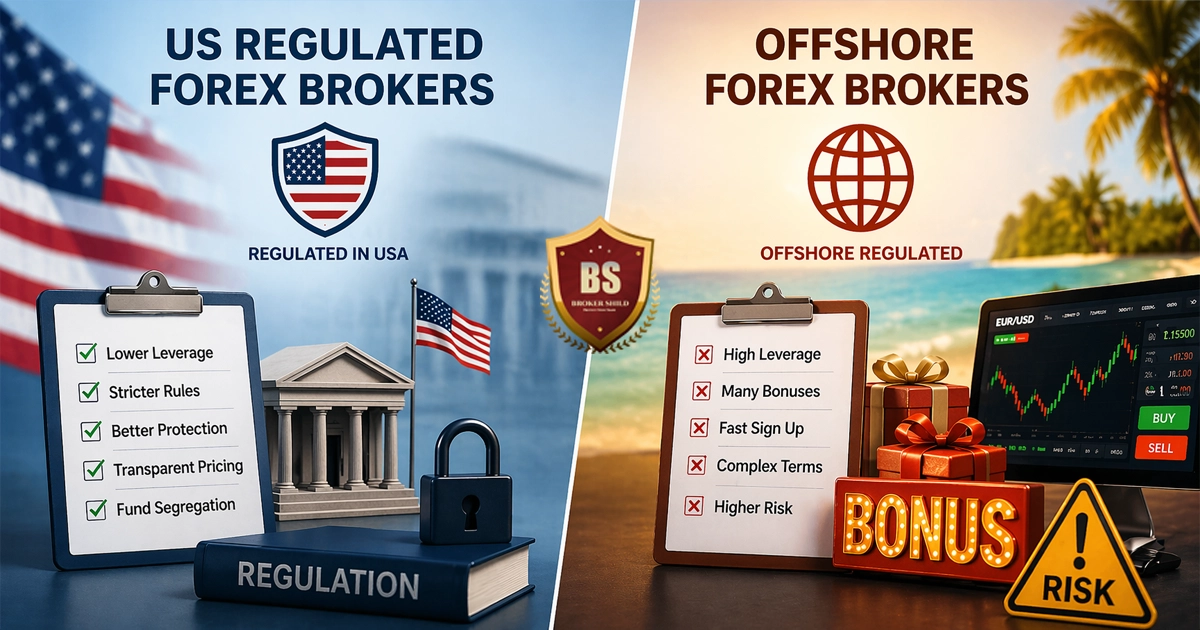
US-regulated forex brokers often look less flashy than offshore competitors. That is not necessarily a weakness. It is usually the result of a tighter rulebook.
You will often see lower leverage than on offshore platforms. You may also notice fewer account types, fewer promotional offers, and more structured onboarding. Some traders see those as drawbacks, and there is a trade-off here. If your only priority is maximum leverage and a fast signup process, the US market will feel restrictive.
But those same restrictions can support better risk control. A stricter operating environment can reduce the chance of dealing with a broker whose business model depends on aggressive acquisition tactics, opaque pricing, or weak client handling. For risk-aware traders, that matters more than marketing extras.
A safe broker search starts with verification, but it should not stop there. Regulation is the entry requirement, not the full decision.
The first screen is simple. Can the broker legally accept US retail clients for forex trading? If the answer is unclear, that is already a problem. A credible broker should be very clear about jurisdiction, account eligibility, and which legal entity serves which clients.
If a broker buries this information in fine print or uses broad global language without a clean US-specific explanation, proceed carefully. Traders often assume that a major global brand automatically serves every country. In forex, that assumption leads to bad decisions.
The next step is understanding who holds your account. Large financial brands sometimes operate through multiple entities across different countries. One entity may be regulated for one region, while another handles clients elsewhere under different rules.
For US traders, the account-holding entity matters more than the group brand. You are not protected by a broker’s strongest global license if your actual account sits under a different structure. The legal entity, customer agreement, and jurisdiction should all line up clearly.
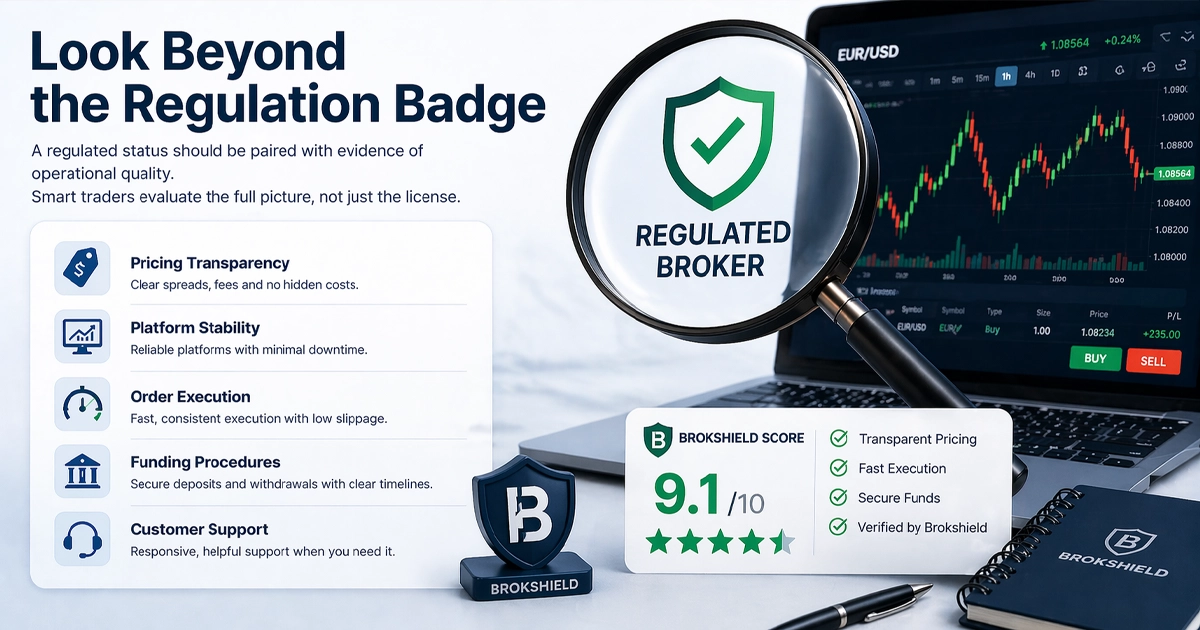
A regulated status should be paired with evidence of operational quality. This includes pricing transparency, platform stability, order execution, funding procedures, and customer support responsiveness.
A broker can meet regulatory requirements and still be a poor fit for your trading style. For example, a beginner may need cleaner education, more intuitive platforms, and stronger support. A more active trader may care more about spreads, execution consistency, and whether the platform supports their preferred tools. The safer choice is not always the cheapest one, and the cheapest-looking one is not always cheaper in practice.
US traders should pay close attention to the full cost structure. Spreads are only part of the story. Some brokers compete well on headline pricing but become less attractive once inactivity charges, wire fees, conversion costs, or platform limitations are considered.
This is one reason criteria-based comparison matters. Looking at one advertised spread figure in isolation is not enough. The real cost of trading depends on how often you trade, what size you trade, and how you fund and withdraw your account.
The biggest red flag is a broker that markets heavily to US traders without being clearly authorized to serve them. If the regulatory position is hard to confirm, treat that as a serious risk factor, not a minor inconvenience.
Another warning sign is pressure-based marketing. Promises of unusually high leverage, guaranteed returns, trading bonuses that distort risk-taking, or urgent deposit messaging are all out of place in a properly supervised broker selection process.
You should also be cautious with brokers that are vague about execution, fees, or account ownership. Clear documentation is not a luxury in this space. It is part of the trust test.
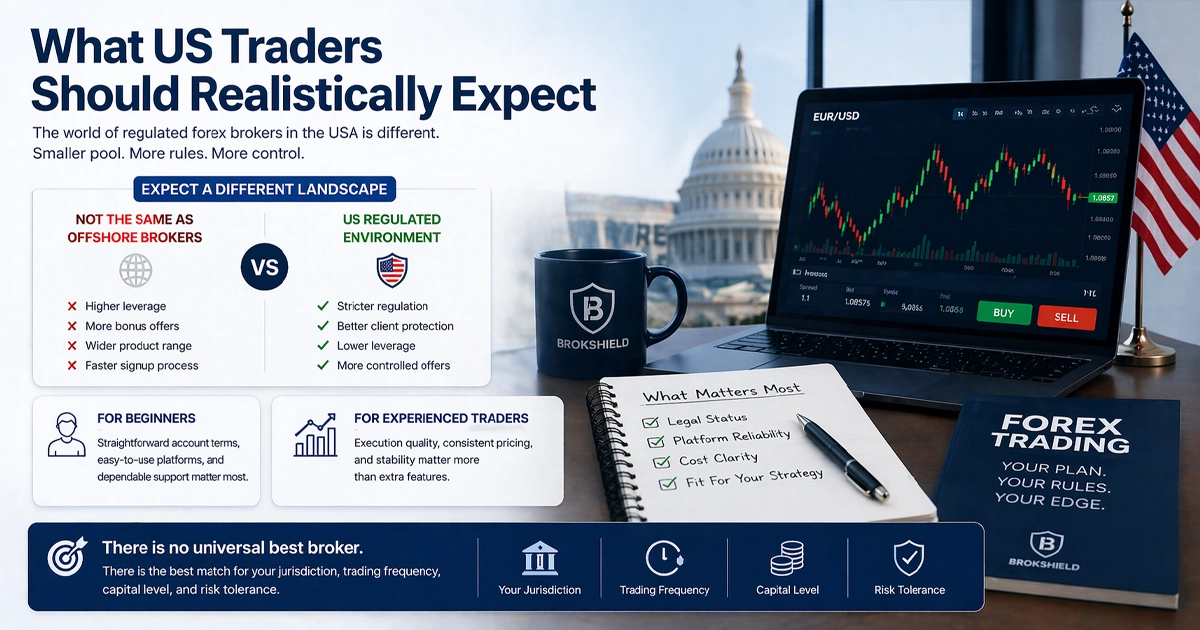
If you are searching for regulated Best forex brokers in USA, it helps to reset expectations early. You are not choosing from the same universe available to traders in loosely regulated jurisdictions. The pool is smaller, and the product environment is more controlled.
That does not mean the options are poor. It means the comparison criteria shift. Instead of chasing the highest leverage or the longest feature list, focus on legal status, platform reliability, cost clarity, and fit for your strategy.
For beginners, a broker with straightforward account terms and dependable support may be the best choice even if its platform catalog is limited. For experienced traders, execution quality and consistent pricing may matter more than extra research tools. There is no universal best broker. There is a best match based on your jurisdiction, trading frequency, capital level, and risk tolerance.
The cleanest broker comparison process is usually narrow and evidence-based. Start with brokers that are clearly available to US retail clients. Then compare them on the factors that affect your actual trading experience: costs, platforms, minimum deposit, available pairs, funding methods, and service quality.
It also helps to separate core safety factors from preference factors. Regulation, legal availability, and transparency come first. Platform design, charting style, and extra tools come after. Traders sometimes reverse that order and get pulled toward a broker because the app looks polished or the marketing feels convincing. That is backwards.
At BrokShield, this is exactly why live testing and structured broker review criteria matter. A broker should not be judged by promotional claims alone. It should be assessed by what traders actually experience once money is deposited and real trading begins.
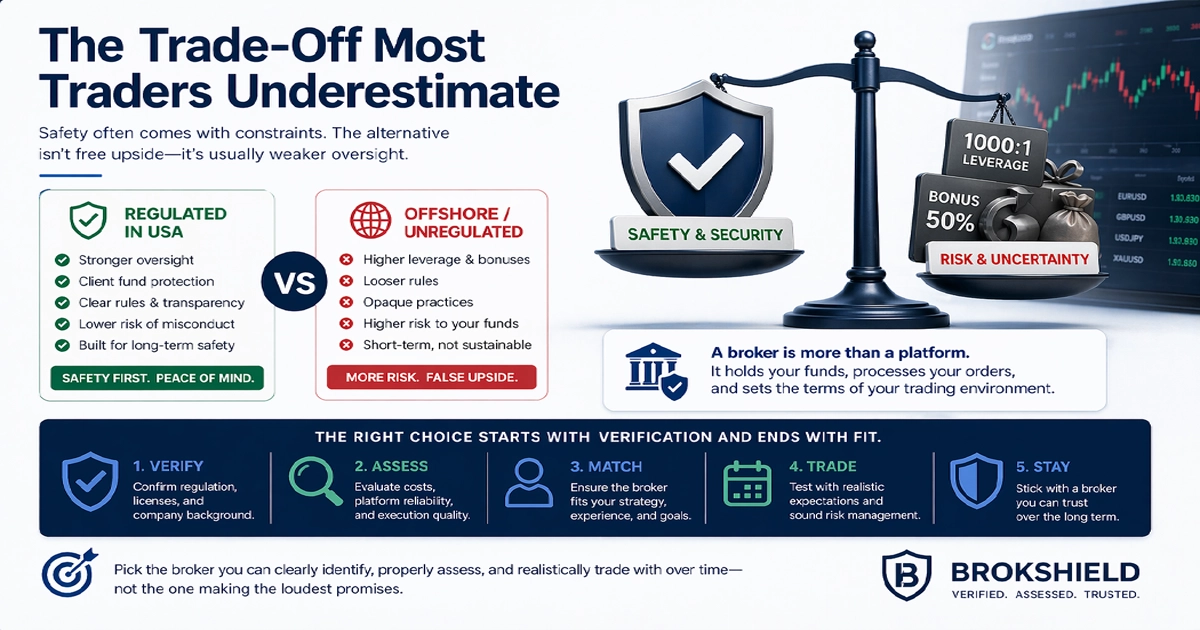
The hardest part of choosing among regulated forex brokers in USA is accepting that safety often comes with constraints. You may get fewer speculative features, narrower account variation, and stricter rules than traders elsewhere. But the alternative is not free upside. The alternative is often weaker oversight.
That trade-off is worth facing directly. If a broker’s biggest selling point is that it bypasses the standards designed for your market, that should not feel like an advantage. It should feel like a reason to pause.
A broker is not just a platform. It is the institution holding your funds, processing your orders, and setting the terms of your trading environment. That is why the right choice starts with verification and ends with fit. Pick the broker you can clearly identify, properly assess, and realistically trade with over time – not the one making the loudest promises.

Emma Thompson

Robert Walker